

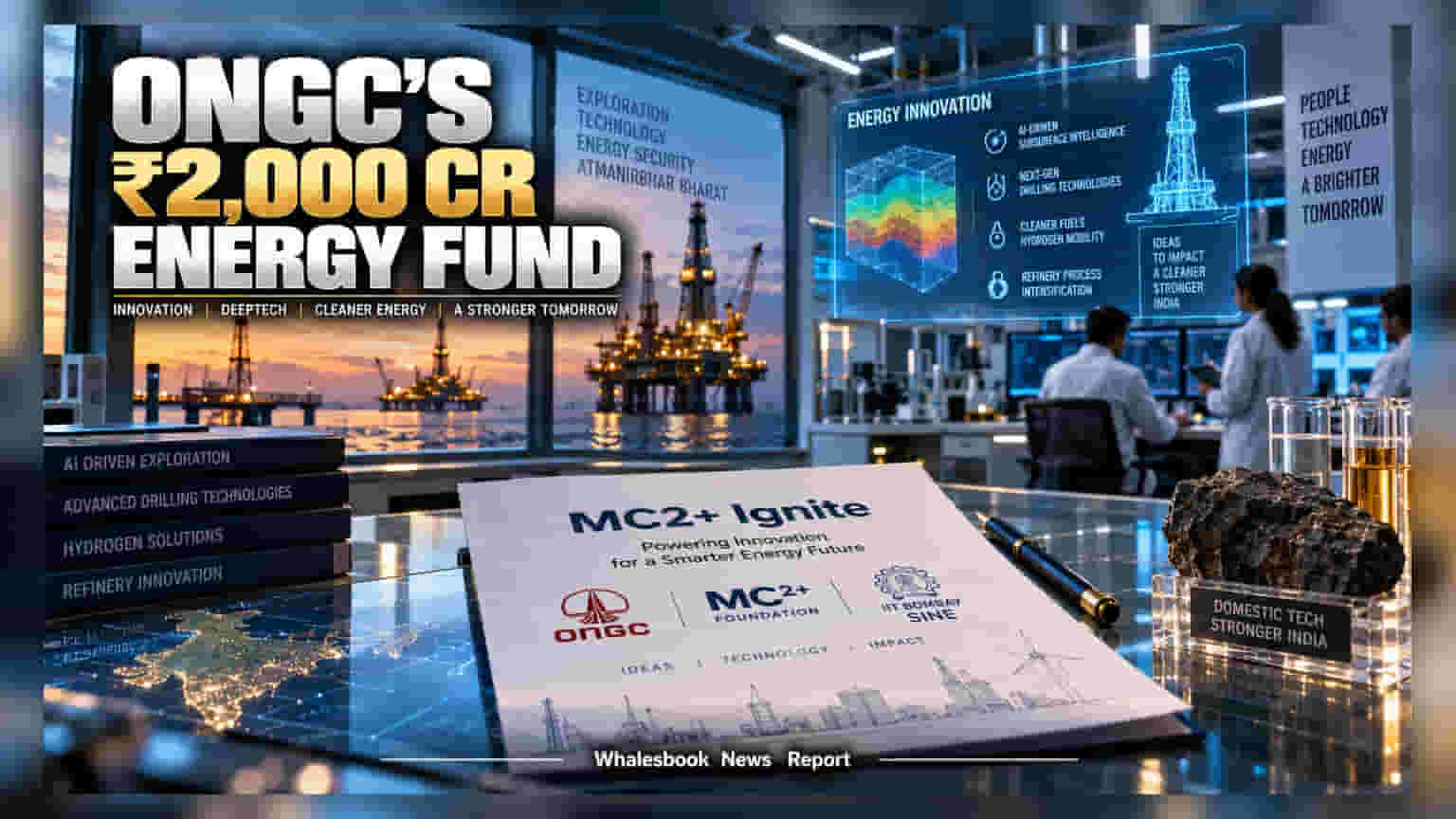
Oil and Natural Gas Corporation (ONGC) has partnered with IIT Bombay and the MC²⁺ Foundation to launch an innovation initiative for energy-sector startups. Part of a larger ₹2,000 crore industry fund, this program aims to improve R&D in areas like deepwater exploration and hydrogen mobility. For investors, the move highlights an effort to modernize operational technology, though the long-term impact will depend on the successful integration of these startup solutions into PSU projects.
Oil and Natural Gas Corporation (ONGC) has entered a strategic partnership with the MC²⁺ Foundation and IIT Bombay’s Society for Innovation and Entrepreneurship (SINE) to foster deeptech innovation in the energy sector. The initiative is part of a broader industry commitment led by India's state-owned oil and gas companies to establish a ₹2,000 crore fund dedicated to supporting early-stage ventures. The program provides selected startups with up to ₹2 crore in funding—comprised of ₹50 lakh in convertible grants and ₹1.5 crore in milestone-based support.
The energy giants, including ONGC, IOCL, BPCL, HPCL, and GAIL, aim to target high-impact areas such as AI-driven subsurface intelligence, drilling technologies, refinery process intensification, and hydrogen mobility. By creating this pathway, the energy majors hope to bypass traditional procurement bottlenecks that often prevent small, innovative firms from becoming vendors to large PSUs.
From a financial perspective, this initiative serves as a strategic R&D investment rather than a core profit driver. ONGC reported a standalone net profit of ₹17,034 crore for the first quarter of fiscal year 2027. While a ₹2,000 crore industry fund is significant for the startup ecosystem, it remains modest when compared to the company’s massive capital expenditure plans, such as its ₹1 lakh crore investment target for deepwater exploration over the next five years. For investors, the fund illustrates a shift toward sourcing domestic technology to potentially lower long-term operational costs and improve drilling efficiency in complex projects.
A key challenge for the oil sector has been the high entry barrier for new technology providers. Strict vendor registration rules historically favored established incumbents, which effectively stifled the adoption of cutting-edge tech. The collaboration with IIT Bombay is designed to create a more agile ecosystem where startups can test their solutions in real-world scenarios. The ultimate measure of success for this initiative will not be the amount of funding deployed, but whether these technologies can be scaled and integrated into ONGC’s day-to-day operations.
Investors should remain aware of the inherent risks associated with this approach. Startup investments are speculative, and there is no guarantee that these ventures will succeed or be applicable at the scale required by a company the size of ONGC. Furthermore, the company’s financial performance remains heavily tied to volatile global crude oil and gas prices, as well as potential under-recoveries in its refining and marketing segments. Investors may track the progress of this initiative by monitoring any subsequent exchange filings regarding technology adoption, pilot project outcomes, or broader collaborative investments by the participating PSUs.