

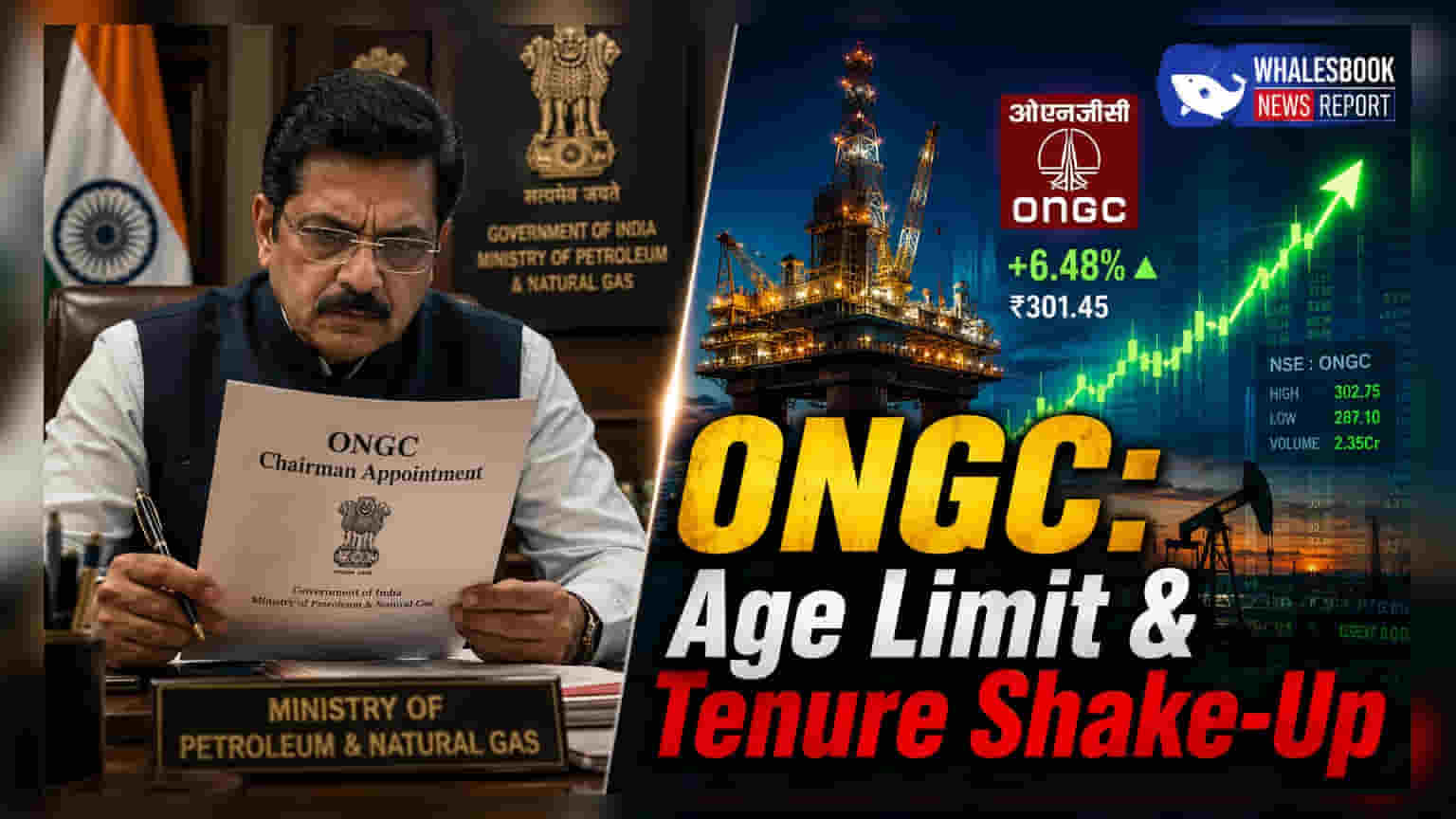
The government has updated the appointment rules for the next ONGC chairman, raising the entry age limit to 59 years with a fixed three-year term extendable to five. This change widens the candidate pool for the state-run oil major as it seeks leadership stability ahead of the current chairman's retirement in December 2026.
What Happened
The Indian government has revised the eligibility criteria for the position of Chairman and Managing Director at Oil and Natural Gas Corporation (ONGC). Under the new guidelines, candidates up to 59 years of age are now eligible to apply for the role. The appointment will feature a fixed three-year term, which can be extended by two additional years based on performance. This change creates a path for individuals to serve beyond the standard retirement age of 60, provided the extension is on a contractual basis. The current chairman, Arun Kumar Singh, is scheduled to complete his term on December 7, 2026.
A New Selection Path
Unlike the typical recruitment process managed solely by the Public Enterprises Selection Board (PESB), the Ministry of Petroleum and Natural Gas has opted for a search-cum-selection committee to oversee this appointment. This committee structure is designed to evaluate a wider range of candidates who might otherwise have been excluded under traditional rules regarding residual service. The move effectively prioritizes leadership experience and talent acquisition over the standard age-based retirement policies usually applied to Central Public Sector Enterprises.
Context on Leadership Stability
This is not the first time the government has adjusted rules to retain or appoint leadership at ONGC. In 2022, similar relaxations were utilized to appoint the current leadership, acknowledging the specialized nature of managing India's largest oil and gas exploration company. By allowing for a fixed, extendable tenure, the government aims to ensure that the head of the company has sufficient time to oversee long-term energy security projects and capital-intensive exploration initiatives that often span several years.
Why Leadership Matters for ONGC
For shareholders and stakeholders, the stability of the management team is critical given the company's massive capital spending on exploration and production. ONGC is currently tasked with aggressive targets to increase domestic oil and gas output to reduce India's import dependency. Any leadership transition involves managing ongoing projects, negotiating government royalties, and navigating energy price fluctuations. A clear, extended tenure provides the necessary continuity for executing these strategic priorities.
What Investors Should Track
Investors may monitor the progress of the search-cum-selection committee and any formal announcements regarding the final candidate. Additionally, market participants typically observe the management's commentary on production growth targets, investment in deep-water exploration, and the company's ability to maintain healthy profit margins amid volatile global crude oil prices. As the December 2026 transition date approaches, the focus will remain on how the incoming leadership balances operational efficiency with the government's energy infrastructure mandates.