

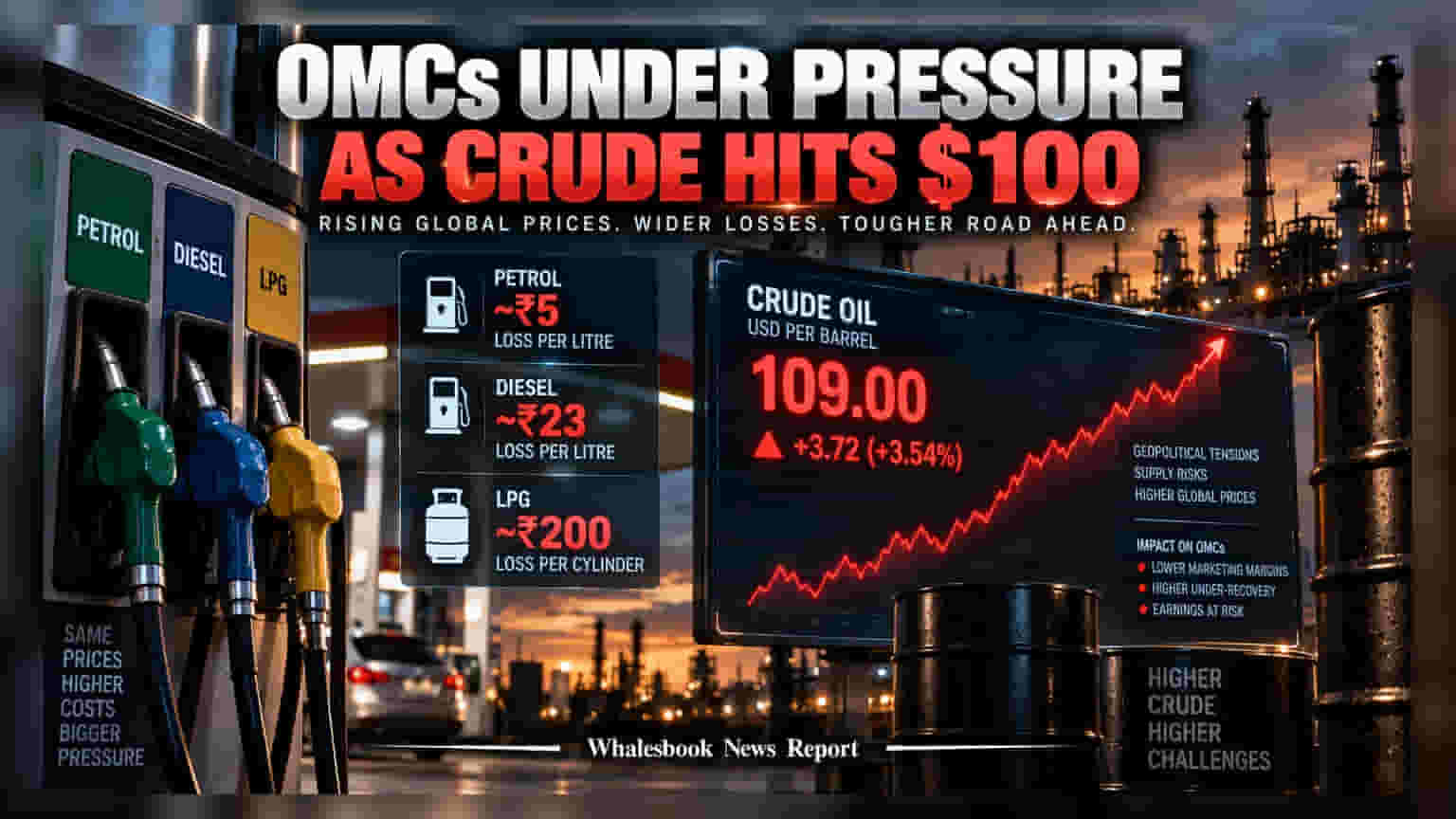
State-owned oil retailers like IOC, BPCL, and HPCL are seeing profit margins shrink as the Indian crude basket crosses $109 a barrel. The gap between procurement costs and stagnant retail fuel prices has led to losses of Rs 5 per litre on petrol and Rs 23 on diesel, with LPG under-recoveries at Rs 200 per cylinder. This energy price surge complicates the earnings outlook for the second quarter of fiscal 2027.
State-owned oil marketing companies (OMCs)—including Indian Oil Corporation (IOC), Bharat Petroleum Corporation (BPCL), and Hindustan Petroleum Corporation (HPCL)—are facing a significant financial hurdle as global crude oil prices have surged past the $100-per-barrel mark. As of September 10, 2026, the Indian crude basket has reached approximately $109 per barrel, putting heavy stress on the refining and marketing margins of these companies.
The core issue for investors is the concept of under-recovery, which occurs when the cost of buying and processing crude oil rises faster than the price at which the company is allowed to sell petrol, diesel, and LPG at retail pumps. Since the last price revision in May 2026, domestic retail fuel prices have remained largely unchanged. As global energy costs move higher, the difference between the cost price and the retail selling price must be absorbed by the companies, directly impacting their profitability.
Financial data indicates that the current margin pressure is severe. Estimates suggest that OMCs are losing roughly Rs 5 per litre on every litre of petrol sold and Rs 23 per litre on diesel. Additionally, domestic LPG cylinders are seeing an under-recovery of approximately Rs 200 per unit. For oil marketing companies, this means that even if they maintain steady sales volumes, the profit generated from retail operations may turn negative, potentially offsetting gains made by their refining divisions.
The recent price spike is largely attributed to geopolitical tensions between the United States and Iran, which have raised concerns about potential supply disruptions in critical transit routes. For domestic investors, this translates into a direct correlation between international crude prices and the financial health of OMCs. While these companies had seen an improvement in marketing margins earlier in the current financial year following price adjustments, the rapid rise in commodity prices creates an earnings risk for the second quarter of the 2027 fiscal year.
The challenge for the management of these firms is balancing profitability with government policy. Historically, OMCs have struggled when the government prevents them from passing the full cost of higher crude prices to consumers to control inflation. If global prices remain elevated, the companies may face pressure to either absorb these losses, which would hurt their balance sheets and cash flow, or seek price hikes, which could be politically sensitive.
Investors should monitor the duration of this current price rally. If crude prices stay above the $100-per-barrel threshold for an extended period, the financial strain will likely deepen, affecting the companies' ability to fund future capital expansion or maintain dividend payouts. The next important update for shareholders will be management commentary regarding their hedging strategies, potential government support, and any future adjustments in domestic retail pricing, all of which will determine the impact on their upcoming quarterly results.