

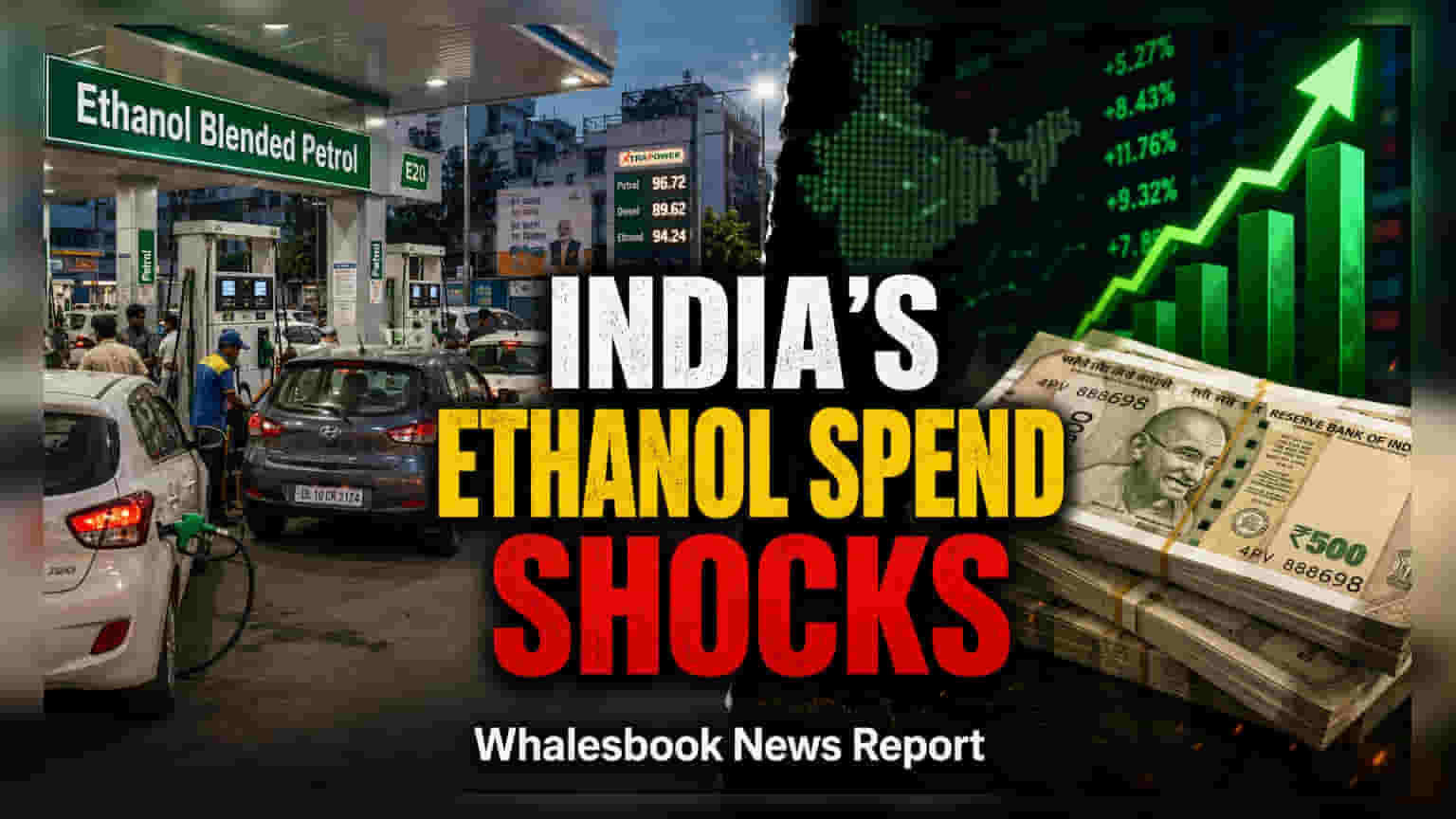
State-run oil companies have invested ₹1.72 lakh crore in ethanol procurement to support India's blended fuel program. With 501 registered manufacturing units, the initiative is helping reduce dependency on traditional fossil fuels. Investors should monitor how these procurement costs influence the profit margins of major fuel retailers in the coming quarters.
Detailed Coverage
Public sector Oil Marketing Companies (OMCs) have channeled ₹1.72 lakh crore into ethanol procurement, reflecting the government's continued focus on the Ethanol Blended Petrol (EBP) Programme. This initiative aims to increase the use of biofuels, reduce crude oil import bills, and support the agricultural sector by using diverse feedstocks like sugarcane and surplus grains.
Scaling Financial Outlay
The financial commitment toward this program has risen steadily. In the Ethanol Supply Year (ESY) 2023-24, OMCs spent ₹48,757 crore. This commitment grew to ₹73,996 crore in ESY 2024-25, with an additional ₹49,577 crore spent in the first nine months of the current supply year up to June 2026. This data underscores a strategic shift toward domestic energy sources, though it also signals significant capital allocation by companies such as Indian Oil Corporation (IOCL), Bharat Petroleum (BPCL), and Hindustan Petroleum (HPCL).
Operational Network and Production
The infrastructure supporting this program has expanded, with 501 ethanol manufacturing units now registered with PSU OMCs as of mid-July 2026. Beyond merely procuring fuel, these oil majors are also involved in internal production. For instance, HPCL Biofuels has reported production of 9,373 kilolitres during the current ESY, while IOCL and BPCL maintain dedicated capacities to meet the rising demand for blended fuel.
Regional Demand and Market Impact
Uttar Pradesh leads the country in the consumption of ethanol-blended petrol, recording 124.98 crore litres in sales during ESY 2024-25. Maharashtra and Tamil Nadu follow, highlighting that demand is geographically spread across major industrial and agricultural states.
Investor Context and Monitorables
For shareholders, the primary impact of this program lies in its effect on the bottom line of OMCs. While the EBP program aligns with national energy security goals, it creates a new cost structure for oil retailers. Investors may want to track the pricing dynamics between OMCs and sugar or grain-based ethanol suppliers. If raw material costs for ethanol rise, or if the government adjusts the fixed purchase price, it could place pressure on the operating margins of these oil companies. Furthermore, while the network of 501 manufacturing units provides supply security, the consistent scaling of procurement requires ongoing capital allocation, which remains a factor for long-term cash flow analysis. Tracking future updates on the blending percentages and the government's periodic review of procurement prices will be essential to gauge the financial health of the sector.