

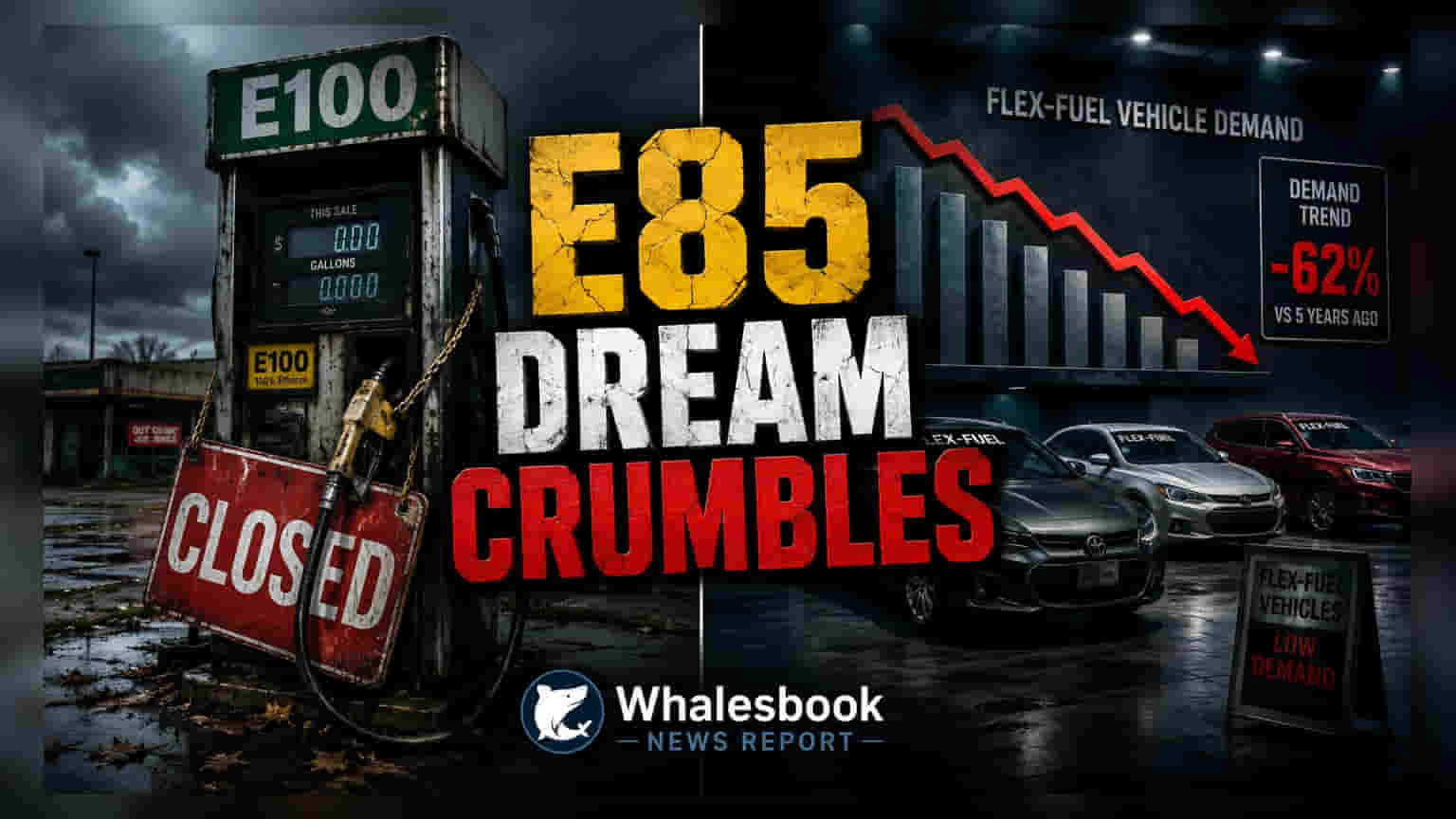
Oil marketing companies are slowing the rollout of E85 fuel stations due to low demand and a lack of flex-fuel vehicles. The pause highlights challenges in India's ethanol-blending roadmap, with current pilot programs showing minimal uptake and concerns over cost efficiency for consumers.
Oil marketing companies (OMCs) in India have decided to scale back their plans for expanding E85 fuel infrastructure, citing a lack of consumer demand and the slow adoption of flex-fuel vehicles. While the government has actively promoted higher ethanol blends to lower India's massive oil import bill, the transition is facing significant practical hurdles on the ground.
Challenges in the Ethanol Roadmap
The shift toward high-ethanol fuels relies on the availability of vehicles that can handle these blends. Currently, the scarcity of flex-fuel vehicles (FFVs) has made the E100 pilot program largely ineffective. Official reports indicate that after testing E100 at nearly 400 retail outlets, the uptake was found to be negligible, leading OMCs to cut the number of active pilot pumps to less than ten. Furthermore, the rollout of E25—a 25% ethanol blend—is also seeing delays as the industry navigates concerns regarding potential engine damage in vehicles that were not specifically built to handle higher ethanol percentages.
Why Expansion Remains on Hold
For OMCs, investing in new infrastructure requires a clear path to profitability and sufficient volume. Current data suggests that the push for E85, which consists of 85% ethanol, is premature because the vehicle base is not yet large enough to support the necessary fuel volumes. Industry experts note that retailers are wary of expanding dispensing infrastructure when there is no certainty that vehicles will be available to use it. Even with government targets aiming for 500 outlets by late 2026 and scaling significantly by 2027, the current count of approximately 48 functional E85 outlets reflects the cautious stance adopted by these companies.
The Pricing and Efficiency Gap
Beyond infrastructure, the economic logic for consumers remains a major barrier. Although E85 is priced at ₹82.12 per litre in Delhi compared to ₹102.12 for conventional petrol, the real-world cost for the user is different. Ethanol has lower energy density than petrol, which means a vehicle consumes more fuel to travel the same distance. This difference effectively increases the real cost of ethanol-blended fuel by an estimated 15% to 25%.
Analysts point out that for ethanol to become a truly competitive alternative, its production cost would need to fall to approximately ₹52-63 per litre. At current price points, there is little financial incentive for the average consumer to choose high-ethanol blends over traditional petrol. Investors should track future updates regarding government subsidies, adjustments in ethanol production costs, and the pace of new flex-fuel vehicle model launches from major automakers, as these factors will determine the timeline for any renewed expansion in ethanol infrastructure.