

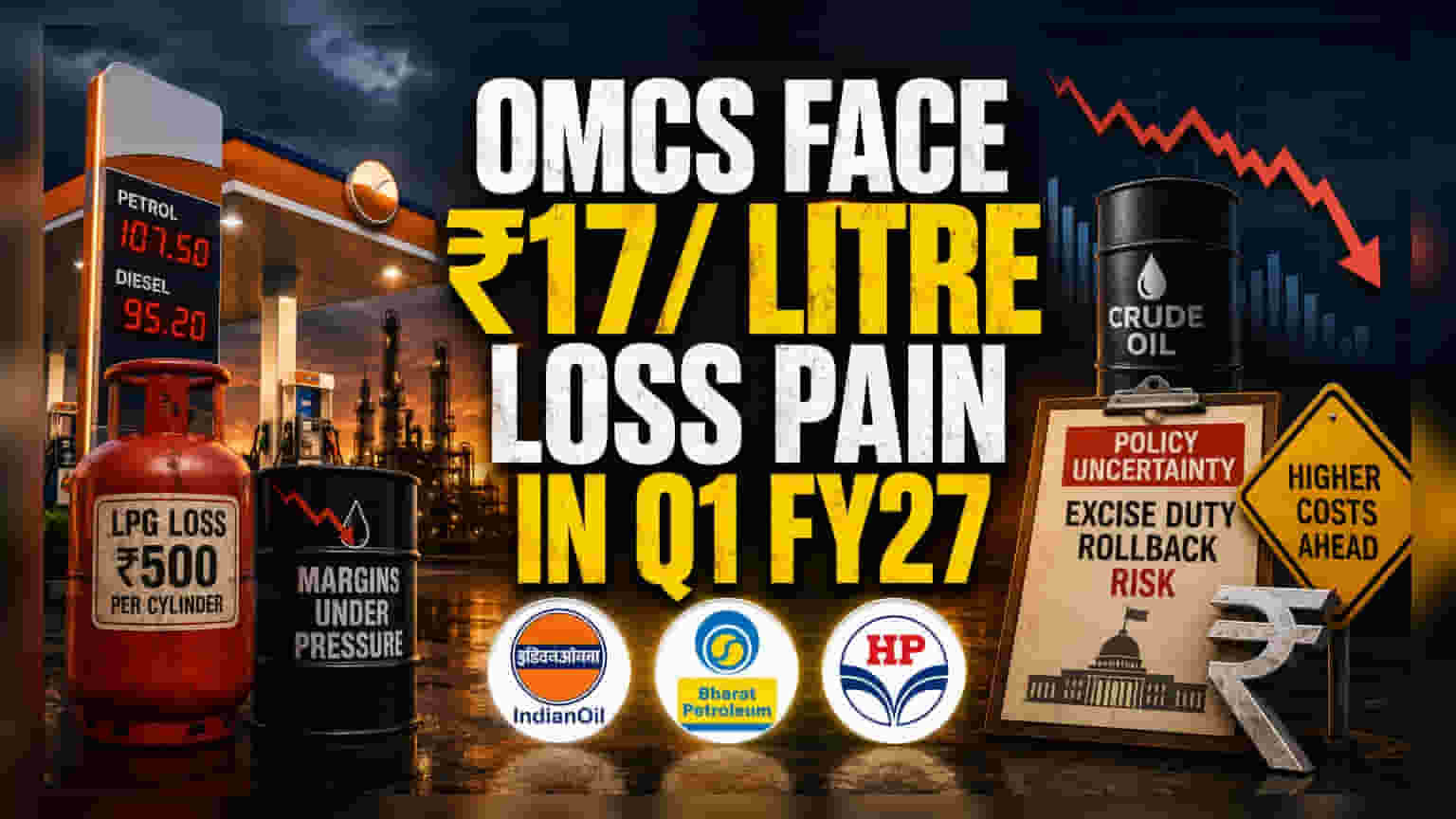
India’s state-run oil marketing companies are facing significant pressure in the first quarter of FY27, with estimated losses of ₹7 per litre for petrol and ₹10 for diesel. High LPG losses and policy uncertainty regarding excise duties have led analysts to downgrade major fuel retailers. Investors are now watching how these companies manage marketing margins amid volatile global oil prices.
What Happened
State-run oil marketing companies (OMCs)—Indian Oil Corporation (IOCL), Bharat Petroleum Corporation (BPCL), and Hindustan Petroleum Corporation (HPCL)—are facing a difficult start to the first quarter of the 2027 financial year. Despite a recent cooling in global crude oil prices, these companies are struggling with 'under-recoveries,' which is the loss incurred when the cost of procuring and processing crude oil is higher than the price at which the fuel is sold in the domestic market.
Recent reports indicate that these companies are facing a combined marketing loss of approximately ₹17 per litre—₹7 on petrol and ₹10 on diesel. This comes even as global Brent crude prices have retreated from their recent peaks, highlighting that the companies were unable to adjust retail prices fast enough to offset the higher input costs experienced earlier in the quarter.
The LPG Burden
Beyond petrol and diesel, the Liquefied Petroleum Gas (LPG) segment remains a significant drag on profitability. Losses for LPG cylinders have been high, with estimates hovering around ₹500 per cylinder for the first quarter. This is largely driven by rising international LPG prices and supply chain disruptions. When international costs for LPG increase—often tracked through Saudi Contract Prices—and the companies are unable to pass the full cost increase to domestic consumers, their profit margins take a direct hit.
Policy Uncertainty and Brokerage Outlook
Adding to the operational pressure is the uncertainty surrounding government policy, specifically the potential rollback of excise duty cuts. During the previous energy crisis, the government had reduced excise duties on fuel to cushion the impact of high global prices.
Analysts at PL Capital have highlighted that this excise duty reduction was likely a temporary crisis management measure rather than a permanent change. The possibility that the government might withdraw this benefit, combined with the continued pressure on marketing margins, has led the brokerage to downgrade ratings for state-run fuel retailers. Specifically, IOCL and BPCL have been downgraded to "Reduce," while HPCL has been moved to a "Hold" rating, reflecting a more cautious outlook on their near-term profitability.
Why Margins Are Pressured
For investors, the core issue is how OMCs balance their role as essential service providers with the need to remain profitable. While a drop in global crude prices is generally good for oil importers, the benefit is not immediate. These companies often deal with a 'lag effect,' where the fuel they sell today was purchased at higher prices weeks or months earlier. Consequently, even when crude prices fall, profitability often remains constrained until the cheaper inventory moves through the system.
What Investors Should Track
Looking ahead, the recovery of these companies will depend on several key factors. First, investors may track whether the companies can improve their marketing margins through retail price adjustments or if they continue to absorb costs. Second, any official communication or policy decision from the government regarding the restoration of excise duties will be a critical monitorable, as this directly affects the tax structure and potential retail pricing. Finally, the quarterly financial results will provide the clearest picture of how these operational losses have impacted cash flow and overall debt levels.