

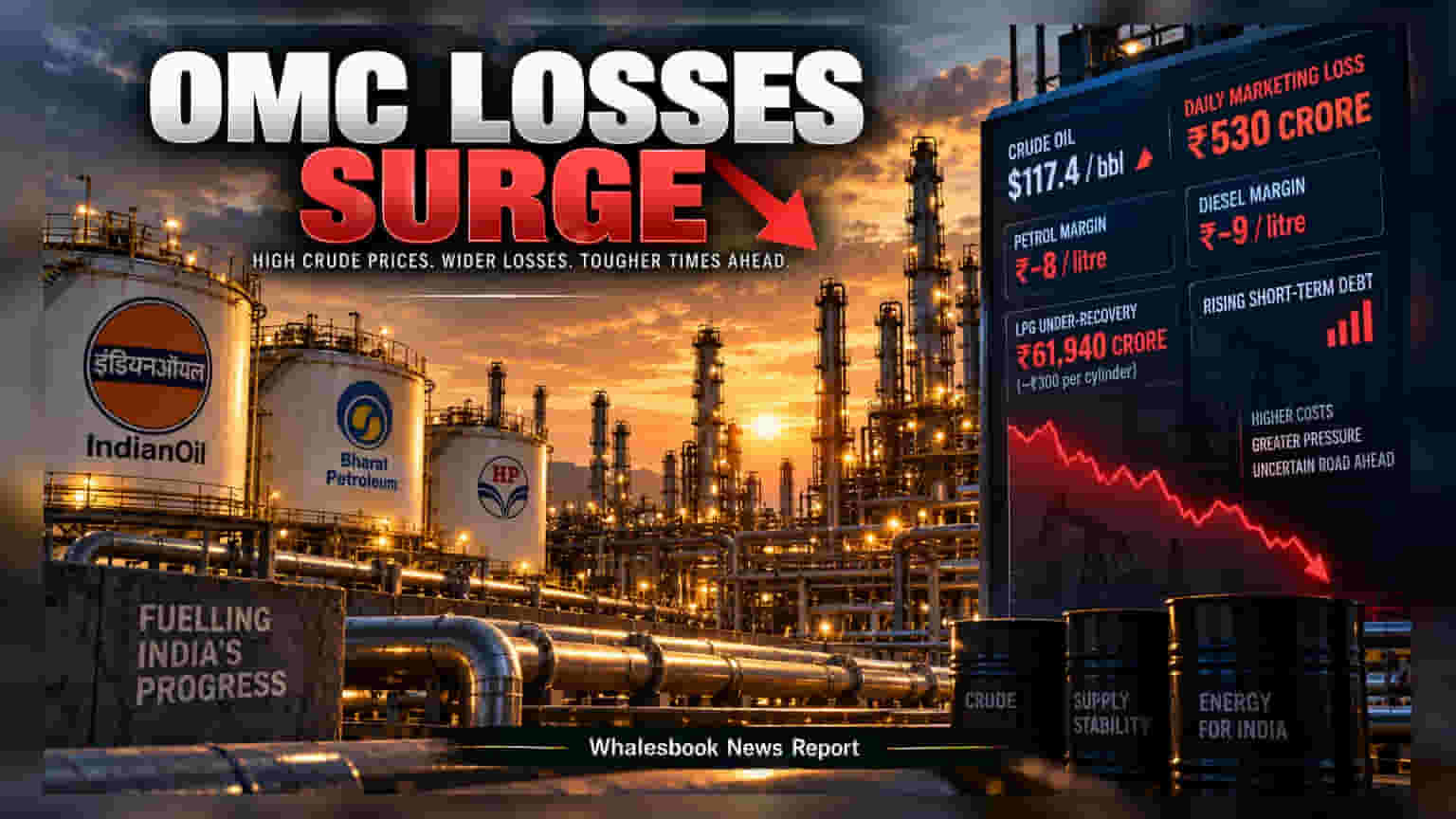
India's state-run oil marketing companies are losing Rs 530 crore daily due to the freeze on petrol and diesel retail prices. With the Indian crude basket at $117.4 per barrel, companies are relying on short-term debt to manage working capital. The sustainability of these losses and potential government intervention remain the key factors for investors to track.
State-run Oil Marketing Companies (OMCs)—including Indian Oil Corporation, Bharat Petroleum, and Hindustan Petroleum—are facing significant financial pressure as they absorb the impact of high global crude oil prices without passing the full cost on to consumers. With the Indian crude basket hovering around $117.4 per barrel, the companies are incurring an estimated daily marketing loss of Rs 530 crore.
The core financial challenge lies in the difference between the cost of crude oil and the capped retail prices of petrol and diesel. According to sector estimates, OMCs are currently seeing a negative margin of Rs 8 per litre on petrol and Rs 9 per litre on diesel. When these companies sell fuel at prices lower than what it costs to import and refine, they accumulate what is known as an under-recovery, which effectively acts as a loss on their books.
While these companies also operate refineries that generate revenue through Gross Refining Margins (GRMs), these gains have not been enough to offset the marketing segment's losses. Although Singapore GRMs have remained above $10 per barrel, providing some relief, the massive marketing losses continue to strain the companies' cash flows. The situation is further complicated by the pricing of LPG cylinders. The cumulative under-recovery for LPG reached Rs 61,940 crore by the end of June, with a loss of approximately Rs 300 per cylinder, further impacting overall profitability.
To bridge the gap between their daily operational expenses and incoming cash, OMCs have increased their reliance on short-term debt. This surge in borrowing is necessary to maintain working capital, but it brings financial risks. Higher debt levels lead to increased interest payments, which can reduce the money available for future infrastructure projects, dividends, or other investments. Investors are keeping a close watch on how long these companies can sustain this borrowing cycle and whether the government will implement measures such as subsidies or allow a revision in retail fuel prices to ease the burden.
The primary focus for investors in the coming months will be the trajectory of global crude oil prices. If prices stay at these high levels without a change in domestic retail pricing, the financial pressure on the balance sheets of these public sector firms will likely continue. Market observers will monitor official announcements for any shift in government policy regarding fuel subsidies or taxes, such as adjustments in excise duties, which could alleviate the liquidity stress on these companies.