

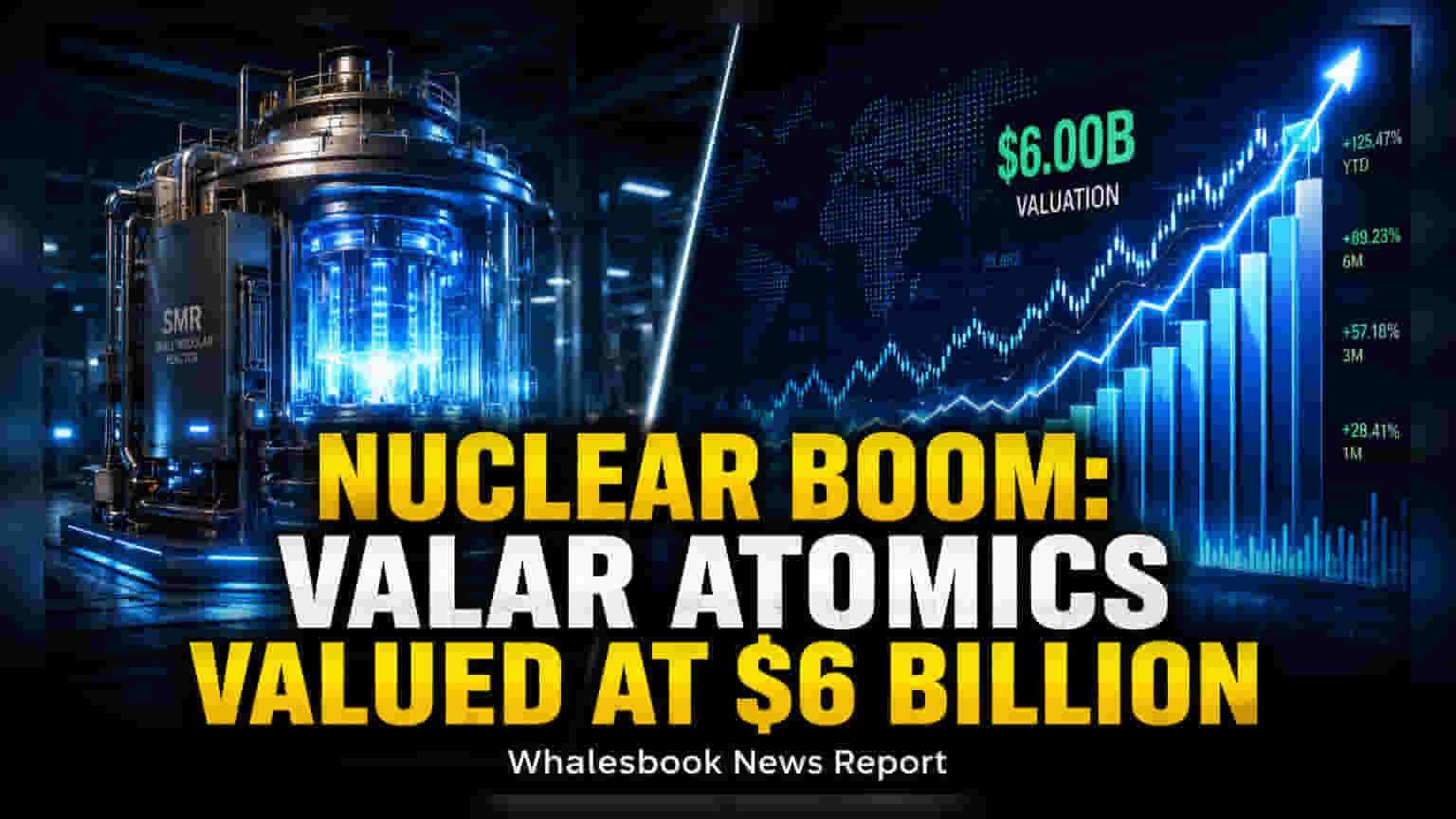
Valar Atomics, a three-year-old nuclear energy firm, is reportedly in talks to raise $1 billion at a $6 billion valuation. The funding aims to support its small modular reactor (SMR) technology, which is increasingly targeted toward powering high-energy AI data centers.
Valar Atomics is reportedly negotiating a new funding round that could value the three-year-old startup at $6 billion. Reports suggest Sequoia Capital may lead this investment, potentially injecting up to $1 billion into the company. This capital raise follows an earlier financing round in March, where the firm secured $450 million in a mix of equity and debt at a $2 billion valuation.
Scaling Nuclear Energy for AI Infrastructure
Valar Atomics specializes in small modular reactors, or SMRs. Unlike massive, traditional nuclear plants that take years to build, SMRs are designed to be compact and produced in factories. This approach is intended to lower costs and reduce the time needed to bring new power capacity online. The company recently highlighted its technology by powering an Nvidia AI chip and has entered into a partnership with the chipmaker to investigate using nuclear energy to meet the massive electricity needs of future AI data centers.
Sector Competition and Regulatory Hurdles
While interest in nuclear energy is rising due to the electricity requirements of AI, the sector remains in its early stages. Valar Atomics faces significant competition from other developers, including Kairos Power and TerraPower, the latter of which is supported by Bill Gates. NuScale Power is another prominent industry peer that has already achieved U.S. regulatory design approval for its SMR technology.
Investors should note that the path to commercial deployment for SMRs is complex. Beyond the engineering challenges, the company has been involved in legal proceedings against the Nuclear Regulatory Commission, specifically regarding how test reactors are licensed and standardized. These regulatory hurdles, combined with the fact that industrial-scale deployment of SMR technology is still unproven at this level, represent significant execution risks. For investors, the next critical updates to monitor include progress on regulatory licensing approvals, the finalization of this funding round, and evidence of the company’s ability to move from experimental setups to large-scale, reliable grid-connected operations.