

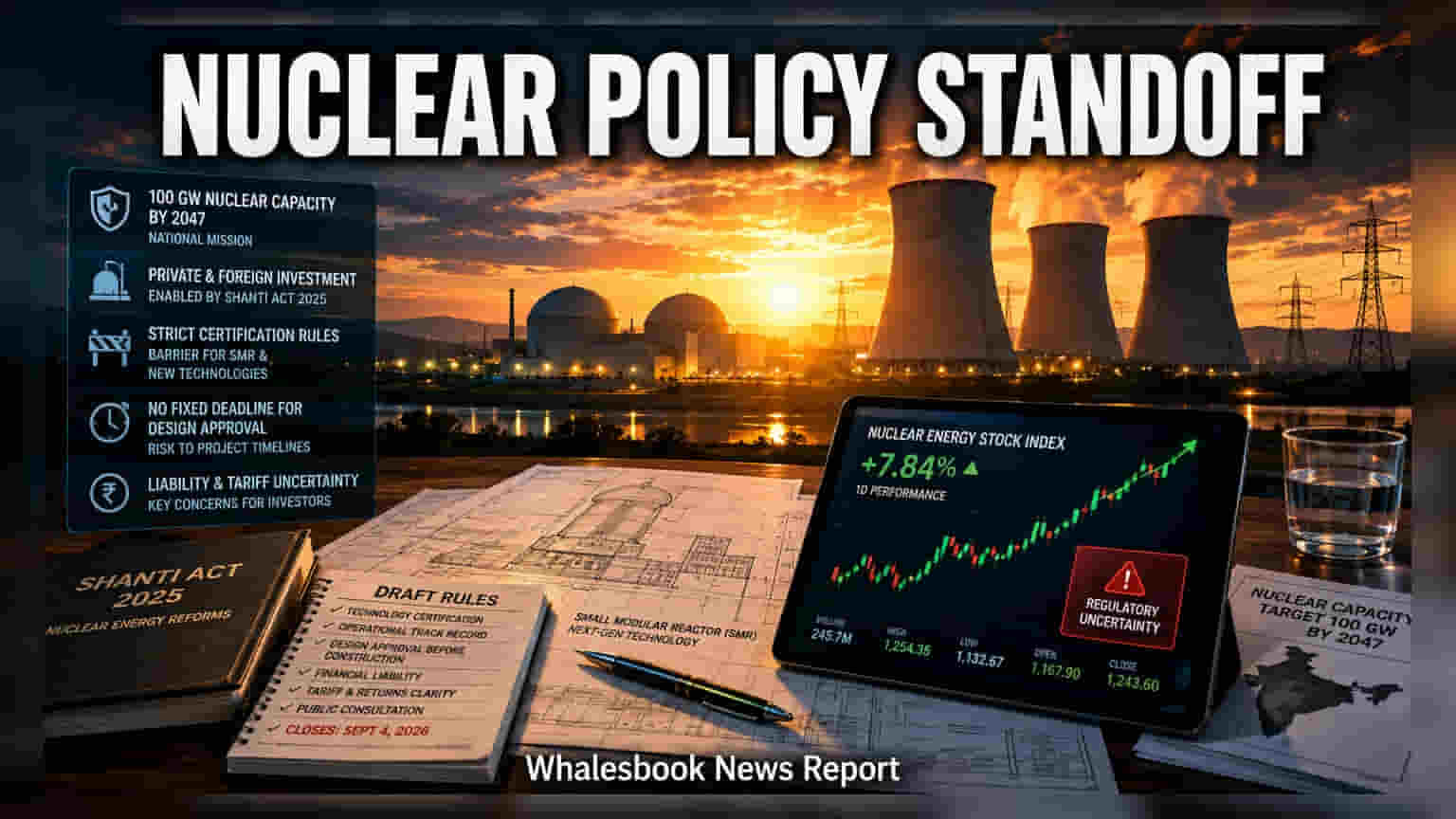
Draft regulations under the 2025 SHANTI Act require foreign nuclear reactor designs to prove operational success before deployment in India. This requirement, aimed at ensuring safety, threatens to limit the entry of advanced, newer technologies and creates uncertainty for major private energy companies looking to help India reach its 100 GW target by 2047.
India’s goal to significantly expand its nuclear energy capacity to 100 GW by 2047 is facing a new regulatory challenge. While the SHANTI Act of 2025 was designed to open the sector to private and foreign investment, draft rules released in August 2026 have introduced strict certification requirements that are causing concern among industry players.
The core issue lies in a mandate requiring any foreign reactor technology to be already certified and currently operational in its home country or another jurisdiction. Industry experts point out that this effectively acts as a barrier for newer, innovative designs, such as Small Modular Reactors (SMRs). Because many SMR technologies are still in early stages of global commercial deployment, they may not meet these strict 'operational track record' requirements. This could narrow the range of technology available to India, potentially forcing the industry to rely only on older, legacy designs.
The regulatory shift also changes the project timeline structure. Under the previous state-run model managed by the Nuclear Power Corporation of India Limited (NPCIL), site and design approvals often happened concurrently. The new framework mandates that construction cannot begin until the regulator grants full design approval, with no fixed deadline for these authorizations. This change risks trapping developers in administrative delays, which could threaten the 2047 expansion timeline.
Major domestic energy players, including Tata Power, Adani Power, Reliance Industries, and NTPC, are closely monitoring these developments as they weigh their entry into the nuclear space. Beyond technology restrictions, these companies are looking for clarity on the financial framework. The current draft lacks specific details on tariff structures, expected returns, and the extent of financial liability for private operators under the new liability framework. With the government shifting significant risk—including financial security requirements for nuclear damage—to private participants, these missing financial details are a major point of hesitation for corporate boards.
Investors and observers should note that the government is seeking feedback on these draft rules, with the public consultation period scheduled to close on September 4. The final form of these regulations, including whether the government eases the certification hurdles for new technologies or provides more clarity on financial liability, will be the next major monitorable for the energy sector. Until these rules are finalized, the pace of private investment in new nuclear projects may remain cautious, as companies balance the long-term potential of the sector against the immediate risks of regulatory uncertainty and raw material supply constraints.