

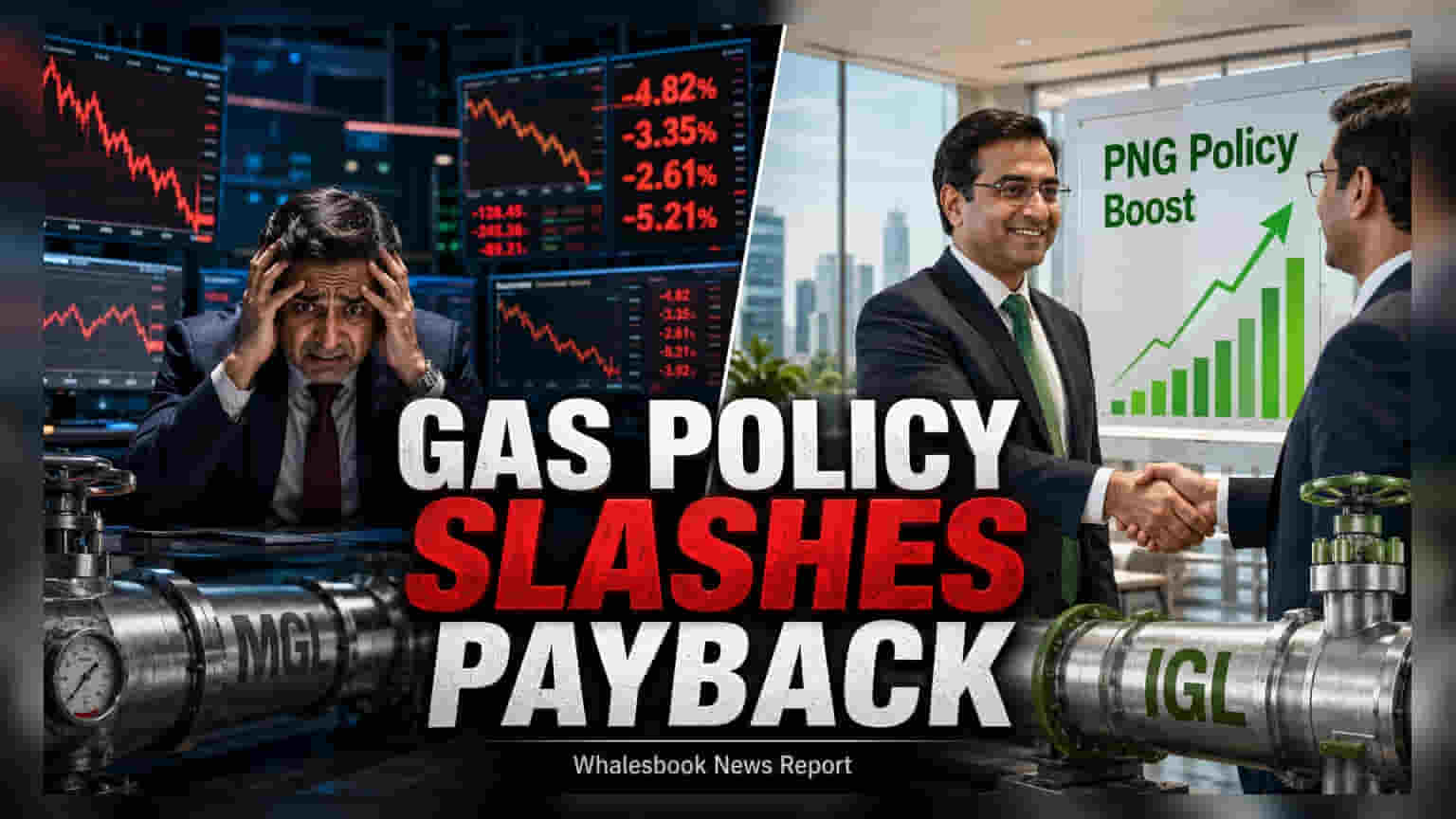
A new government incentive effective September 1, 2026, offers low-cost gas to city gas distributors for every new home connection. This policy could cut the payback time for infrastructure spending from 10 years to three. Shares of companies like Mahanagar Gas, Indraprastha Gas, and Adani Total Gas rose 2-6% following the announcement.
The government has introduced a significant incentive scheme for city gas distribution companies, set to take effect on September 1, 2026. This policy is designed to speed up the rollout of domestic Piped Natural Gas (PNG) connections. For every new home connection made above a specific baseline, distributors will receive an additional 200 standard cubic metres of lower-cost gas under the Administered Price Mechanism. This change is expected to improve the financial health of the sector by reducing the capital spending payback period from roughly 10 years to just three years.
The core benefit for these companies lies in the ability to substitute expensive imported Liquefied Natural Gas with lower-cost local gas. By meeting connection targets, gas distributors can allocate more low-cost gas to their Compressed Natural Gas (CNG) segment, where margins are often higher. This shift in gas sourcing mix is the primary reason for the positive market sentiment. Following the announcement on August 19-20, 2026, shares of key players including Mahanagar Gas, Indraprastha Gas, and Adani Total Gas rallied between 2% and 6%.
Mahanagar Gas is being watched closely by investors as a potential major beneficiary. Analysts note that its recent lower rate of household additions may make the growth threshold easier to clear compared to peers. Indraprastha Gas and Adani Total Gas are also expected to see benefits, though the impact will depend on their ability to accelerate infrastructure deployment within the two defined six-month tranches ending in February 2027.
While the incentive structure offers a boost to profitability, investors should be mindful of the operational realities. Success depends on the companies' actual ability to ramp up connections quickly. The business also faces several risks that remain unchanged by this policy. First, the sector relies on consistent gas availability, and volatility in global LNG prices can still pressure overall sourcing costs. Second, natural gas is currently excluded from the Goods and Services Tax framework, which complicates input tax credit efficiency and affects operating costs. Finally, companies face on-the-ground execution hurdles such as securing Right-of-Way permissions and high upfront deployment costs for pipeline infrastructure in new areas.
The market will now focus on the upcoming quarterly results to see how quickly companies can convert this policy support into actual connection numbers. The ability of these firms to maintain their margin profiles while scaling up infrastructure will be the key indicator of whether the projected three-year payback period remains realistic.