

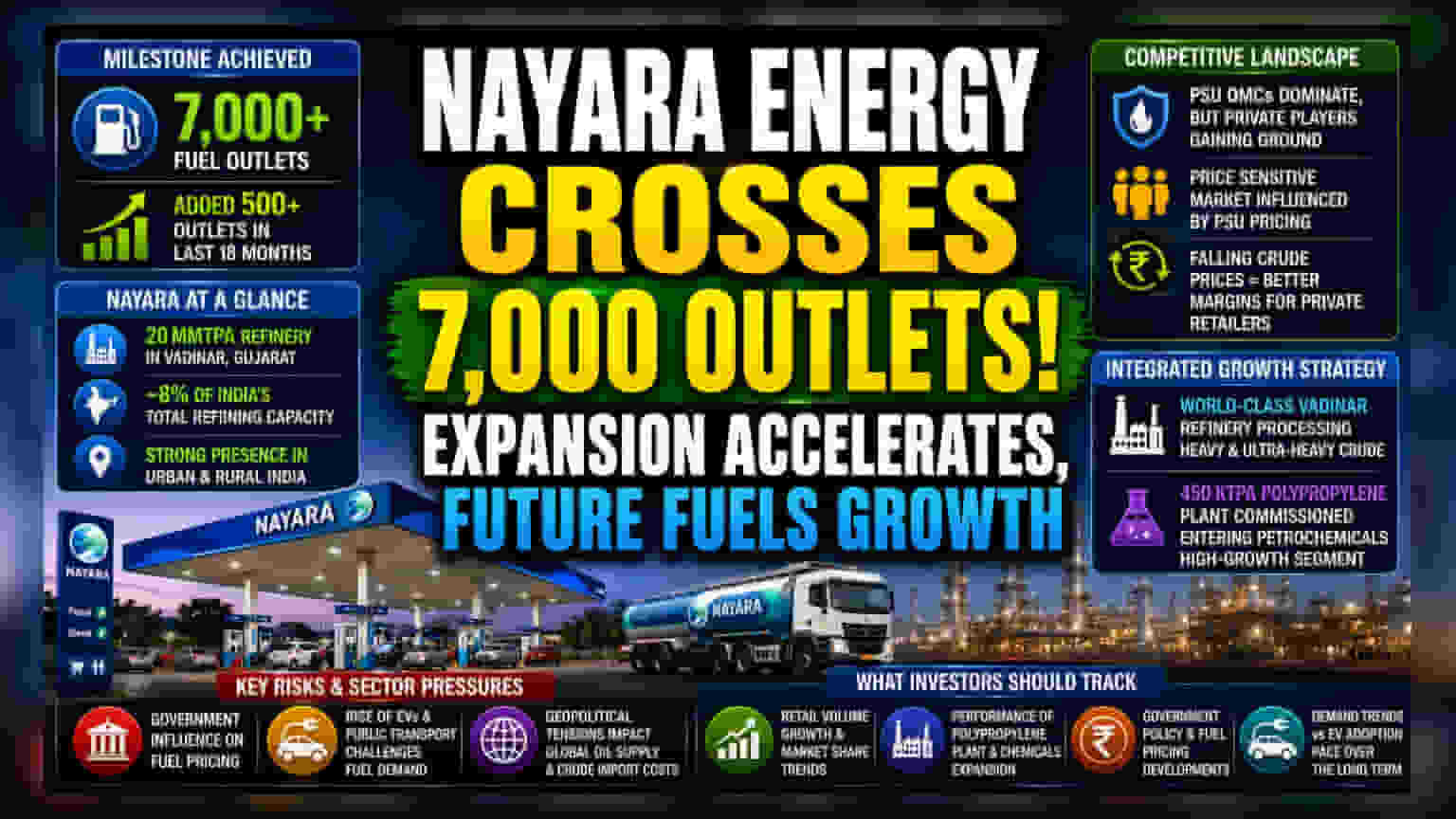
Nayara Energy, backed by Rosneft, has expanded its retail network to over 7,000 fuel stations in India. This rapid growth intensifies competition for public sector oil marketing companies like IOCL, BPCL, and HPCL, as well as private rival Reliance Industries. The company’s move signals a strategic push to capture more retail market share despite ongoing volatility in fuel pricing and global energy trends.
What Happened
Nayara Energy, India's second-largest private fuel retailer, has officially surpassed the 7,000-outlet mark. The company reported the addition of over 500 new fuel stations in the last 18 months, maintaining an aggressive pace of expansion. Headquartered in Mumbai, Nayara operates a massive 20 million metric tonnes per annum (MMTPA) refinery in Vadinar, Gujarat, which accounts for roughly 8% of India’s total refining capacity. This expansion reinforces the company's presence in both urban centers and rural hinterlands, aiming to strengthen its distribution footprint nationwide.
Why This Matters For The Energy Sector
The expansion of Nayara Energy’s retail footprint represents a significant play in India’s competitive fuel market. While public sector oil marketing companies (OMCs) like Indian Oil (IOCL), Bharat Petroleum (BPCL), and Hindustan Petroleum (HPCL) hold a dominant share of the retail market, the growth of private players like Nayara and Reliance-bp (Jio-bp) adds a layer of competition. For investors monitoring the oil and gas sector, Nayara’s ability to scale rapidly despite the challenges of a price-sensitive market is a key indicator of the company's long-term infrastructure strategy.
The Competitive Landscape
The Indian fuel retail market is highly influenced by the pricing decisions of state-run OMCs. Historically, when public sector firms hold pump prices steady during periods of rising international crude oil costs, private retailers often face pressure. In such scenarios, if private players attempt to price their fuel at market rates to protect margins, they may risk losing volume to PSU pumps. Conversely, periods of falling crude prices can create better margins for private retailers. Investors in the broader energy sector often track these market share shifts to gauge the health of downstream oil businesses and the pricing power of these retailers.
Refining And Diversification Strategy
Beyond fuel retail, Nayara Energy is building a vertically integrated business model. Its Vadinar refinery is considered one of the most complex in the world, capable of processing heavy and ultra-heavy crude oil, which often provides a cost advantage. Furthermore, the company has successfully commissioned a 450 KTPA (kilo tonnes per annum) polypropylene plant, marking its entry into the high-growth petrochemical sector. This diversification is a strategic move to insulate the company from the inherent cyclicality and margin volatility of the fuel retail business.
Risks And Sector Pressures
Private fuel retailers in India operate in a complex regulatory and economic environment. One primary risk is the government's indirect influence on fuel pricing, which can impact the profitability of private outlets compared to state-run competitors. Additionally, the rise of electric vehicles and improvements in public transport infrastructure present long-term challenges to the traditional fuel demand model. Geopolitical tensions that affect global oil supply also remain a significant variable for players like Nayara, given the volatility of crude import costs.
What Investors Should Track Next
Investors tracking the energy sector should monitor retail volume growth across both private and public players to understand market share dynamics. Additionally, Nayara Energy’s progress in its petrochemicals expansion, particularly the operational performance of its polypropylene plant, will be crucial. Other monitorables include changes in government fuel pricing policies, shifts in diesel and petrol demand due to economic activity, and the pace of EV adoption, which will define the long-term utility and profitability of these large retail networks.