 Whalesbook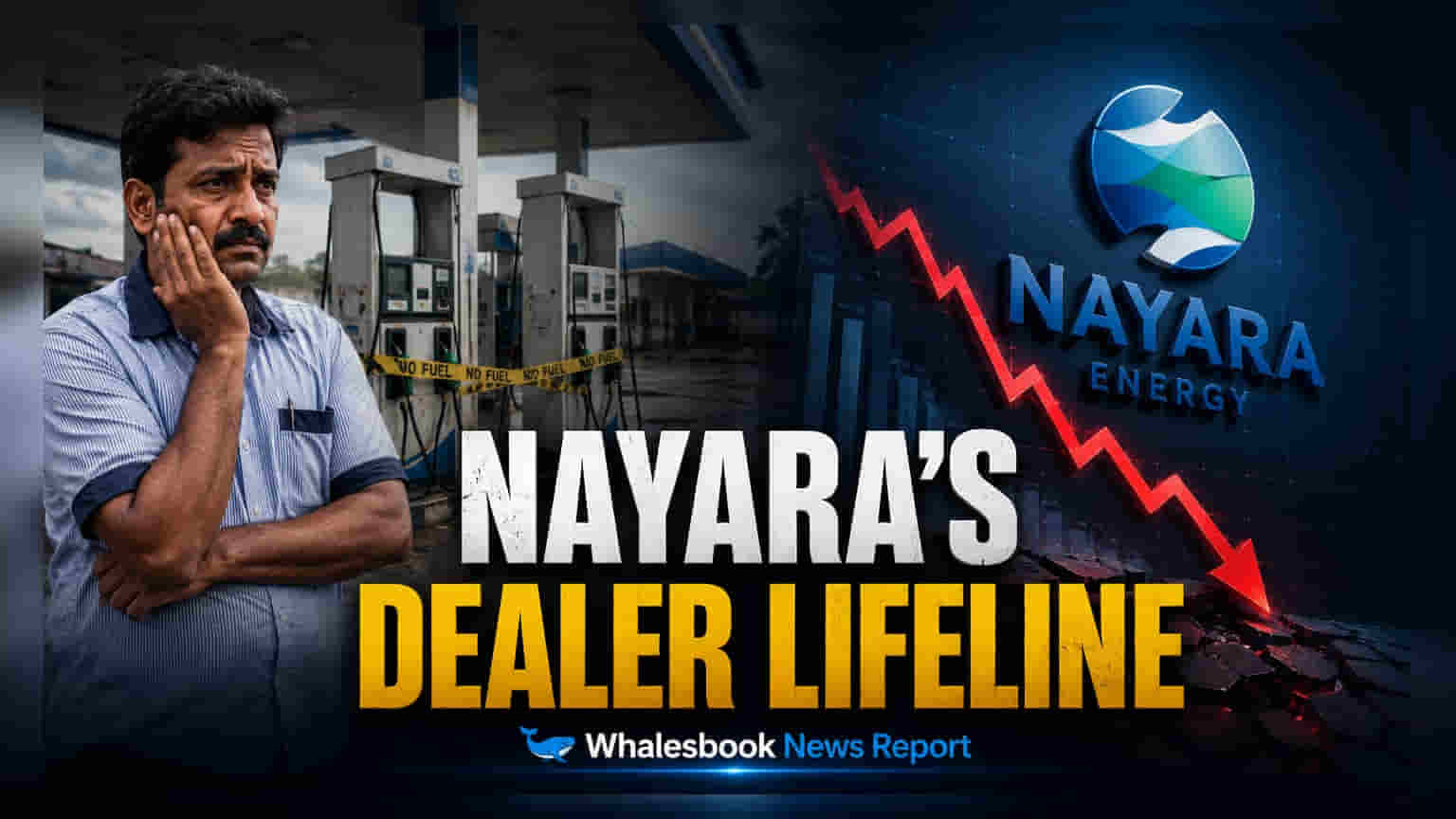


The Operational Strain
The move to compensate dealers for volume shortfalls is a reactionary measure to acute supply chain inconsistencies that have forced private retailers to operate far below capacity. While the incentive program stabilizes dealer cash flow, it highlights a fundamental inability to maintain consistent product distribution. Private entities like Nayara are currently caught between rising procurement costs and the retail pricing discipline imposed by public sector behemoths like Indian Oil Corporation and Bharat Petroleum, which benefit from implicit government oversight and broader cross-subsidization strategies.
The Pricing Disparity and Market Share
Maintaining a price delta of approximately ₹5 per litre above state-run pump prices effectively makes private fuel retail a premium product in a price-sensitive market. Unlike public-sector companies that can absorb inventory losses through upstream exploration and production gains, private retailers lack such extensive integrated hedging. Recent trends suggest that the consistent price wedge is driving volume migration toward public outlets, rendering the current dealer support scheme a temporary liquidity bridge rather than a sustainable commercial solution. Without a normalization in supply logistics, these compensation outlays threaten to erode the company's own balance sheet integrity.
Structural Weaknesses and Regulatory Risks
From a risk perspective, the reliance on ad-hoc dealer support points toward a fragile distribution network. If supply disruptions persist, the long-term viability of these independent retail sites remains in jeopardy. History shows that when private players fail to achieve scale parity with state incumbents, dealer loyalty rapidly degrades, often leading to mass outlet closures. Furthermore, the company remains highly susceptible to shifts in international crude benchmarks and the Russian export sanctions environment, which complicate procurement. Regulatory authorities have consistently favored price stability for the end consumer, providing little relief for private players seeking to pass on the full cost of imported fuel, thereby ensuring that margin compression remains a persistent structural hurdle for the foreseeable future.
Future Outlook
Market analysts expect that the competitive environment will remain skewed in favor of public sector marketing companies as long as the current pricing policy persists. Unless there is a significant change in the government’s approach to retail fuel pricing or a radical shift in global refining margins, Nayara Energy will likely continue to face a difficult trade-off between market share preservation and the fiscal cost of keeping its retail network solvent. The focus remains on whether the company can secure more efficient supply lines to reduce the frequency and volume of these emergency support payments.