

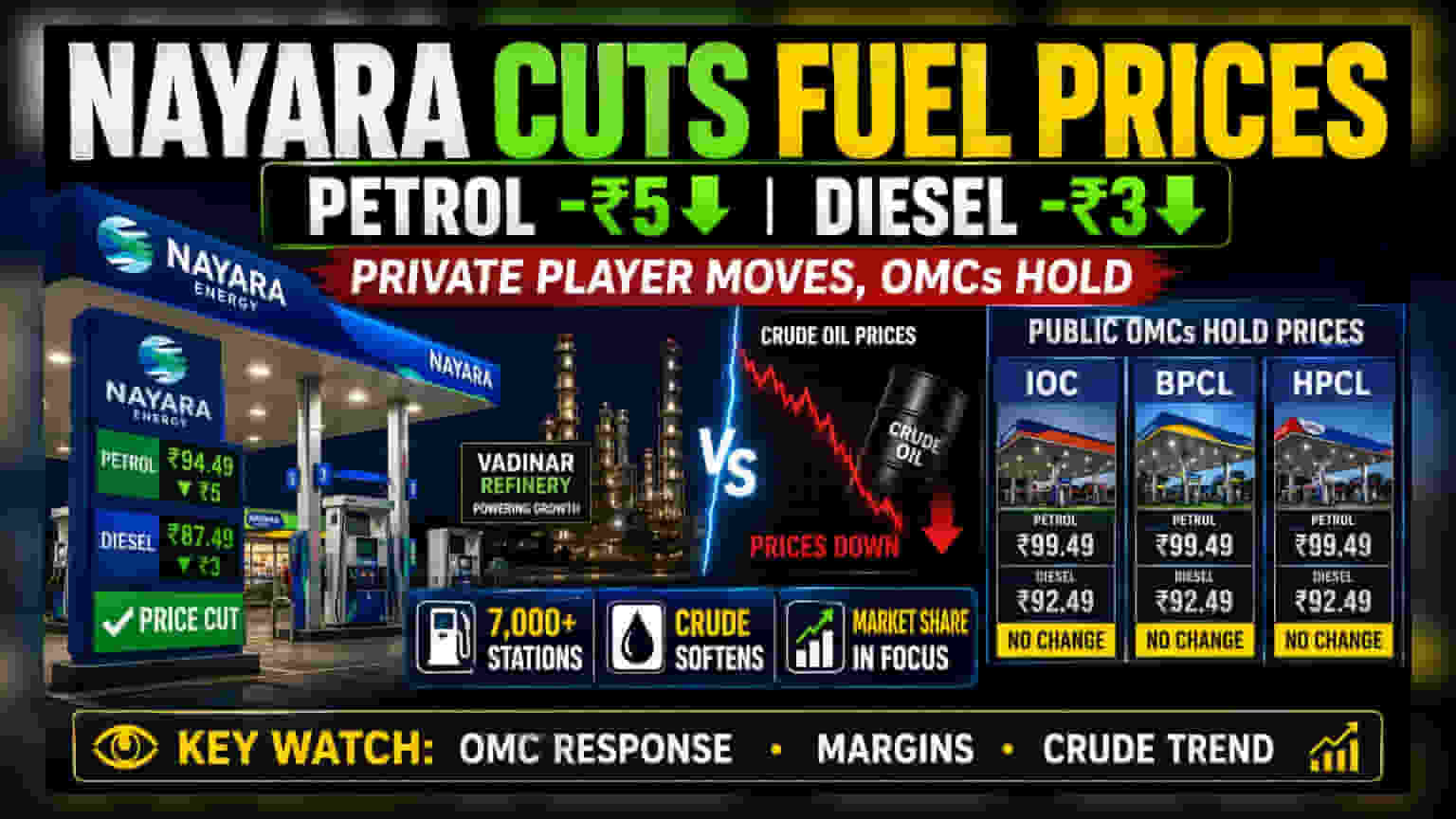
Private retailer Nayara Energy has cut petrol prices by ₹5 and diesel by ₹3 per litre following a drop in global oil costs. While this is the first price reduction in two years for the company, major listed state-owned retailers like IOC, BPCL, and HPCL have kept their prices unchanged. Investors should watch if this gap in pricing leads to market share changes for the state-run firms.
What Happened
Nayara Energy, a private fuel retailer, has reduced retail prices for petrol by ₹5 and diesel by ₹3 per litre across its national network of over 7,000 fuel stations. This marks the first major price reduction by the company in over two years. The move follows a decline in global crude oil prices, which has been helped by the cooling of tensions in West Asia and the reopening of key maritime shipping routes. Nayara Energy operates a major 20 million tonnes per annum (MTPA) refinery in Vadinar, Gujarat, which recently completed a maintenance turnaround, ensuring the company is well-positioned to manage supply.
The Private vs. Public Dynamic
This price reduction highlights a divergence between private fuel retailers and public sector oil marketing companies (OMCs). Major listed players like Indian Oil Corporation (IOC), Bharat Petroleum Corporation (BPCL), and Hindustan Petroleum Corporation (HPCL) have maintained their current fuel prices. These three companies collectively control over 90% of India's retail fuel market.
For investors, the key difference lies in the business models. Nayara Energy is a private, unlisted company and operates with more flexibility in its pricing strategy. In contrast, state-owned OMCs are often subject to government policy influence regarding retail fuel pricing, especially during periods of high volatility. While the state-run companies previously raised prices by ₹7.50 per litre in May to cover rising costs, they have not yet mirrored Nayara's recent cuts.
Impact on Listed Oil Marketing Companies
Investors in IOC, BPCL, and HPCL should track this development closely. If the gap between private and public fuel prices persists, it could influence consumer behavior. Historically, price differences at the pump can cause retail customers to shift volumes from public sector stations to private ones.
If the state-owned retailers choose to maintain higher prices to protect their marketing margins—the profit they earn on every litre of fuel sold—they risk losing market share to private players like Nayara. However, if they decide to match the price cuts to keep customers, it could put pressure on their own profit margins, particularly if global oil prices rise again or if under-recoveries occur.
Financial and Operational Context
Nayara Energy’s decision is backed by a normalization of supply routes and a drop in raw material costs for refining. The company's Vadinar refinery is a crucial part of its business, and its operational status directly affects its ability to offer competitive pricing. For listed OMCs, the situation is different as they balance refining profits with retail marketing responsibilities. Investors should monitor how the government and OMC management teams respond to this shift in the coming weeks.
What Investors Should Track
- Market Share Data: Watch for any reports indicating a shift in fuel sales volume from public sector pumps to private retailers.
- OMC Response: Monitor any statements or price revisions from IOC, BPCL, and HPCL regarding retail fuel rates.
- Marketing Margins: Check quarterly results for updates on whether marketing margins for OMCs are under pressure due to competition or cost factors.
- Crude Oil Trends: Keep an eye on global crude oil prices, as sustained drops provide more room for companies to cut retail prices without hurting profitability.