

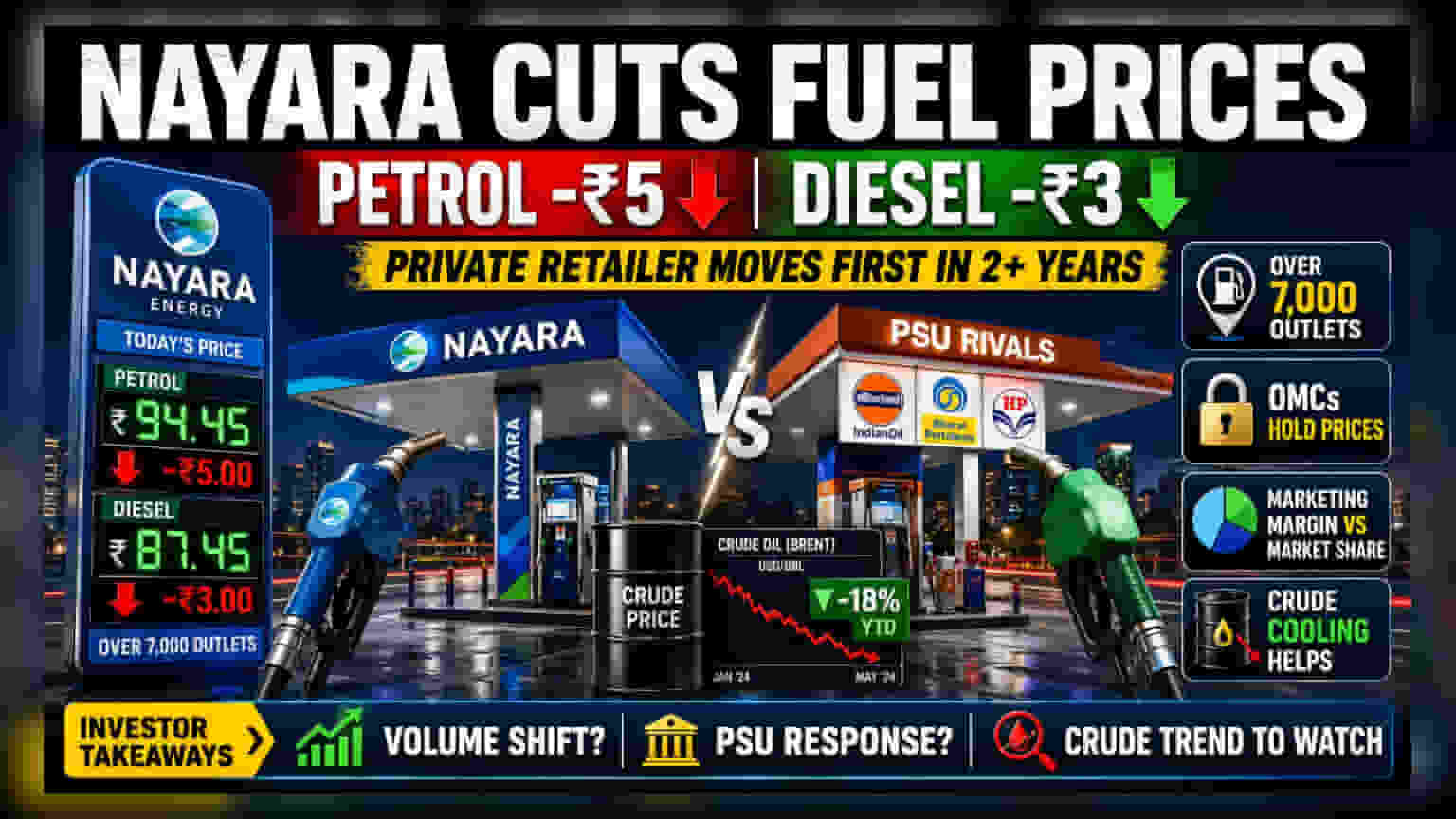
Nayara Energy has reduced petrol prices by Rs 5 and diesel by Rs 3 per litre across its retail network. This is the first fuel price cut in India in over two years, driven by lower global oil costs. While Nayara has adjusted rates, major state-run retailers like IOCL, BPCL, and HPCL are maintaining current prices, creating a price gap in the market.
What Happened
Private fuel retailer Nayara Energy has announced a reduction in fuel prices across its network of over 7,000 outlets in India. Petrol prices have been cut by Rs 5 per litre, and diesel by Rs 3 per litre. This is the first time in more than two years that any fuel retailer in India has lowered pump prices. The company attributed this decision to the recent cooling of international crude oil prices, following a reduction in geopolitical tensions in West Asia and more stable shipping routes through the Strait of Hormuz.
Impact on Market Competition
This move by Nayara Energy creates a noticeable price divergence between private retailers and state-owned Oil Marketing Companies (OMCs) like Indian Oil Corp (IOCL), Bharat Petroleum Corp (BPCL), and Hindustan Petroleum Corp (HPCL). These state-run giants have decided to maintain their existing retail prices. In major cities, such as Delhi, this will lead to a scenario where consumers may see different prices at different fuel stations, depending on the brand.
Why This Matters for Investors
The key metric for investors in the oil marketing sector is the 'marketing margin'—the profit earned on the sale of petrol and diesel at the pump. When global oil prices are low, OMCs usually enjoy higher margins. By cutting prices, Nayara Energy is choosing to prioritize market share and consumer sentiment over immediate profit margin maximization.
For investors in listed OMCs like IOCL, BPCL, and HPCL, this development raises a question about competition. Historically, these state-run companies act as price anchors to manage inflation under government guidance. While they currently hold prices steady, investors will need to watch if Nayara’s move forces these larger players to respond to protect their volume share or if they continue to prioritize margin expansion in a lower-cost environment.
The PSU Differentiator
State-run retailers often operate under different strategic priorities compared to private players. Their pricing decisions are frequently influenced by broader government objectives regarding inflation and macroeconomic stability. Investors should understand that while private players like Nayara can adjust prices more dynamically based on their specific inventory costs and competitive strategy, state-run retailers may follow a more calibrated approach, often retaining higher margins when global prices fall to offset potential losses incurred during high-price periods.
What Investors Should Track
The most important monitorables for the sector are:
Volume Shift: Does Nayara Energy see a significant increase in sales volume compared to its state-run peers following this price cut?
PSU Response: Will state-run retailers match these price cuts in the coming weeks, or will they maintain the current price gap to improve their own profitability?
Global Crude Trends: Fuel retail profitability remains highly sensitive to global crude oil prices. Any sudden spike in tensions in West Asia could reverse the cost benefits that allowed for this price reduction, forcing retailers to hike prices again.