

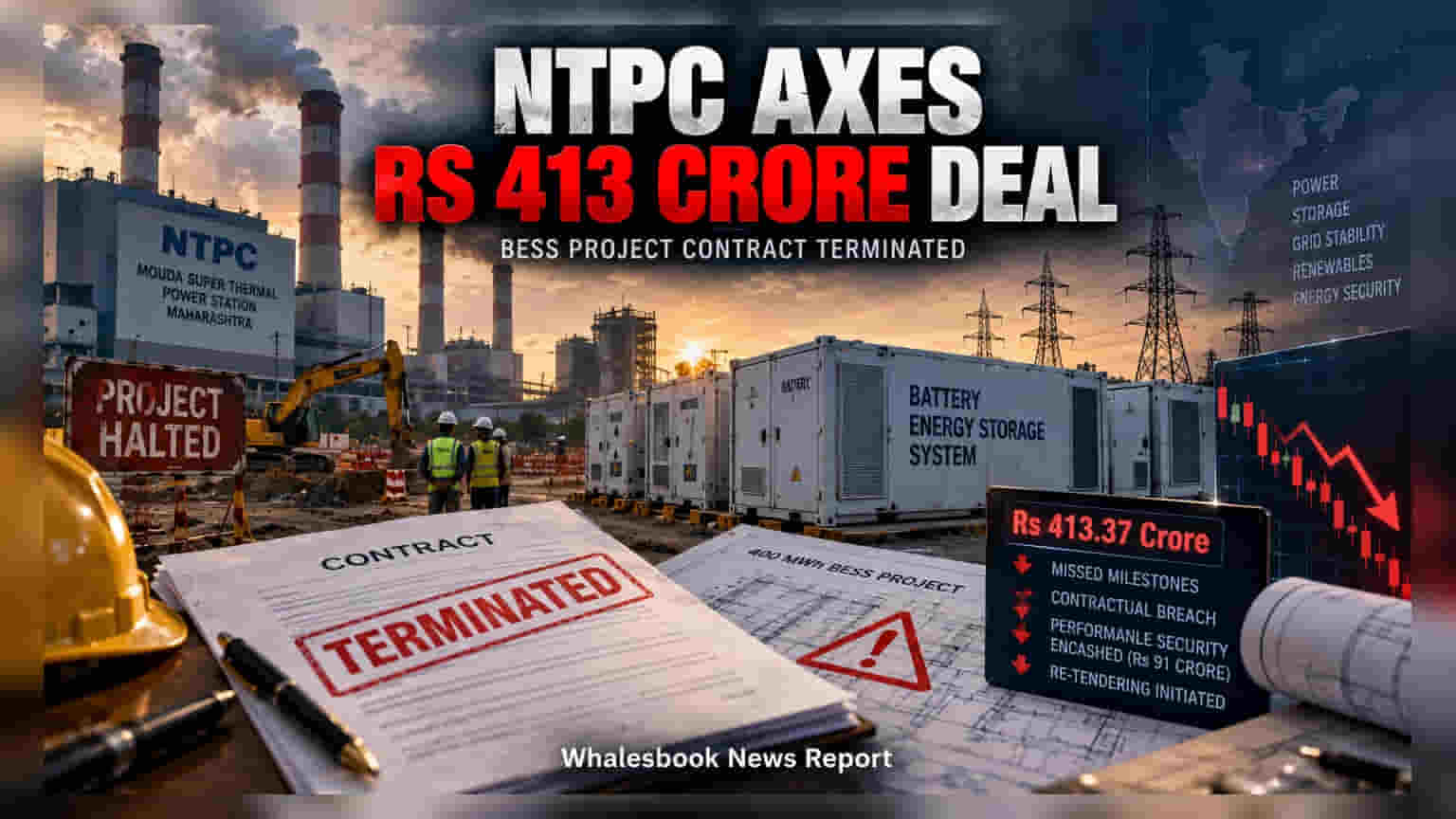
NTPC has terminated a Rs 413.37 crore battery energy storage system (BESS) contract with GR Infraprojects for the Mouda power station in Maharashtra. The power utility has encashed Rs 91 crore in performance securities citing project delays. This development impacts GR Infraprojects' diversification efforts into energy storage and signals potential execution risks for the company.
NTPC Ltd has officially terminated its contract with GR Infraprojects Ltd for a 400 MWh Battery Energy Storage System (BESS) project. The contract, valued at Rs 413.37 crore, was intended for the Mouda Super Thermal Power Station in Maharashtra. The decision follows a failure by the contractor to meet critical milestones and contractual obligations as per the terms agreed upon in March 2026.
As a direct consequence of the termination, NTPC has encashed performance securities totaling approximately Rs 91 crore. The power utility has also begun the process of re-tendering the project, explicitly stating that it will be executed at the risk and cost of the original contractor. In large engineering and construction contracts, this clause means that if the new contractor charges a higher price to complete the work, the original contractor may be held liable for the additional cost.
This project was part of NTPC's broader strategy to integrate battery storage solutions to manage grid stability as its renewable energy capacity increases. For GR Infraprojects, the contract represented a significant move to diversify its revenue streams beyond its core business of road construction and railway projects. Entering the BESS segment requires technical expertise in battery technology and system integration, which differs from traditional civil engineering and road development.
The termination creates a two-fold challenge. For NTPC, the priority is to re-assign the project quickly to avoid long delays in its infrastructure plans. For GR Infraprojects, the situation is more complex. Beyond the immediate financial loss of the security deposit, the company faces uncertainty regarding potential additional liabilities under the risk-and-cost clause if the new contract is awarded at a higher price. Such an event may also influence the company's ability to bid for similar high-tech energy projects in the future.
Investors should closely track the timeline for the re-tender process. A delay in awarding the new contract would suggest extended pressure on the project's overall completion schedule. Furthermore, any upcoming financial disclosures or official statements from GR Infraprojects regarding the contract cancellation, potential legal responses, or impact on its order book will be critical to understand the long-term effect on the company's profitability and its reputation in the energy EPC sector.