

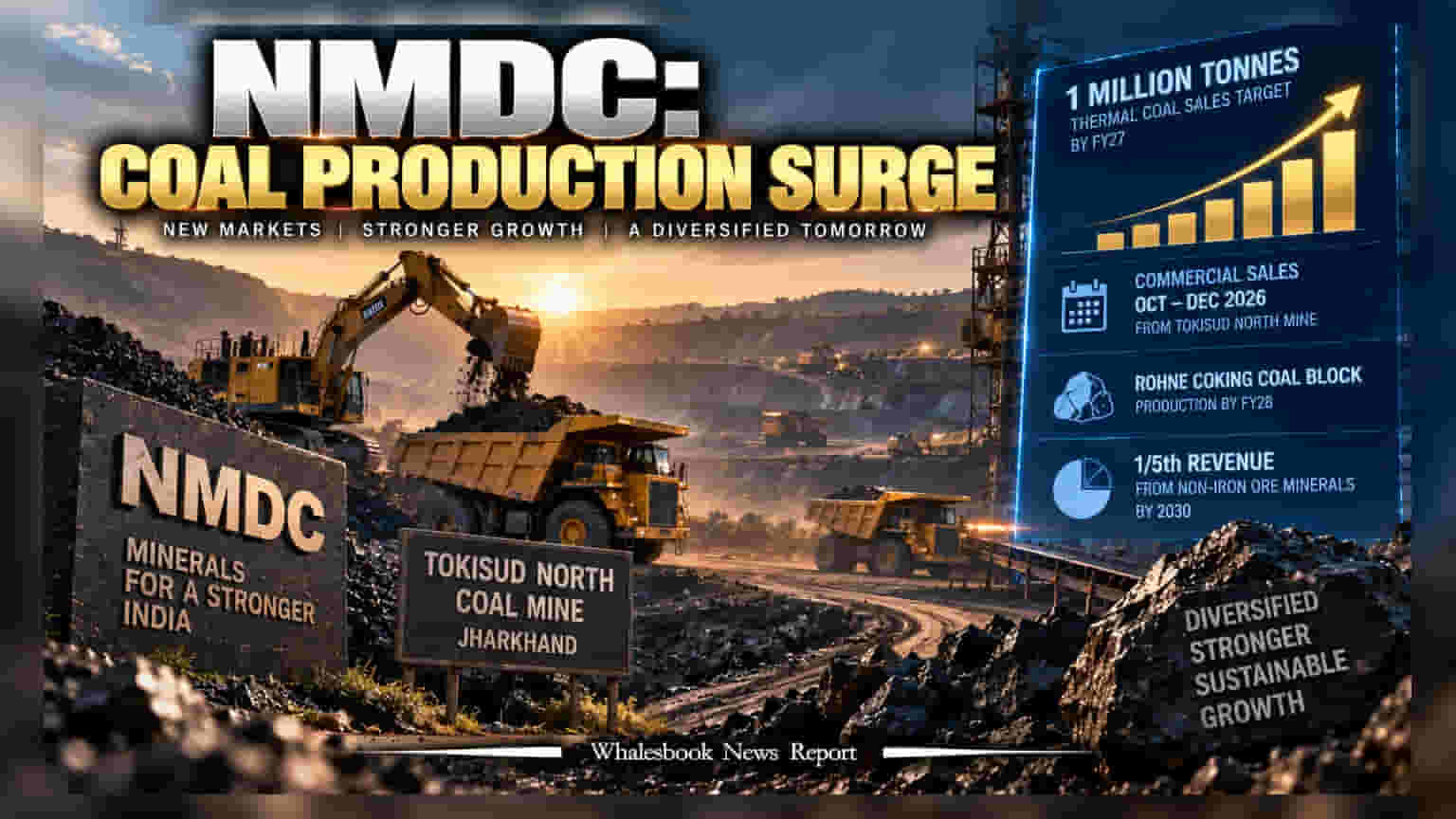
State-owned miner NMDC plans to begin selling thermal coal from its Jharkhand-based Tokisud North mine between October and December 2026. This move is part of the company’s long-term strategy to generate 20% of its revenue from non-iron ore minerals by 2030. The firm is also preparing to develop the Rohne coking coal block to support the domestic steel supply chain.
NMDC, India’s largest iron ore producer, is set to enter the commercial coal market. The company confirmed that it will begin selling thermal coal from its Tokisud North mine in Jharkhand during the October-December 2026 quarter. This initiative marks a significant step in the miner’s strategy to reduce its heavy reliance on the iron ore segment, where it currently accounts for about 20 percent of total national production.
The company has set an ambitious target to sell 1 million tonnes of thermal coal by the end of the 2027 financial year. Having launched initial mining operations at the Tokisud North site earlier in January 2026, the firm is now moving into the commercial production phase. This expansion is central to a broader long-term goal for 2030: to derive one-fifth of the company's total revenue from minerals other than iron ore.
Beyond thermal coal, NMDC is also planning to deepen its involvement in the steel value chain. The company is working on the development of the Rohne coking coal block, with plans to start production by the 2028 financial year. Coking coal is a vital raw material for steel mills, and this move could potentially integrate NMDC more closely with domestic steel manufacturers.
The company’s ability to fund these new ventures is supported by its recent financial performance. In the 2026 fiscal year, NMDC reported a record revenue of Rs 31,554 crore, providing a strong cash foundation for its capital spending plans. These investments are essential for maintaining growth, as the firm simultaneously aims to reach an iron ore production capacity of 100 million tonnes annually by 2030.
Investors should, however, note the risks inherent in such a transition. Expanding into coal mining involves different operational challenges compared to iron ore, and the company will face exposure to price volatility in global coal markets. Additionally, large-scale mining projects often carry risks of delays and cost increases. Changes in government policy regarding royalty structures or environmental regulations for coal mining could also impact profitability. The success of this strategy will depend on the firm’s ability to execute these projects on time and manage the complexities of a diversified mineral portfolio.