 Whalesbook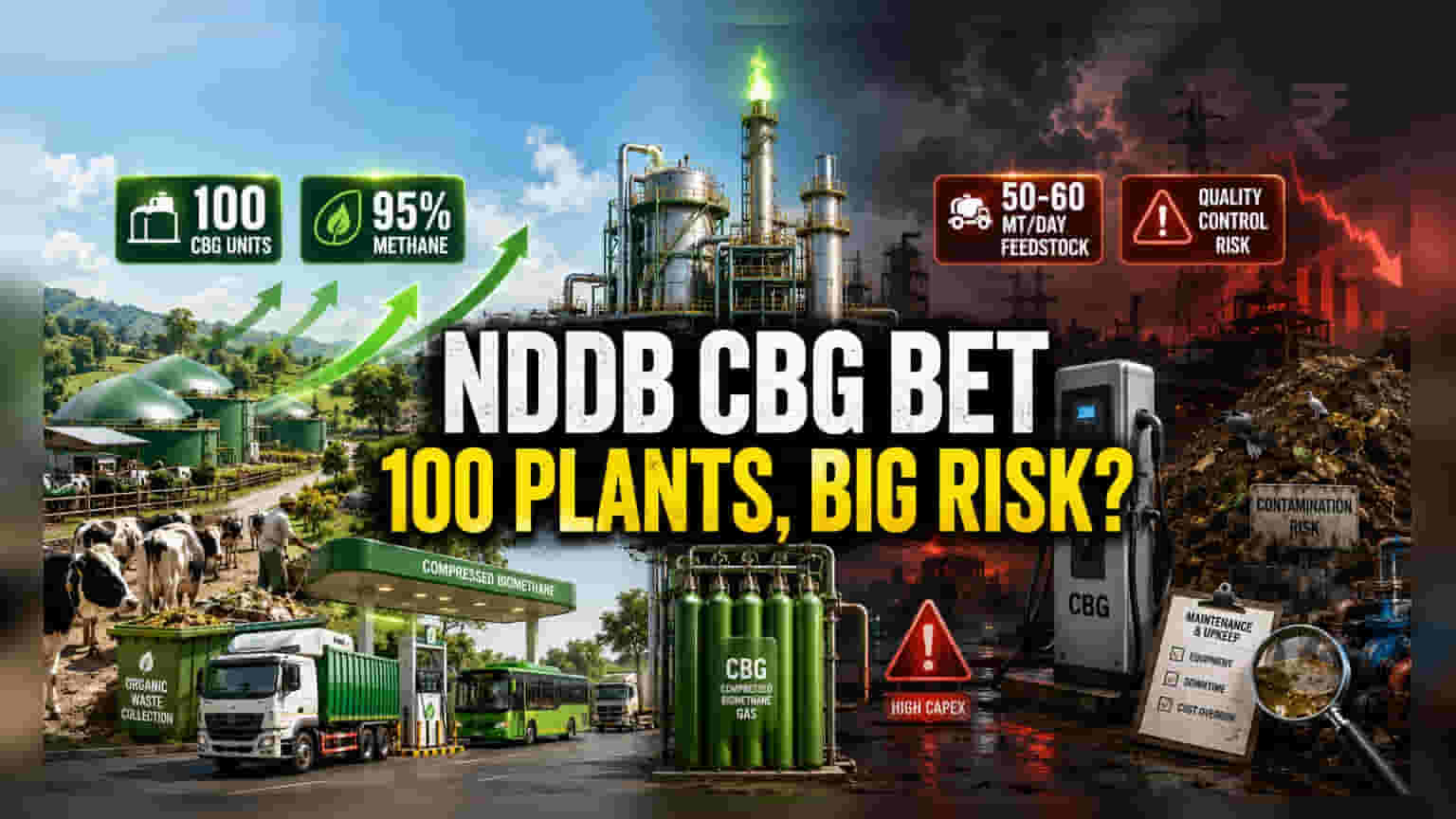


The Operational Catalyst
Scaling to 100 Compressed Biomethane Gas (CBG) units represents a shift from localized pilot programs to a structural attempt at decentralized energy production. By purifying organic waste to 95% methane content, the National Dairy Development Board (NDDB) aims to bypass the grid-dependency inherent in electric vehicle charging infrastructure. The primary driver here is the conversion of raw manure into a high-density, portable fuel source that mirrors the performance metrics of traditional Compressed Natural Gas (CNG). Market participants are watching whether this can achieve consistent energy density at the scale required for automotive adoption.
The Suzuki Financial Backbone
The partnership with Suzuki R&D Center India provides more than just capital; it integrates an automotive manufacturer’s need for future-proof fuel sources with the NDDB’s massive agricultural supply chain. This synergy is designed to create a closed-loop system where Suzuki-linked retail networks supply the fuel, while the agricultural sector provides the feedstock. Historical data from the Banaskantha pilot indicates that centralized processing units require precise daily input—roughly 50 to 60 metric tons—to remain cost-effective. The transition from one successful plant in Gujarat to a nationwide footprint of 100 units introduces complex logistical challenges regarding feedstock collection, transportation costs, and moisture-controlled storage.
The Structural Weaknesses
Despite the optimistic rhetoric surrounding rural income generation, significant risks remain. Decentralized biogas production historically struggles with consistent quality control and feedstock contamination, which can lead to rapid corrosion of storage and compression equipment. Unlike standardized industrial natural gas, CBG production is highly susceptible to biological variances in the raw input, creating a variable quality profile that could potentially damage vehicle engines if not stringently filtered. Furthermore, while the initiative claims to reduce fertilizer import reliance, the economic viability of organic slurry as a commercial product remains unproven at a national scale. Farmers often prioritize synthetic fertilizers for immediate crop yields, and convincing them to switch to bulk organic slurry—which incurs higher transportation costs due to its weight and volume—remains a major barrier to adoption.
Future Outlook and Competitive Position
Broader energy markets are increasingly skeptical of biogas as a direct rival to electrification. While proponents argue that CBG utilizes existing internal combustion engine technology, critics point to the massive capital expenditure required to set up thousands of localized plants compared to the relative ease of high-speed electrical grid upgrades. Institutional analysts are currently monitoring the internal rate of return for the initial Banaskantha units to determine if the model can survive without heavy, long-term subsidies. The success of this 100-plant expansion will hinge less on the technology itself and more on the ability to standardize production across highly diverse regional dairy markets.