 Whalesbook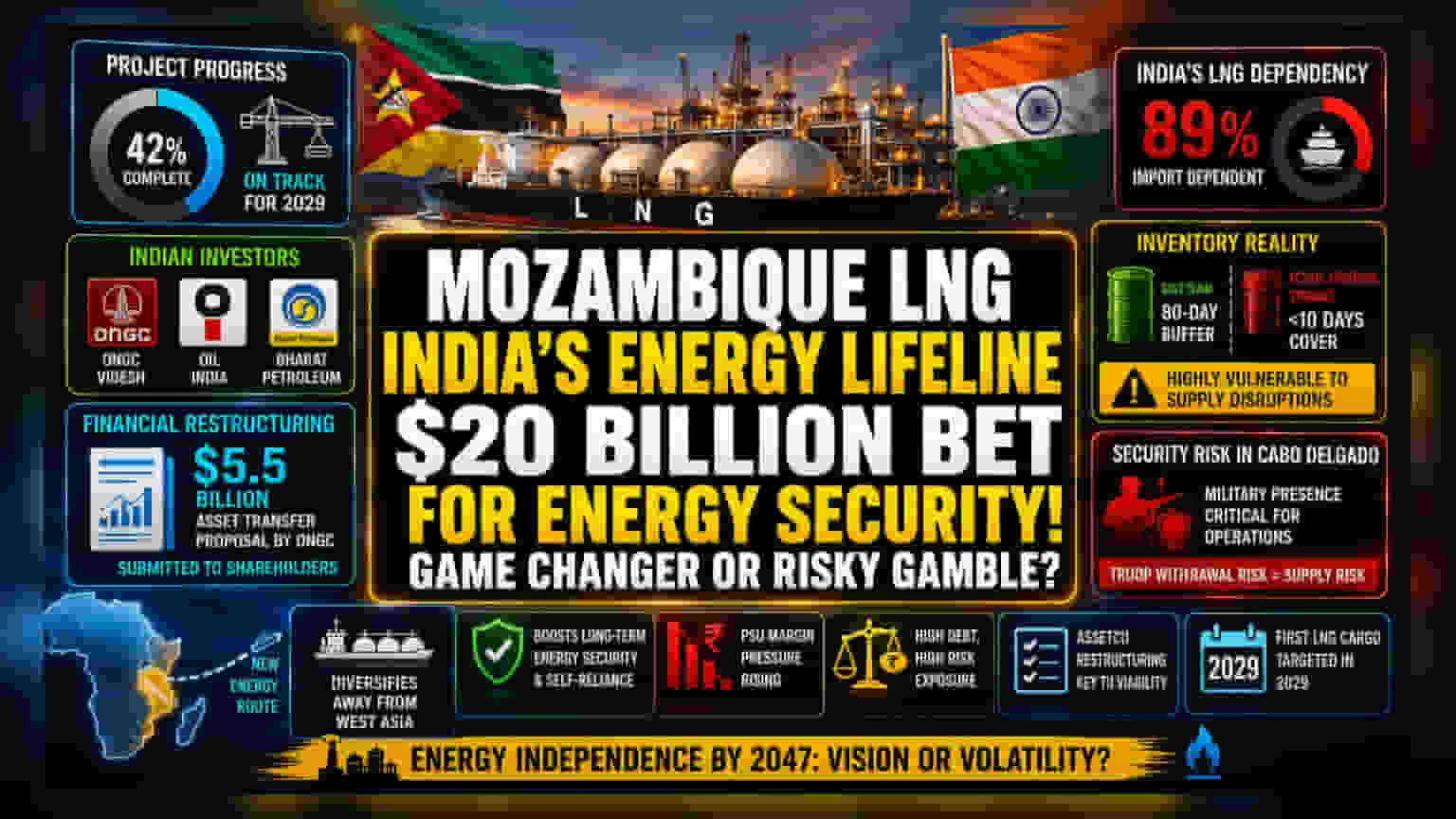


The Catalyst for Diversification
The ongoing construction of the Mozambique LNG project represents a critical hedge for India against its 89% import dependency. With the project now 42% complete, Indian public sector entities—specifically ONGC Videsh, Oil India, and Bharat Petroleum—are positioning this $20 billion offshore venture to mitigate the impact of West Asian supply chain disruptions. The shift is not merely aspirational; state-run firms are currently undergoing significant financial restructuring to align the project with global financing standards, including a recent $5.5 billion asset-transfer proposal submitted by ONGC to its shareholders.
The Operational Reality
Despite the optimistic framing from government officials regarding energy security, the project’s history remains scarred by its 2021 suspension. Although force majeure was lifted in November 2025 and 6,000 workers are now mobilized on-site, the reliance on external military intervention in Cabo Delgado creates a fragile operational backdrop. Unlike stable, long-term supply agreements with traditional Gulf partners, the Mozambique output is subject to the sustainability of regional security arrangements, which have recently faced scrutiny due to potential troop withdrawals.
Risk Factors and Structural Weaknesses
Market participants should distinguish between the government’s '80-day buffer' narrative and the reality of physical inventories. The official reserve figure aggregates strategic petroleum reserves (SPR), refinery stocks, and commercial holdings; however, the actual strategic storage capacity provides only a fraction of that, covering less than 10 days of consumption. This leaves the domestic energy sector highly vulnerable to sustained closures of maritime corridors. Furthermore, the financial burden on state-owned oil marketing companies is mounting. As these firms attempt to absorb the costs of global price volatility and localized supply-chain shocks, margin compression remains a persistent threat. Unlike competitors with lower debt-to-equity ratios and more localized production, Indian PSUs involved in this project are heavily leveraged to a single, high-risk geopolitical geography.
The Path Ahead
Expectations for the first LNG cargo remain anchored to the 2029 timeline, contingent on security stability. While the government continues to prioritize a transition toward a gas-based economy to meet its 2047 self-reliance vision, the immediate focus remains on managing high-stakes volatility. Investors should monitor upcoming disclosures regarding the AssetCo restructuring, as these will provide the clearest signal of the project’s long-term financial viability against the backdrop of shifting geopolitical alliances.