

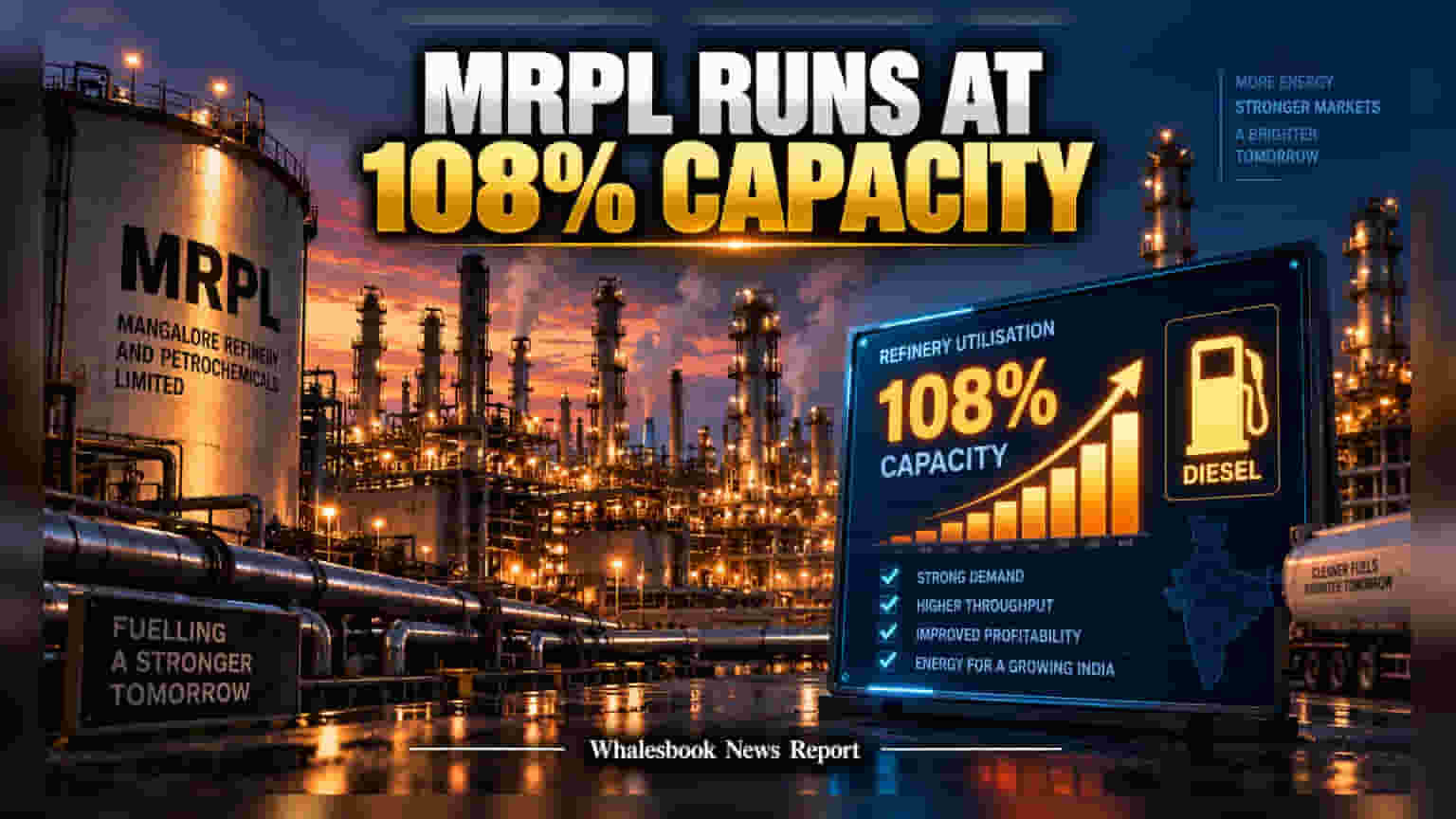
Mangalore Refinery and Petrochemicals Limited (MRPL) is running at up to 108% capacity to meet strong diesel demand. This operational focus led to a standalone net profit of ₹914.82 crore in Q1 FY27, a sharp turnaround from previous losses. Investors are monitoring whether these high utilization levels can be sustained given the company’s high debt and the risks of fluctuating global crude oil prices.
Mangalore Refinery and Petrochemicals Limited (MRPL) is currently operating its refinery at utilization rates between 105% and 108%, pushing beyond its nominal design capacity. This high-intensity operational schedule is driven by strong demand for diesel in domestic and regional markets. To capture better profit margins, the company has adjusted its production configuration, prioritizing middle distillates like diesel over other products such as jet fuel.
The operational shift has contributed to a financial turnaround for the company. In the first quarter of the 2027 fiscal year, MRPL reported a standalone net profit of ₹914.82 crore, a significant improvement from the loss of ₹272 crore recorded in the same quarter of the previous year. The company also posted a consolidated revenue from operations of ₹41,609 crore for the period.
Supporting this sustained output is the refinery's technical flexibility. The facility’s processing units are capable of handling a wide variety of crude oil grades, ranging from 16 to 48 on the API gravity scale. This technical adaptability allows MRPL to source a broader range of feedstocks, which helps maintain high throughput even when supply chains face disruptions. To further ensure a stable supply of crude oil, the company secured a $500 million parent guarantee from ONGC, which facilitates imports from Saudi Aramco through August 2028.
Despite the strong operational performance, the company faces distinct financial and sector risks. A primary concern for investors is the company's high debt-to-equity ratio, which impacts financial flexibility. Additionally, the company's profitability remains sensitive to global crude oil price volatility and the margins it earns on refined products, known as crack spreads. Being part of the energy sector, MRPL also operates within a regulatory environment where government fuel price controls can influence its earnings. As the company continues to run at these high levels, the next important items for investors to track will be the sustainability of these high utilization rates, the impact of debt repayment on cash flow, and the company's ability to navigate fluctuating global commodity prices.