

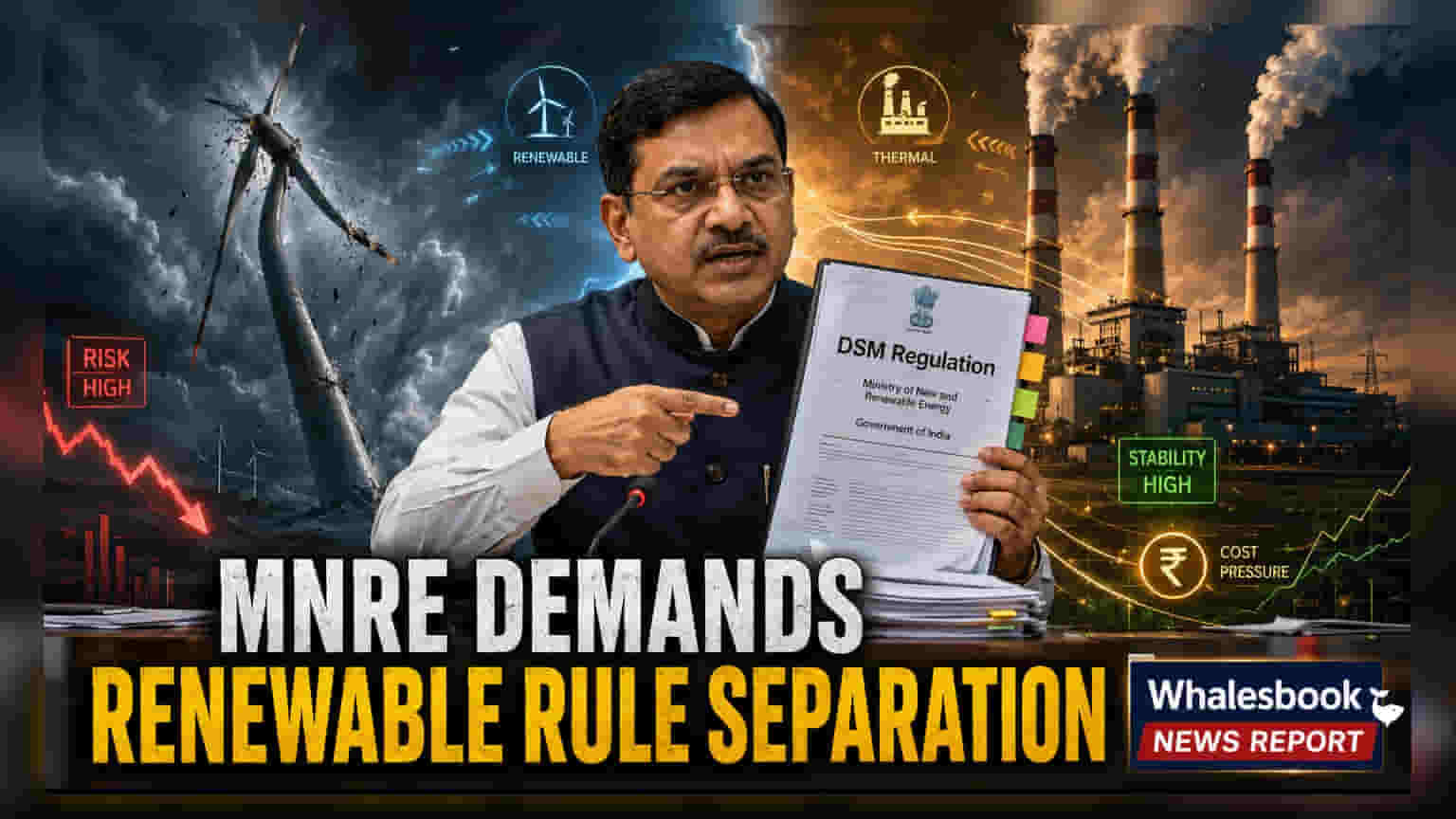
The Ministry of New and Renewable Energy has pushed back against proposed uniform grid penalty rules, noting that treating weather-dependent solar and wind plants like conventional power could hurt project profits. The ministry is calling for a more flexible approach to help developers manage output uncertainty.
What Happened
The Ministry of New and Renewable Energy (MNRE) has formally opposed a proposal to enforce uniform grid penalty rules on renewable energy projects. This feedback pertains to the draft 'Deviation Settlement Mechanism and Related Matters (Third Amendment) Regulations, 2026.'
Under the current draft, the rules would treat future wind and solar projects similarly to conventional power plants like thermal stations when calculating grid penalties. The ministry argues that this approach is flawed because renewable energy generation depends on weather, while traditional power sources can control their output.
What Grid Penalties Actually Mean
The Deviation Settlement Mechanism (DSM) is a system used to maintain grid stability. When power generators or electricity distributors fail to match the power they promised to supply with what they actually supply, they are charged a penalty. This mechanism keeps the electricity grid balanced.
For an investor, this is a financial matter. If a solar or wind park generates less or more power than predicted due to sudden weather changes, the operator could be hit with steep penalties. The ministry warns that if these rules are made too strict or uniform, it could create a significant financial burden on renewable energy developers.
Why This Matters For Investors
The MNRE has clearly stated that treating renewables like conventional power sources could negatively affect the financial health and bankability of green energy projects. If developers face high penalties for unpredictable generation, they may be forced to add an 'uncertainty premium' to the price of electricity they sell.
This would make the power costlier for buyers and potentially lower the profit margins of these projects. For investors, this creates uncertainty about future project returns and how developers will handle operational risks if the final rules remain strict.
The Ministry’s Argument
The ministry is advocating for a 'graded' or technology-specific framework. It suggests that penalties should be linked to the maturity of forecasting technology, the capacity available, and the support systems in place, rather than a blanket rule. The MNRE is also seeking specific exemptions for smaller renewable generators and wants developers to have more flexible options for fixing grid imbalances, such as through third-party arrangements via Grid India.
What Investors Should Track Next
Investors should watch for the final notification of these regulations. The key monitorable is whether the regulator accepts the ministry’s demand for a separate, more flexible framework for solar and wind projects. If the final rules do not include these changes, it could increase the operational risk for renewable energy companies, potentially leading to higher costs or lower margins for new and future capacity additions.