

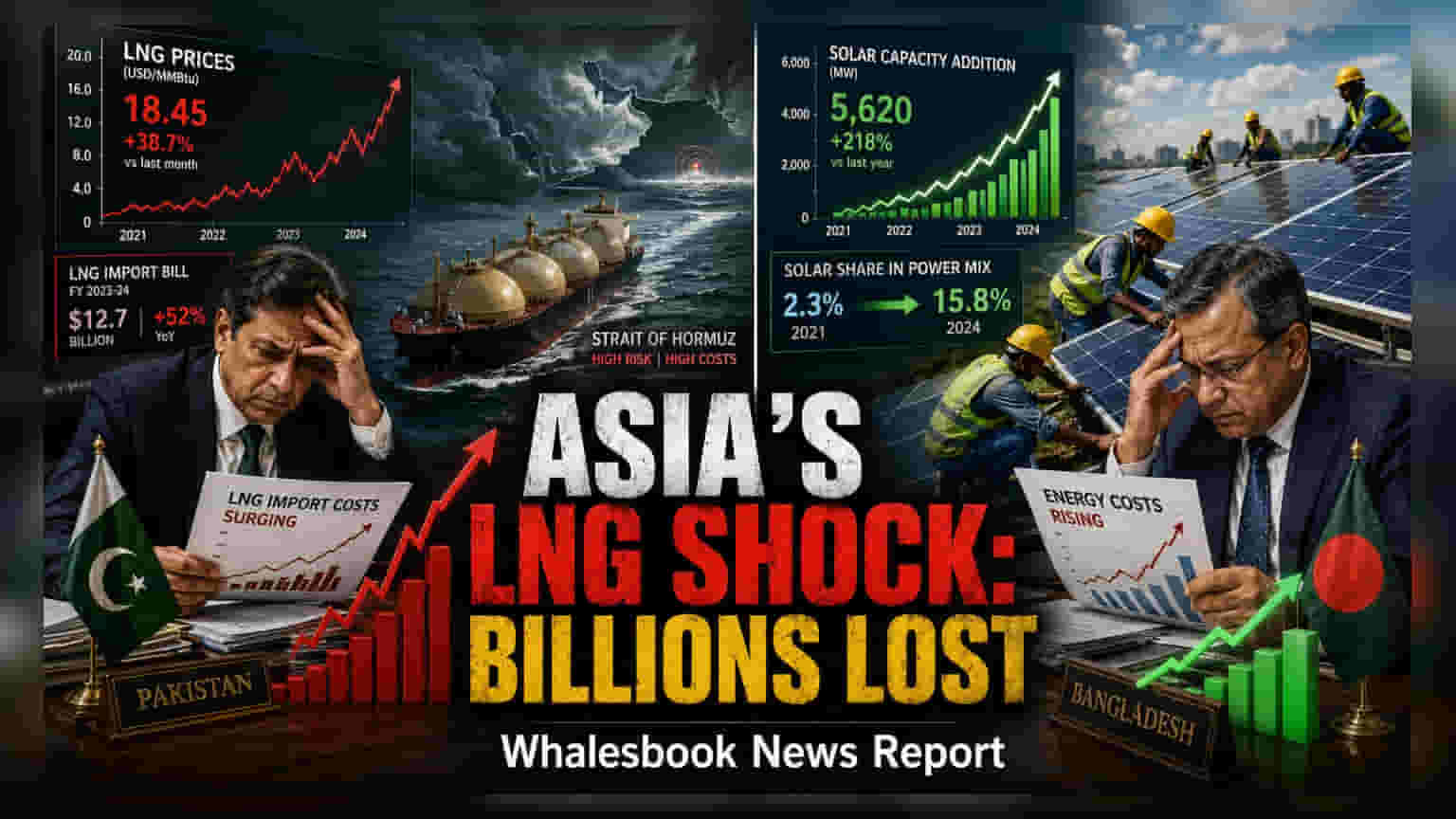
Liquefied natural gas prices for Pakistan and Bangladesh have hit their highest levels since 2022 following regional conflict. These emergency imports are straining government budgets and driving both nations to accelerate their shift toward nuclear, coal, and solar energy to reduce reliance on expensive fuel imports.
Detailed Coverage
Rising tensions in the Middle East have significantly disrupted energy supply chains, forcing Pakistan and Bangladesh to pay near-record prices for liquefied natural gas. Pakistan LNG Ltd. recently secured a late July shipment at approximately $21.88 per million British thermal units. This price is the highest the country has faced for spot market purchases since 2022, highlighting the financial burden caused by current instability near the Strait of Hormuz.
Impact on Regional Energy Stability
The Strait of Hormuz serves as a vital shipping route for roughly one-fifth of the world’s liquefied natural gas. As supply routes face delays and uncertainty, both nations are being forced to buy fuel on the spot market at prices that are nearly double their typical long-term contract rates. This energy crisis is not new, as both countries have struggled with rolling blackouts for several months. The situation became more difficult in March 2026, when major supplier Qatar canceled scheduled deliveries following temporary closures of its export facilities. These high costs are now forcing both governments to consider raising electricity and gas tariffs to manage the widening gap in their budgets.
Strategic Shift Toward Alternative Energy
To reduce long-term dependence on imported liquefied natural gas, both nations are rapidly changing their energy strategies. Bangladesh is taking significant steps to boost its solar power sector. The government has introduced tax exemptions for solar energy projects that will remain in place through 2035. This policy shift is already showing results, with solar panel and cell imports from China rising by 40% in the first half of 2026 compared to the same period last year. The country has set an ambitious target to reach 10 gigawatts of installed solar capacity by 2030, a sharp increase from its 1.7 gigawatts in 2024.
Meanwhile, Pakistan is focused on diversifying its energy mix by increasing usage of nuclear power and coal. Data from June 2026 showed a 30% year-on-year increase in nuclear power generation, while coal-based electricity production rose by 5%. These moves are designed to fill the shortfall left by reduced liquefied natural gas imports and to stabilize the power grid against future global supply shocks.
Investors may monitor the progress of these renewable energy projects and the impact of higher energy tariffs on local manufacturing and consumer demand. The primary concern for stakeholders remains whether these nations can manage their fiscal deficits while funding the infrastructure needed to transition away from expensive imported fuels.