 Whalesbook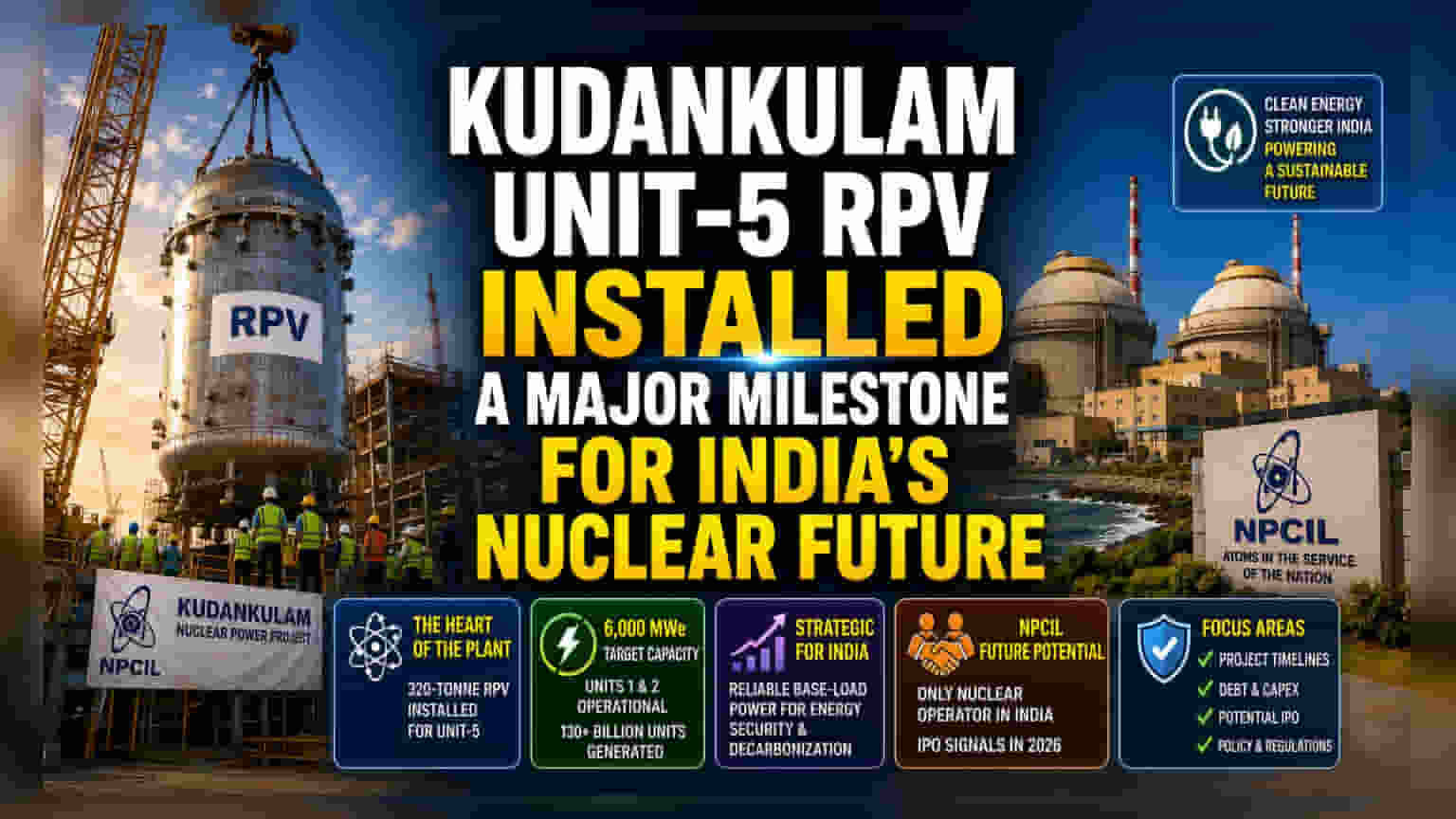
NPCIL has installed the 320-tonne reactor pressure vessel at Kudankulam Unit-5, a key step in India’s nuclear energy expansion. As the state-run power generator eyes a potential IPO, this project underlines the country’s long-term push for stable, clean base-load power.
What Happened
The Nuclear Power Corporation of India Limited (NPCIL) has reached a major construction milestone at the Kudankulam Nuclear Power Project (KKNPP) in Tamil Nadu. The company successfully installed the 320-tonne reactor pressure vessel (RPV) for Unit-5. Often called the "heart" of a nuclear power plant, the RPV is the central chamber where the nuclear fission process occurs. This installation was completed following clearance from the Atomic Energy Regulatory Board (AERB), signalling the start of the next phase of equipment erection at the site.
Why This Matters For The Energy Sector
This development is part of India’s broader plan to scale up nuclear capacity to meet rising electricity demand while focusing on decarbonization. Once completed, the Kudankulam site is designed to have a total installed capacity of 6,000 MWe across six units. Units 1 and 2 are already operational and have been significant contributors to India’s energy output, generating over 130 billion units of electricity. The expansion is critical to India’s base-load power strategy, as nuclear energy provides a stable, 24/7 power supply, unlike intermittent renewable sources like solar and wind.
The Investor Angle: NPCIL And Future Potential
For investors monitoring the Indian energy landscape, NPCIL is a critical entity. As a public sector enterprise, NPCIL is the only company responsible for designing, constructing, and operating nuclear reactors in the country. While NPCIL is currently unlisted, there have been market signals and reports suggesting a potential Initial Public Offering (IPO) in 2026. The government has also adjusted equity support in recent budgets, a move often linked to preparations for a market listing. This makes the progress of projects like Kudankulam highly relevant, as successful project execution and operational efficiency directly impact the company’s future valuation and investor interest.
Risks And Challenges In Nuclear Projects
Investors should keep in mind that nuclear energy projects, while strategically important, come with inherent risks. These projects are characterized by high upfront capital costs and very long gestation periods, which can test financial flexibility. Unlike thermal or renewable projects, nuclear power plants require extensive regulatory approvals and have complex safety protocols, which can sometimes lead to project delays or cost increases. Additionally, the sector faces public perception challenges and relies on long-term government policy stability. The industry also operates under a strict regulatory framework, including the Atomic Energy Act, 1962, and the Civil Liability for Nuclear Damage Act, 2010, which govern liability and safety standards.
What Investors Should Track Next
Moving forward, the key monitorables for the sector and NPCIL include the project commissioning timeline for Units 3, 4, 5, and 6, and updates on the progress toward any planned market listing. Investors will also monitor how the company manages debt levels and capital expenditure during these massive infrastructure projects. Furthermore, any changes in government policy regarding private participation or foreign investment in the nuclear energy sector could also influence the long-term industry structure.

