

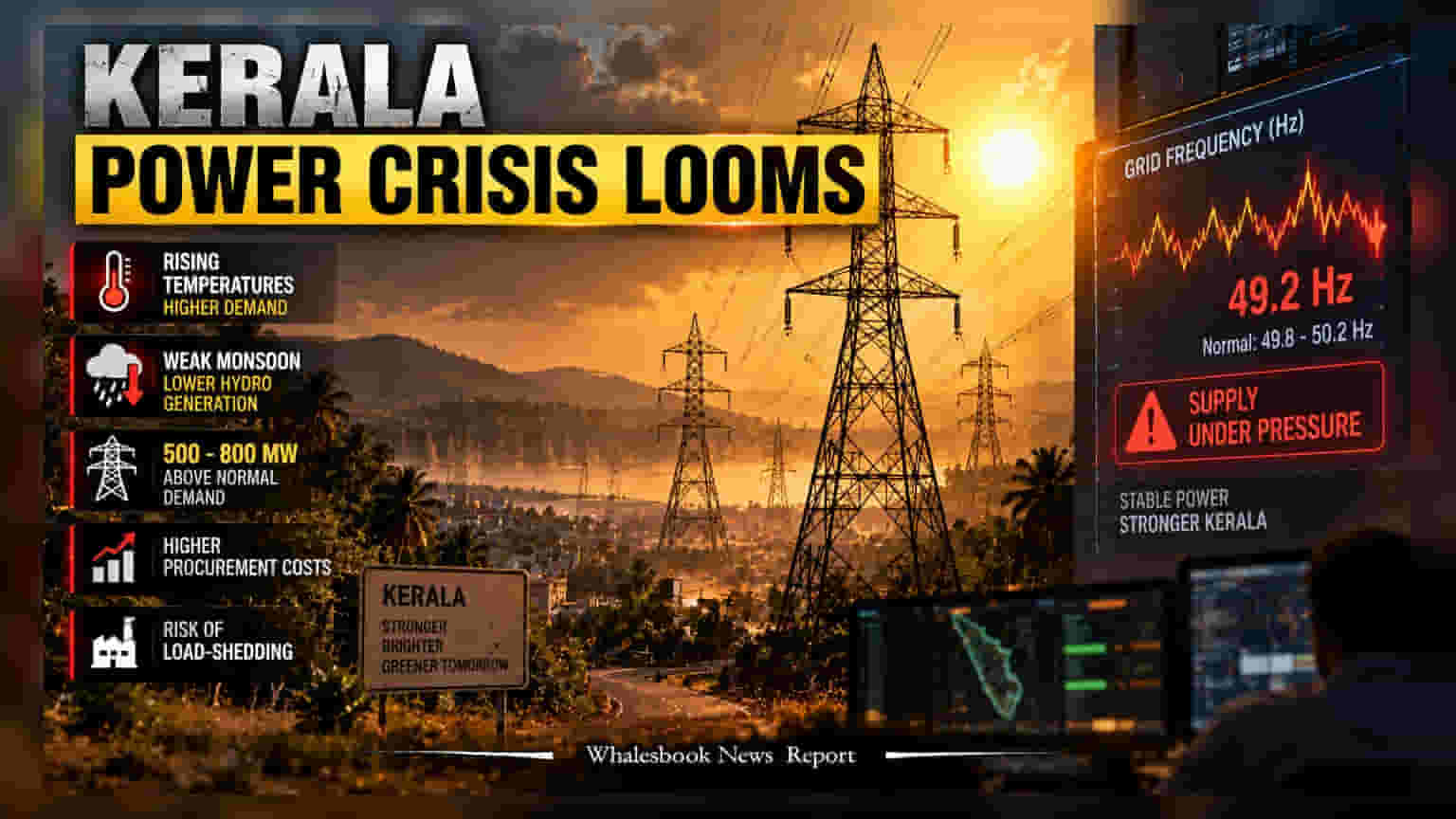
Kerala is facing severe electricity shortages, with demand consistently exceeding historical levels by up to 800 MW. The state utility is battling supply gaps caused by weak monsoon rains and heatwaves, forcing potential load shedding during peak evening hours. This situation increases financial pressure on the utility as it navigates a tight national power market.
The Kerala State Electricity Board (KSEB) is facing an acute power supply crisis as a combination of persistent heatwaves and a weak monsoon have driven electricity demand significantly higher. With the state reporting peak demand levels that are 500 to 800 MW above historical averages for September, the utility is struggling to maintain consistent supply, particularly during the peak evening hours of 6 pm to midnight.
Impact of Monsoon and Heat on Supply
The current supply-demand gap is driven by two primary factors. First, the unseasonably high temperatures have led to increased usage of cooling appliances, pushing residential and commercial electricity consumption to record highs. Second, the weak southwest monsoon has resulted in lower-than-expected water levels in reservoirs, which directly affects the state’s hydroelectric power generation. As hydro power is a crucial component of Kerala's energy mix, its reduced availability has forced the utility to rely more heavily on external power sources.
These local challenges are happening within a difficult national context. The national power grid is currently dealing with a structural deficit of approximately 12,000 MW. This makes it challenging for state utilities to procure additional power through the spot market or short-term tenders to cover sudden deficits. When the state enters the Real-Time Market (RTM) to secure emergency electricity, the limited supply and high competition often result in increased procurement costs. This creates a financial strain on the utility, as the cost of buying short-term power is frequently higher than the regulated tariff structure.
Industrial and Economic Context
The uncertainty surrounding power availability creates operational risks for industries in the state. Reliable electricity is essential for continuous manufacturing processes, and any load-shedding schedules, even if temporary, can disrupt production timelines and increase operational costs for businesses relying on expensive backup power, such as diesel generators. For the broader Indian energy sector, this situation highlights the ongoing volatility in power supply caused by extreme weather patterns and the growing dependence on efficient grid management.
Investors and stakeholders tracking the power sector may monitor several factors in the coming weeks. The most important updates will include the status of reservoir levels as the monsoon progresses, the availability of power from central generating stations, and the effectiveness of KSEB's efforts to secure long-term power purchase agreements to reduce reliance on the volatile spot market. Grid frequency stability will remain the primary technical metric to watch, as sustained instability is typically the final trigger before regulators mandate load-shedding measures.