

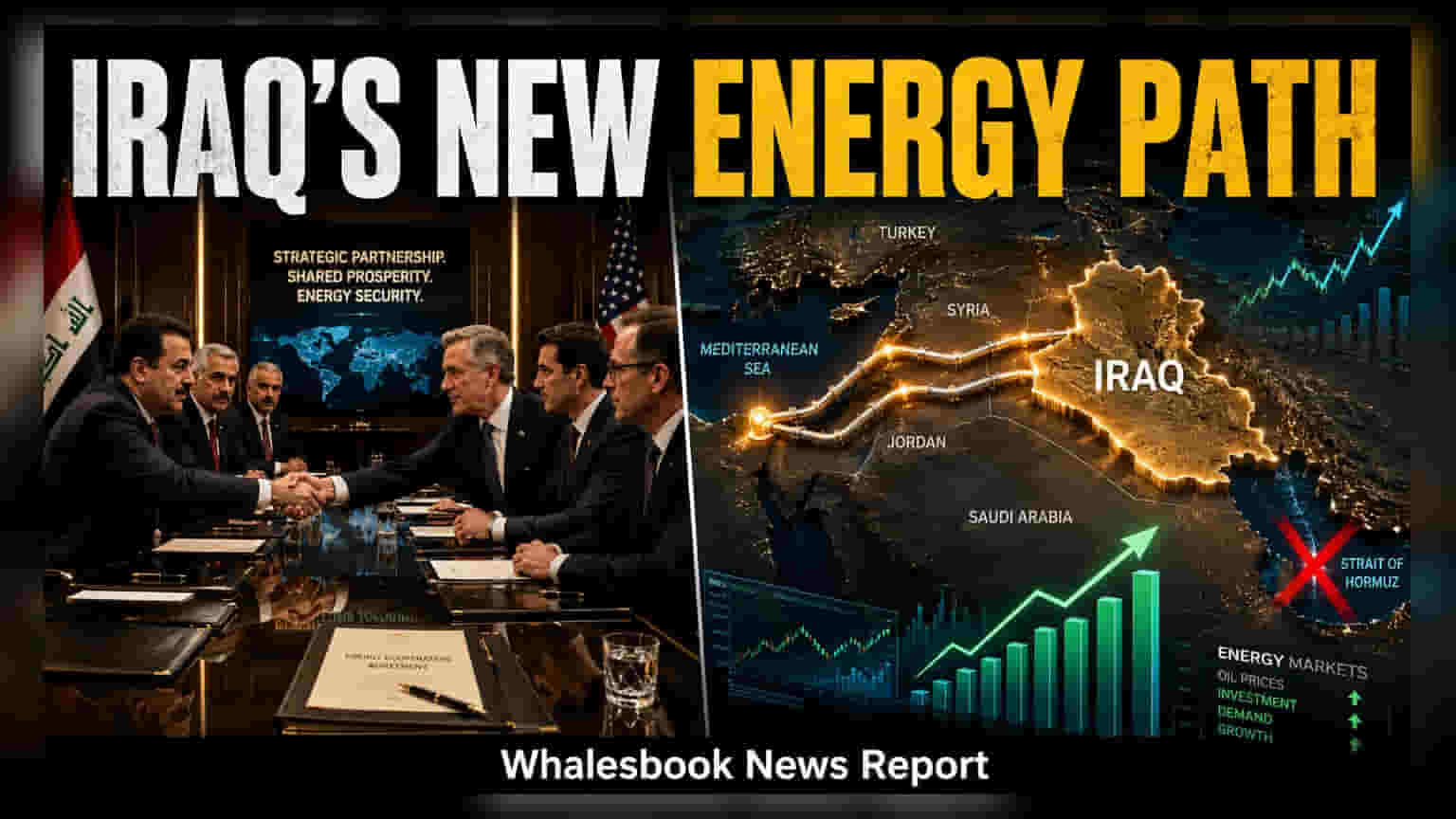
Iraq has inked $60 billion in non-binding agreements with US energy companies to develop new export pipelines and redevelop oilfields. These pacts aim to reduce reliance on the Strait of Hormuz, a vital but sensitive global shipping chokepoint. Investors will track how these infrastructure projects impact regional energy stability and the long-term production capabilities of US firms involved.
Iraq is moving to reshape its energy export strategy by partnering with American corporations in a series of agreements valued at $60 billion. Announced during a US-Iraq business summit, these non-binding memorandums of understanding involve major energy players aiming to modernize infrastructure and unlock new export channels. The central goal is to establish alternative routes for Iraqi crude, thereby reducing dependency on the Strait of Hormuz, which currently serves as a critical but politically sensitive transit point for approximately 20% of global oil and gas shipments.
Pipeline Infrastructure and Market Access
Among the proposed developments, Chevron is reportedly set to focus on pipeline infrastructure. A key component of this strategy involves creating a route that could transport Iraqi crude oil to the Mediterranean coast via Syria. For energy markets, such an infrastructure project is significant because it provides a land-based alternative to maritime transit. By diversifying export options, Iraq seeks to ensure consistent supply to global markets, which could theoretically mitigate the risk of price volatility often associated with disruptions in the Strait of Hormuz.
Field Redevelopment and US Involvement
ConocoPhillips is set to enter the Iraqi energy sector by acquiring a 42% stake in BP Energy of Kirkuk Ltd. This partnership with BP is intended to redevelop four major oilfields in northern Iraq. The involvement of US majors brings advanced extraction technology and capital into a region where production efficiency has historically faced challenges. BP, which has operated in the Kirkuk region since its oil discovery in 1927, sees this joint venture as a way to leverage combined technical expertise to enhance output from established fields.
Strategic Implications and Economic Context
These agreements reflect a broader shift in Iraq’s economic diplomacy, aimed at deepening cooperation with the United States. While the deals are currently non-binding, they signal a clear intent from the Iraqi government to position the country as a major energy hub. For international investors, the success of these initiatives will depend on the eventual conversion of these memorandums into firm, binding contracts. Furthermore, the construction of pipelines through regional territories involves complex geopolitical and security considerations that could impact project timelines and cost structures. Investors monitoring this sector will focus on the progress of regulatory approvals, the finalization of investment terms, and the physical feasibility of the proposed pipeline routes in the coming months.