

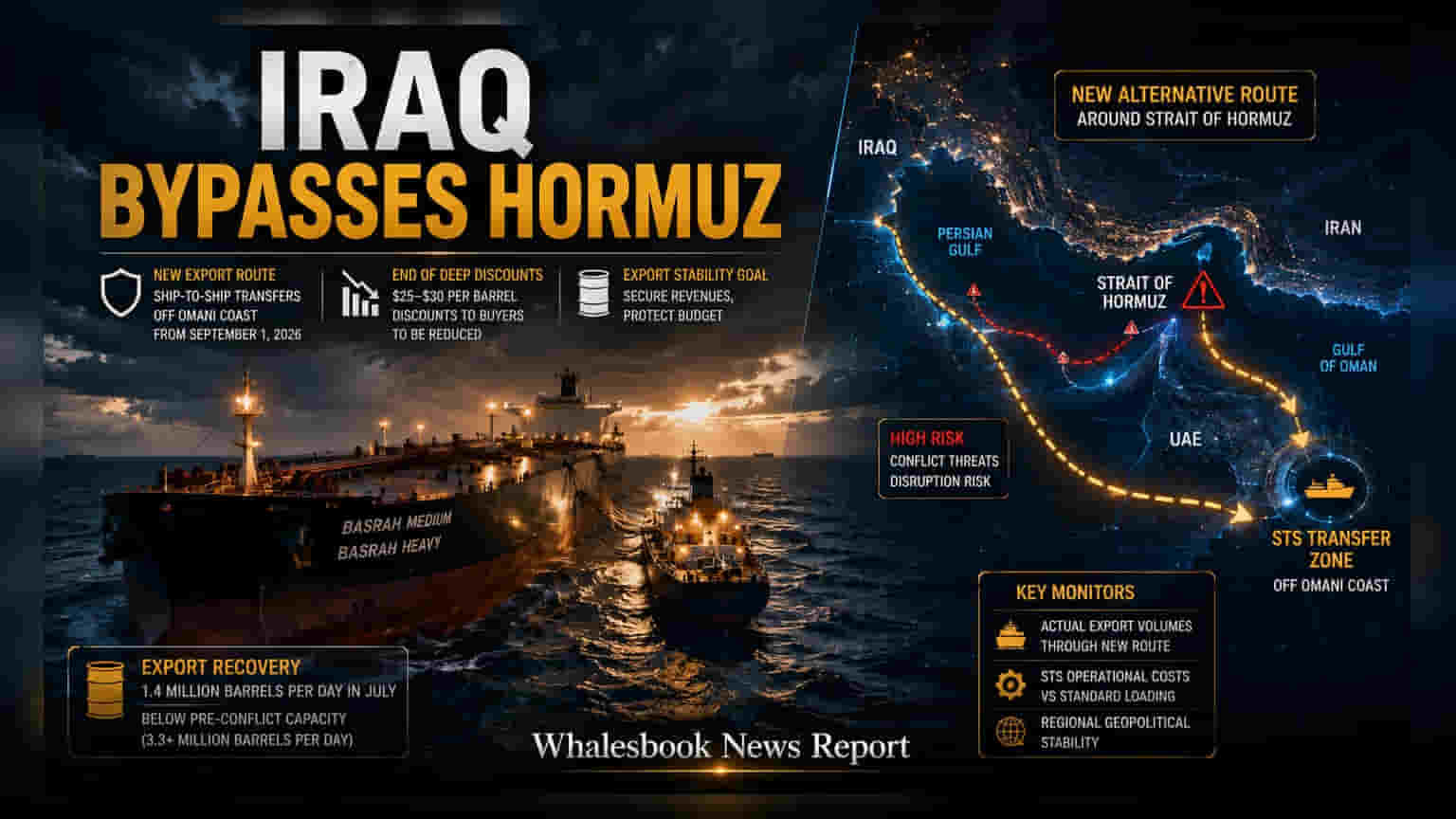
Iraq’s state oil marketer, SOMO, is shifting crude collection off the Omani coast to bypass the conflict-prone Strait of Hormuz. This move aims to cut reliance on heavy price discounts and improve logistics. For global energy markets, including India as a major importer, the stability of Iraqi oil flows remains a key factor to watch.
Iraq's state-owned oil marketer, SOMO, is shifting its export strategy for Basrah Medium and Basrah Heavy crude to circumvent the volatile Strait of Hormuz. Starting in September 2026, the country will facilitate ship-to-ship (STS) transfers off the Omani coast, providing an alternative collection point for international buyers. This marks a strategic pivot away from the reliance on the Persian Gulf, where conflict-driven risks have hampered logistics and forced the country to offer steep price discounts to maintain export interest.
Over the past several months, the government had been providing discounts ranging from $25 to nearly $30 per barrel to compensate buyers for the security risks and logistical hurdles associated with navigating the Gulf. This pricing strategy created significant fiscal pressure, directly impacting the national budget. By moving to a more secure logistical pathway, Baghdad intends to stabilize export revenues while reducing the necessity for such deep price cuts, although the efficiency of STS transfers compared to standard terminal loading remains a critical factor for the market to assess.
For Indian investors and the broader energy sector, the stability of Iraqi exports is a primary concern. Iraq is one of the top suppliers of crude oil to India, and any disruption in supply chains or volatility in global oil prices directly influences domestic economic indicators, such as inflation and the import bill. While this new route seeks to secure supply lines, the region remains fragile. The move to STS transfers involves higher logistical complexity and the potential for increased insurance or operational costs, which could impact the final landed price of oil.
Despite the resilience shown in recent months, with export volumes recovering to roughly 1.4 million barrels per day in July, the figures remain significantly lower than the pre-conflict capacity that often exceeded 3.3 million barrels per day. The transition to the new mechanism is currently approved for a three-month period, starting September 1, 2026, involving both international and local firms.
Market participants will continue to monitor the success of this initiative. The key points to watch include the actual volume of oil successfully exported through these alternative routes, the operational cost of the ship-to-ship transfer process, and whether the regional geopolitical situation stabilizes enough to allow for a consistent recovery in export flows. Any further escalation in regional tensions could pose continued risks to the security of these supply lines, regardless of the route chosen.