 Whalesbook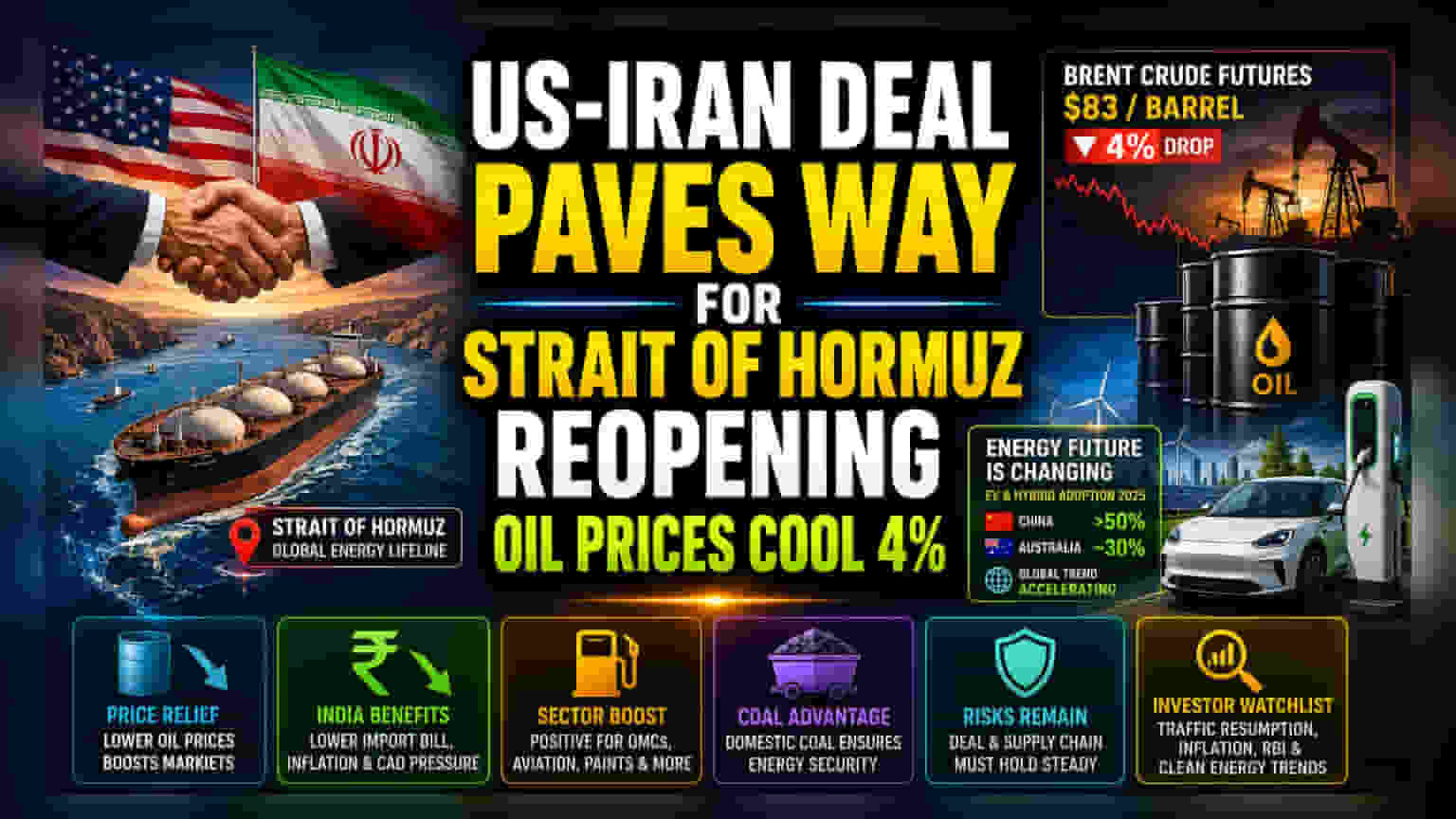


A peace deal to reopen the Strait of Hormuz has eased global energy fears, sending Brent crude down to $83. For Indian investors, the move brings relief to import-heavy sectors, though the long-term shift toward EVs and domestic energy security remains a critical theme to watch.
What Happened
A new framework agreement between the United States and Iran has paved the way for the potential reopening of the Strait of Hormuz. This vital waterway, which had been effectively closed since February 28, 2026, following geopolitical tensions, is a critical artery for global oil and liquefied natural gas (LNG) shipments. Following the announcement of the deal, global energy markets reacted swiftly, with Brent crude futures dropping 4% to reach $83 per barrel. This marks a notable cooling of prices that had surged earlier due to the supply disruption.
Why This Matters For Investors
For India, which is one of the world's largest importers of crude oil, the stability of this waterway is paramount. When oil prices spike, it directly impacts India's import bill, increases pressure on the current account, and can lead to higher domestic inflation. For the equity market, lower or stabilizing oil prices generally provide relief to sectors like Oil Marketing Companies (OMCs), paint manufacturers, and aviation, as input costs moderate. Conversely, a reduction in uncertainty helps stabilize investor sentiment, which often gets rattled during periods of geopolitical conflict.
The Energy Shift And Long-Term Trends
While the reopening of the Strait of Hormuz brings short-term relief, experienced investors are looking beyond the immediate price move. History shows that energy supply shocks—such as those seen during past conflicts—often serve as a trigger for long-term changes in consumption. Global data from 2025 and 2026 shows a clear trend of accelerating adoption of electric and hybrid vehicles, particularly in major Asian economies.
In markets like Australia and China, EV and hybrid adoption has reached significant levels, with China reporting over 50% sales in this category in 2025. This indicates that consumers and corporations are increasingly prioritizing energy security and cost stability over traditional fossil fuel dependence. For Indian investors, this trend reinforces the importance of tracking companies in the electric vehicle ecosystem, renewable energy, and battery storage space, as these segments are likely to see sustained policy and consumer support.
The Role Of Domestic Coal
Another sector that may warrant attention is domestic coal. During periods of global supply volatility, nations with substantial domestic reserves often pivot back to coal to ensure energy security. Because coal does not face the same chokepoint risks as imported LNG or crude oil traveling through narrow straits, it remains a strategic asset for power generation. Investors may observe whether companies with strong domestic coal production capabilities continue to see demand stability, as energy-intensive industries look to insulate themselves from future global supply chain disruptions.
What Could Go Wrong
A peace deal is a significant step, but it does not guarantee immediate stability. The actual restoration of supply chains will take time, and global markets will need to see actual cargo movement through the Strait of Hormuz before fears fully subside. If the deal faces political hurdles or if geopolitical tensions flare up again, energy prices could quickly climb back. Furthermore, OPEC+ production policies and the speed at which producers can ramp up output will dictate whether oil prices remain at current levels or fluctuate further.
What Investors Should Track
Investors may want to monitor several key indicators in the coming weeks. First, the actual resumption of vessel traffic through the Strait of Hormuz is the primary gauge of success. Second, tracking inflation data and the subsequent policy stance of the Reserve Bank of India will be crucial, as oil prices are a major determinant of macro-economic health. Finally, watching for long-term capital allocation in renewable energy projects and domestic manufacturing, especially in the EV supply chain, will provide clues on how companies are preparing for a less oil-dependent future.