

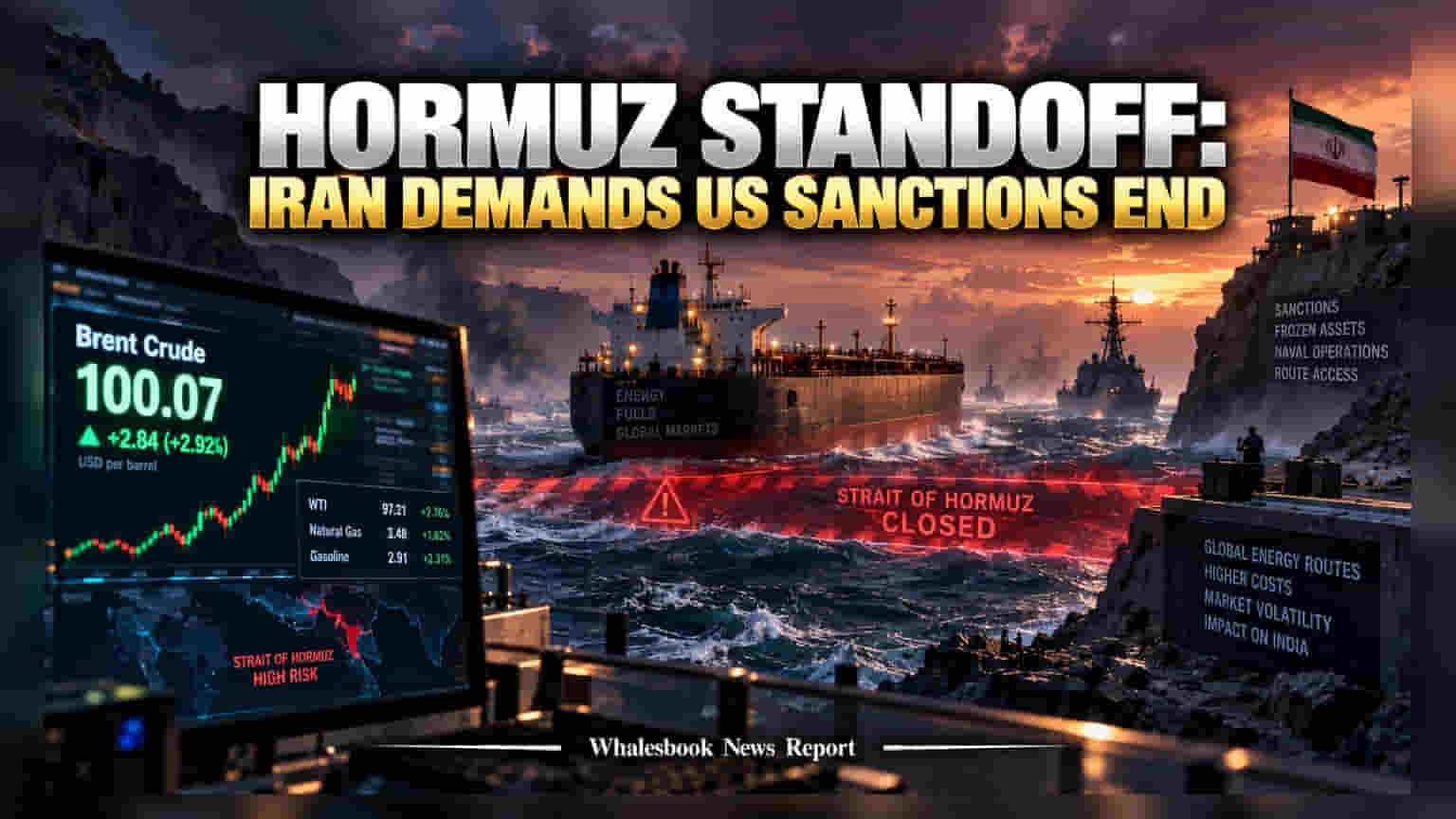
Iranian President Masoud Pezeshkian has stated that the Strait of Hormuz will remain blocked until the United States lifts economic sanctions and ends naval operations. This stance sustains pressure on global energy supply chains and poses significant cost risks for energy-importing nations like India.
The ongoing closure of the Strait of Hormuz has entered a new phase of diplomatic clarity, with Iranian President Masoud Pezeshkian explicitly linking the future of the vital maritime route to the removal of US economic sanctions. Speaking during the BRICS Summit in New Delhi, the Iranian leader confirmed that Tehran will maintain its blockade until the United States not only lifts sanctions but also provides access to frozen assets and halts the naval operations that have been in place since April 2026.
The Strait of Hormuz, which acts as a major artery for global oil and liquefied natural gas (LNG), has been largely inaccessible for commercial transit since February 28, 2026. This disruption has forced energy markets to operate under significant uncertainty, as approximately 20% of the world's daily oil and gas supply typically passes through this narrow passage. For Indian investors and the broader economy, the prolonged closure presents a persistent challenge. India relies heavily on imported crude oil, and sustained volatility in energy prices directly impacts the national import bill, domestic inflation, and the operating margins of companies across various sectors.
The current impasse is rooted in a wider conflict that escalated in early 2026, leading to a U.S.-led naval blockade of Iranian ports and active military operations in the region. These developments have not only restricted physical supply but have also driven up maritime insurance premiums and logistics costs for any vessel navigating the wider Persian Gulf region. With the Iranian government framing the blockade as a defensive reaction to external economic and military pressure, the threshold for a quick diplomatic resolution appears high.
From a market perspective, the immediate impact remains focused on energy price stability. As long as this chokepoint remains closed, energy markets face a structural risk, where supply chain disruptions can quickly translate into higher fuel costs for businesses and consumers. Investors are monitoring the situation for any signs of a framework for negotiation, as any shift in the current military or diplomatic stance would immediately influence global crude oil benchmarks and regional trade costs.
The most important factor for market participants to watch in the coming weeks will be the level of diplomatic progress, if any, emerging from the sidelines of the BRICS Summit and subsequent talks with regional mediators like Oman. Any indication of a softening in the standoff could ease the current risk premium on energy, while a continued deadlock will likely keep global energy prices in a state of elevated volatility.