

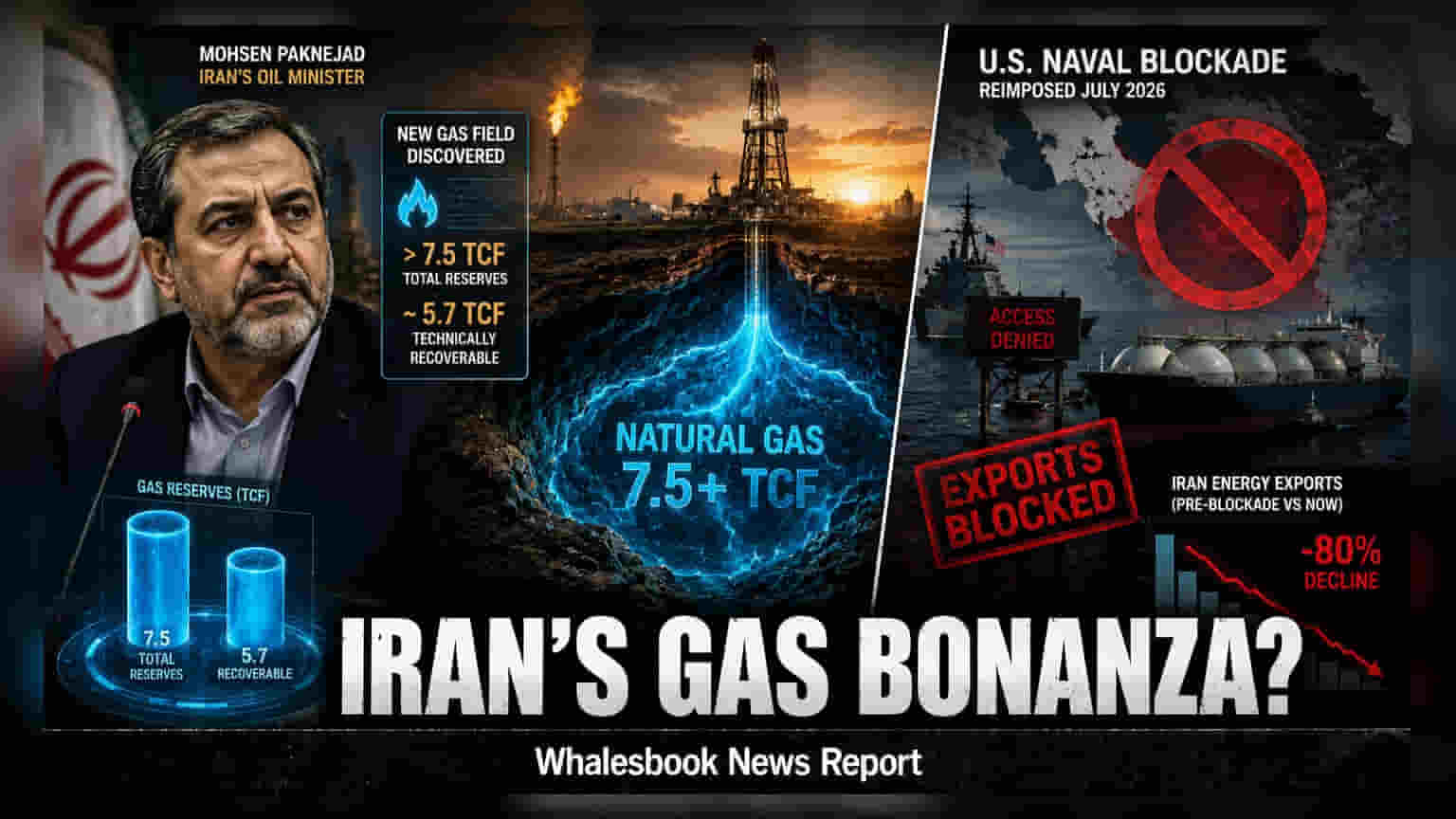
Iran has discovered 7.5 trillion cubic feet of natural gas in Fars Province, with 5.7 trillion estimated as recoverable. While the find is substantial, international sanctions and a U.S. naval blockade continue to restrict the foreign investment and technology needed to extract and export these reserves effectively.
Iran’s Oil Minister, Mohsen Paknejad, announced on August 23, 2026, that the country has discovered a new natural gas field in the southern Fars Province. The field holds over 7.5 trillion cubic feet (tcf) of gas, with engineers estimating that approximately 5.7 tcf of this volume is technically recoverable. While this is a notable addition to Iran's domestic energy resources, the practical benefits of the discovery remain heavily constrained by the current economic and geopolitical environment.
The challenge for Iran lies in the gap between identifying reserves and actually bringing them to market. The Iranian energy sector is currently dealing with the impact of a U.S. naval blockade, which was reimposed in July 2026. This move has curtailed the country's ability to export crude oil and gas, thereby limiting the inflow of foreign currency. Without these revenues and access to global capital markets, funding large-scale, capital-intensive projects like this new gas field becomes difficult.
Domestic energy pressures also play a significant role in the outlook. Iran has recently faced high domestic consumption levels, which have caused recurring power cuts and supply shortages. When a nation struggles to meet its own basic energy needs, it has less capacity to focus on export-oriented development. Furthermore, the industry is grappling with aging infrastructure, which requires significant upgrades. Modernizing these facilities typically demands advanced technology and international partnerships, both of which are currently hard to secure due to international sanctions.
For investors and global energy markets, the key issue is that this gas remains effectively stranded. While the geological potential is confirmed, the conversion of this resource into marketable energy depends on the government's ability to navigate the complex geopolitical landscape. Until there is a shift in the regulatory environment or a resolution to the ongoing conflict regarding energy exports, the development timeline for this field will likely face significant delays.
The most important factors to watch in the coming months will be any potential changes in diplomatic relations regarding energy trade and updates on the domestic infrastructure situation. Investors should monitor whether the government can secure any localized or alternative financing to begin development, or if these reserves will remain largely untapped in the near term.