

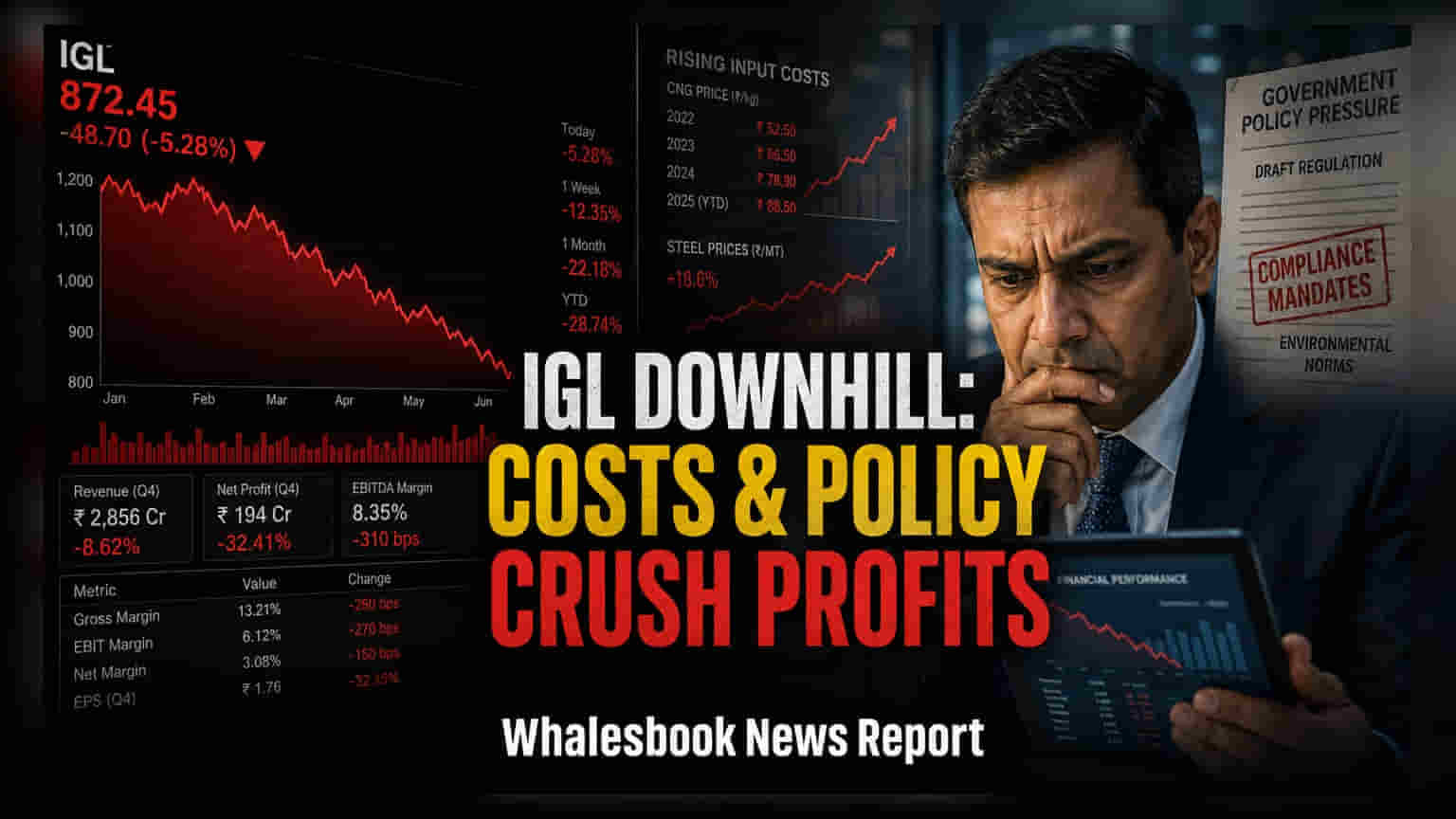
Indraprastha Gas (IGL) faces investor caution after reporting a 48% drop in Q1 FY27 profit to ₹186 crore. The company is dealing with margin compression caused by rising global gas costs and a shifting policy landscape in Delhi, where a new EV policy restricts future CNG three-wheeler registrations starting January 2027.
Indraprastha Gas (IGL) is navigating a challenging period as both financial performance and regulatory changes weigh on investor sentiment. The company’s stock has recently traded under pressure, reflecting concerns over profitability and long-term volume growth in its core CNG segment.
In the first quarter of the 2027 financial year, IGL reported a standalone net profit of ₹186.18 crore, a 48% decline compared to the same period last year. While revenue grew by 16% year-on-year to ₹5,040.15 crore, this top-line growth could not offset the sharp rise in operating expenses. EBITDA margins contracted significantly to 6% during the quarter, down from 13% in the previous year.
The decline in profitability is largely attributed to elevated global LNG costs, which have been volatile due to geopolitical tensions in West Asia. Furthermore, the company has faced a less favorable gas sourcing mix. A reduction in the allocation of cheaper gas under the Administered Pricing Mechanism (APM) has forced the company to rely more on costlier imported gas, which squeezes profit margins if the increased costs cannot be fully passed on to consumers.
Beyond immediate costs, the company faces a structural challenge from the Delhi EV Policy 2026-30. This policy mandates that all new three-wheeler registrations in the city must be electric starting January 1, 2027. As the three-wheeler segment is a significant user of CNG, this regulatory shift creates a headwind for the company's future volume growth in the National Capital Region.
Market analysts have been actively monitoring these developments. While some brokerages have maintained positive long-term outlooks, they have revised their price targets downward to reflect the risks posed by higher input costs and potential volume stagnation. The core concern for investors remains whether the company can protect its margins if gas prices stay high and whether it can effectively navigate the transition to cleaner energy alternatives in its primary market.
Looking ahead, investors will be tracking the company’s ability to manage its gas sourcing mix and the impact of the upcoming EV regulations on sales volumes. The extent to which IGL can balance its planned capital expenditure with cash flow generation will also be a key factor in its financial health during this period of transition.