

India's ambitious incentive scheme to convert coal into chemical feedstocks has failed to attract any bidders, casting doubt on the government's import substitution strategy. The lack of interest from the industry highlights deep concerns over high startup costs, technical challenges with coal quality, and the absence of guaranteed sales for the final products.
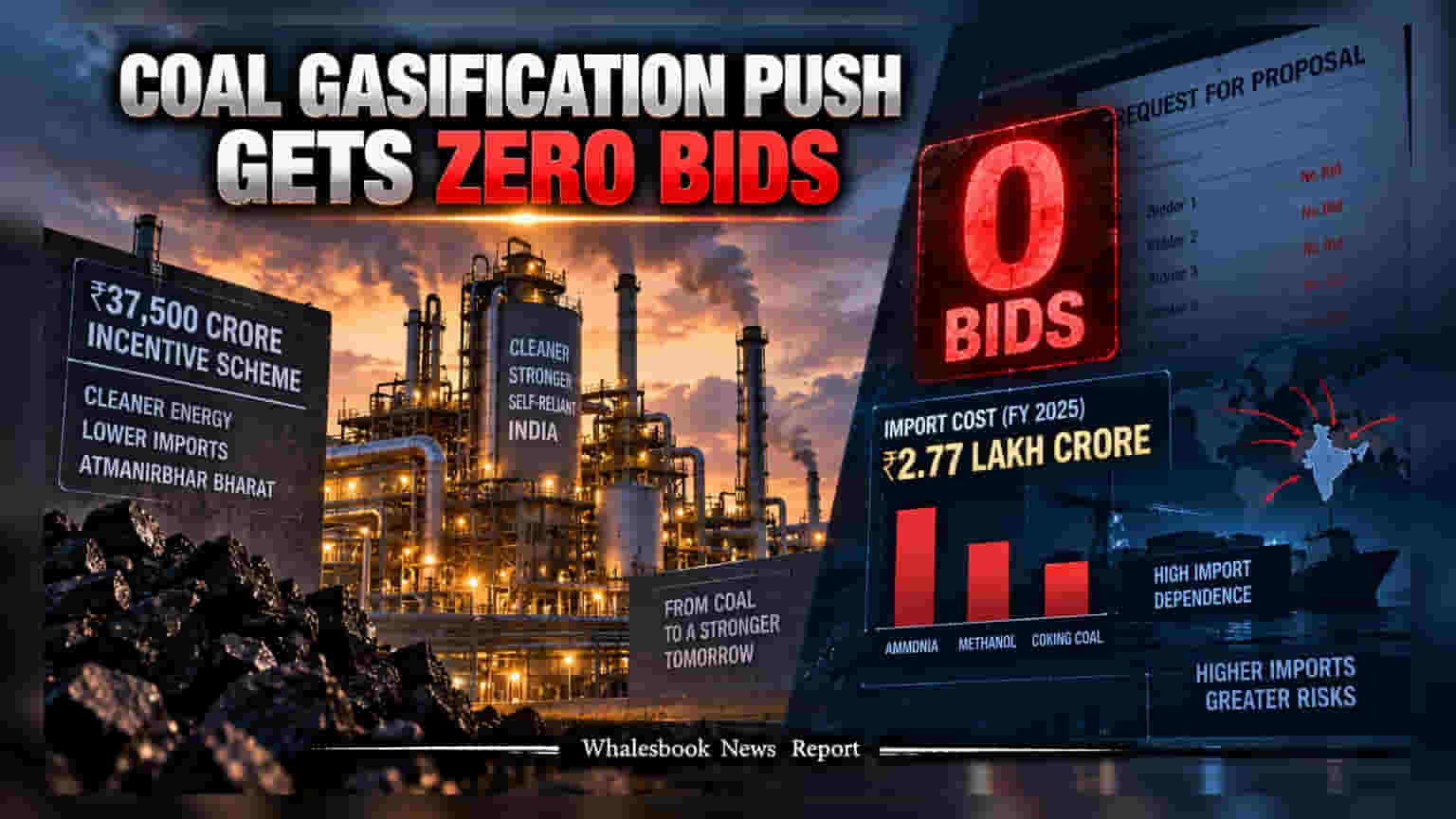
The government's major push to drive large-scale industrial coal gasification has encountered a significant roadblock. The Request for Proposal process for the ₹37,500 crore incentive scheme concluded without a single bid, marking a setback for the initiative designed to reduce India's reliance on imported chemicals, urea, and fuel feedstocks.
The scheme was strategically aimed at cutting down the massive import bill for substitutable commodities. In the 2025 financial year alone, India spent approximately ₹2.77 lakh crore on importing items like ammonia, methanol, and coking coal. By converting domestic coal into synthetic gas, policymakers intended to build energy autonomy and stabilize supply chains that are often exposed to global market volatility. However, the lack of private sector participation signals a misalignment between the current government incentives and the industry's risk appetite.
Industry experts and potential developers have pointed to several hurdles that prevented participation. Primary concerns include the steep capital investment required to set up gasification plants and the operational challenges posed by India’s high-ash coal, which is technically difficult to process efficiently compared to cleaner international variants. Additionally, companies have highlighted the lack of assured buyer guarantees and fixed domestic coal linkages. For many large energy and chemical firms, these risks create too much uncertainty for long-term investments, even with government subsidies in place.
While a smaller, separate scheme allocating ₹8,500 crore to support eight ongoing projects is still moving forward, this latest large-scale rollout has struggled to find takers. The result highlights the difficulty in making coal gasification commercially viable without stronger policy support regarding pricing and supply security.
With the tender failing to draw any applicants, the focus now shifts to the Ministry of Coal. The next important update will be whether the government decides to recalibrate the incentive framework, potentially by offering more clarity on coal supply commitments or easing the financial requirements to make these projects more attractive for the industry.