

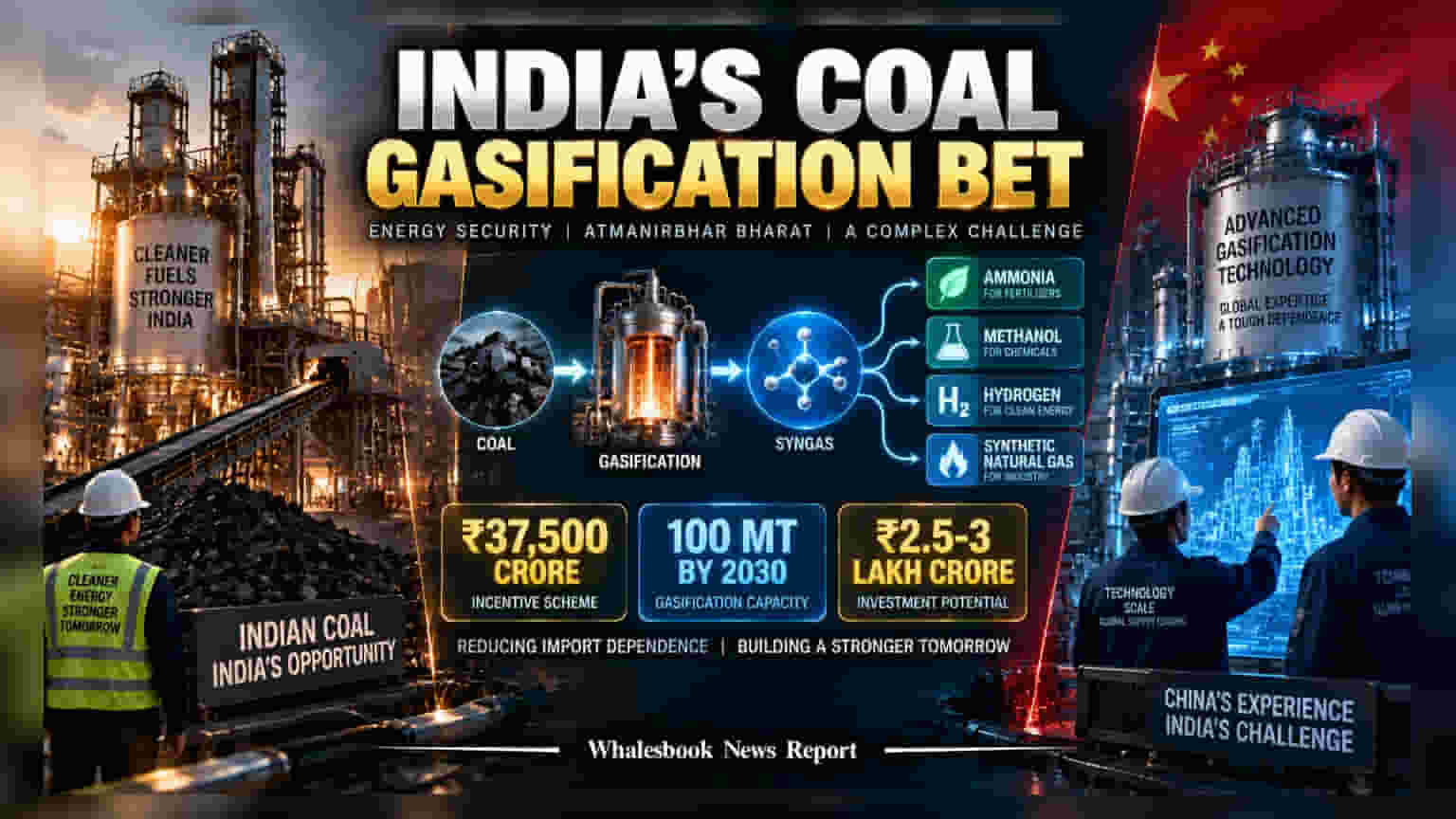
India’s coal gasification incentive scheme received seven applications from companies like Adani Enterprises and NTPC to boost domestic capacity. While the plan aims to cut the massive import bill for chemicals and fuels, the main challenge remains adapting technology to handle India’s high-ash coal content.
The Ministry of Coal has received seven applications in the first round of its ₹37,500-crore incentive scheme for surface coal and lignite gasification, which concluded on September 7, 2026. This initiative is a major strategic push to achieve a capacity of 100 million tonnes by 2030. Major industry players have stepped forward, with Adani Enterprises proposing three urea projects and NTPC focusing on synthetic natural gas. Other participants include Talcher Fertilisers, Gallantt Ispat, and Shyam Sel & Power.
The core objective of the programme is to reduce India’s dependence on imported LNG, urea, ammonia, and methanol. In the financial year 2024-25, India’s import bill for these essential materials stood at approximately ₹2.77 lakh crore. By localizing production through gasification, the government hopes to trigger investments ranging between ₹2.5 lakh crore and ₹3 lakh crore.
However, the path to commercial success involves a complex technical hurdle. Indian coal typically contains 30-45% ash, which is significantly higher than coal found in many other regions. Standard gasification technologies often designed for lower-ash coal cannot be used directly in India. This high ash content alters how the gasifier performs and affects the chemistry and equipment requirements, making it difficult to simply import and install foreign technology without substantial modifications.
While China has over six decades of commercial experience in large-scale coal gasification and the downstream industrial network to convert syngas into useful chemicals, industry experts warn that this is not a plug-and-play solution. Any overseas technology, including Chinese expertise, requires deep engineering changes to adapt to the specific characteristics of Indian coal. Companies must either customize these foreign designs or rely on emerging indigenous solutions to ensure the projects remain reliable and efficient.
Beyond the technical aspect, these projects are highly capital-intensive. Their long-term viability will depend on the effectiveness of the government incentives and the ability of companies to manage operational costs to remain competitive against market-linked prices. Investors may watch how these companies handle the technical adaptation phase and the actual project execution in the coming months.
The government has already launched the second round of applications on September 8, 2026, with plans for subsequent windows at two-month intervals to keep the momentum going.