

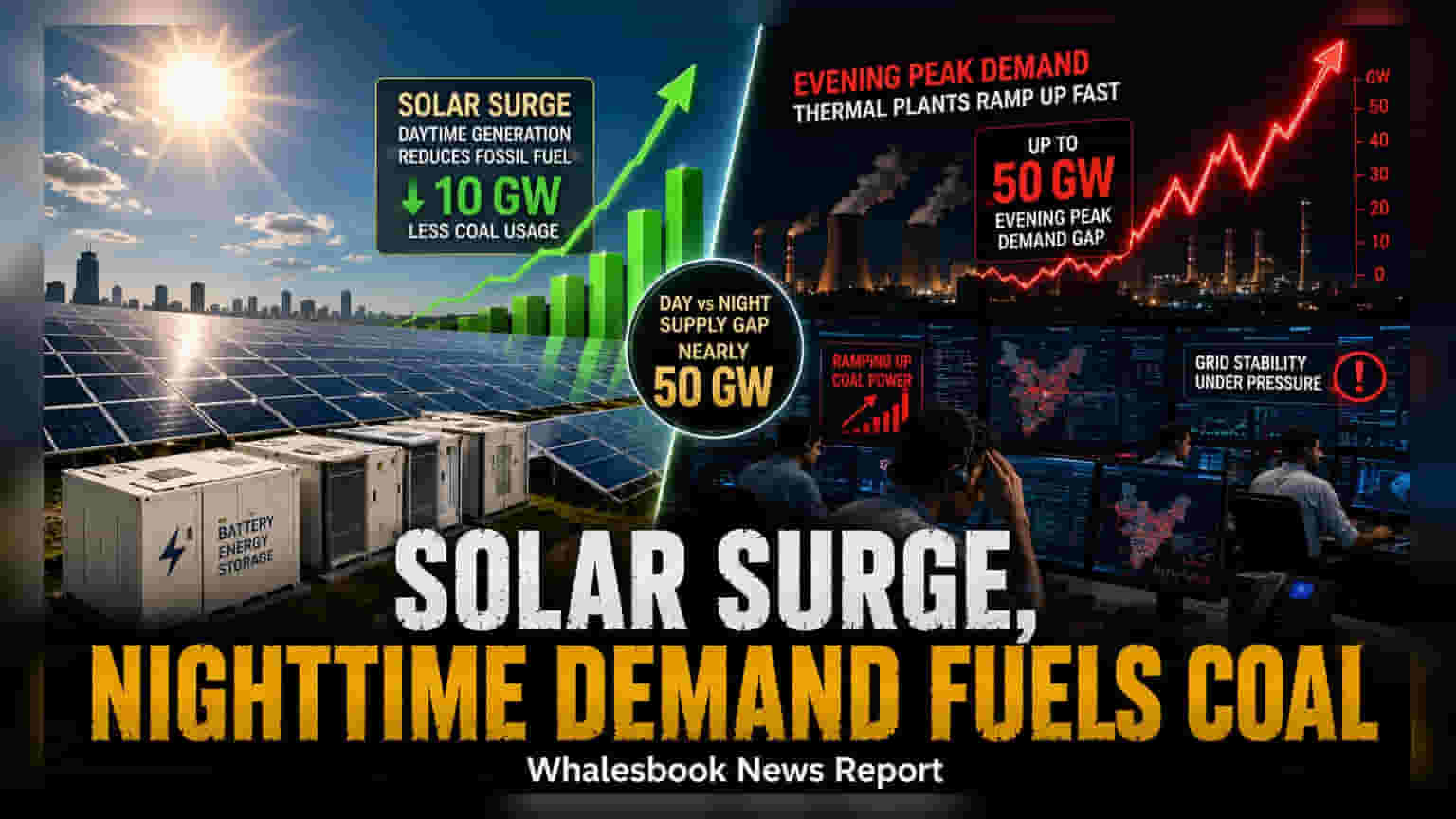
India’s rapid solar energy adoption has slashed daytime fossil fuel reliance but created a massive challenge during sunset. A 50 GW gap between midday solar surplus and evening peak demand is forcing a heavy reliance on thermal power. This shift is driving urgent demand for battery storage solutions and creating new operational realities for power companies.
India’s power sector is undergoing a massive shift. While solar energy generation has surged, allowing the country to reduce daytime fossil fuel usage by approximately 10 gigawatts (GW), the transition has created a new operational hurdle. As soon as the sun sets, solar generation drops to near zero, forcing thermal power plants to rapidly increase output to meet persistent peak demand. This creates a supply gap that has widened to nearly 50 GW between the midday low and the evening peak.
The Operational Strain on Thermal Plants
For traditional power generators like NTPC, Tata Power, Adani Power, and JSW Energy, this shift changes how plants are run. Thermal power stations are traditionally designed to run at steady, high capacities. Forcing them to ramp up and down rapidly to balance the grid is expensive and inefficient. When demand is low during the day, these plants often run at their “technical minimum” load—the lowest level of power generation required to keep the plant operational. Operating at these low levels hurts profitability because the plants are less efficient and maintenance costs often remain fixed.
Regulators have been working to address this, with the government extending deadlines for coal plants to adopt flexibility measures until June 2027. However, until these plants can adjust their output more efficiently, the financial pressure from reduced efficiency remains a factor for thermal operators.
Renewable Curtailment and Revenue Impact
This gap is not just a problem for coal plants; it also impacts renewable energy companies. When the grid cannot absorb excess solar power during peak daylight hours, the grid operator may force renewable energy sites to shut down or reduce generation. This is known as curtailment. In the first quarter of 2026 alone, approximately 300 GWh of renewable energy was lost due to these grid constraints. For independent power producers, curtailment means lost revenue, as they are unable to sell the power they generate. This makes the grid's ability to handle solar power a direct financial concern for renewable energy investors.
The Move Toward Storage Solutions
To bridge the 50 GW gap, the power sector is shifting focus toward energy storage. Battery Energy Storage Systems (BESS) are becoming critical because they allow solar energy generated during the day to be stored and released during the evening peak hours. Companies involved in manufacturing batteries, grid infrastructure, and power electronics are seeing increased attention from the market as a result. Players like Hitachi Energy, Siemens, and various infrastructure engineering firms are essential for building the grid upgrades needed to handle this two-way power flow.
Looking ahead, the next few years will be defined by how quickly India can deploy large-scale battery storage and finalize market reforms that allow storage providers to earn money for stabilizing the grid. Investors are likely to track policy updates regarding grid flexibility, the pace of battery deployment, and the financial impact of curtailment on renewable energy producers in upcoming quarterly results.