 Whalesbook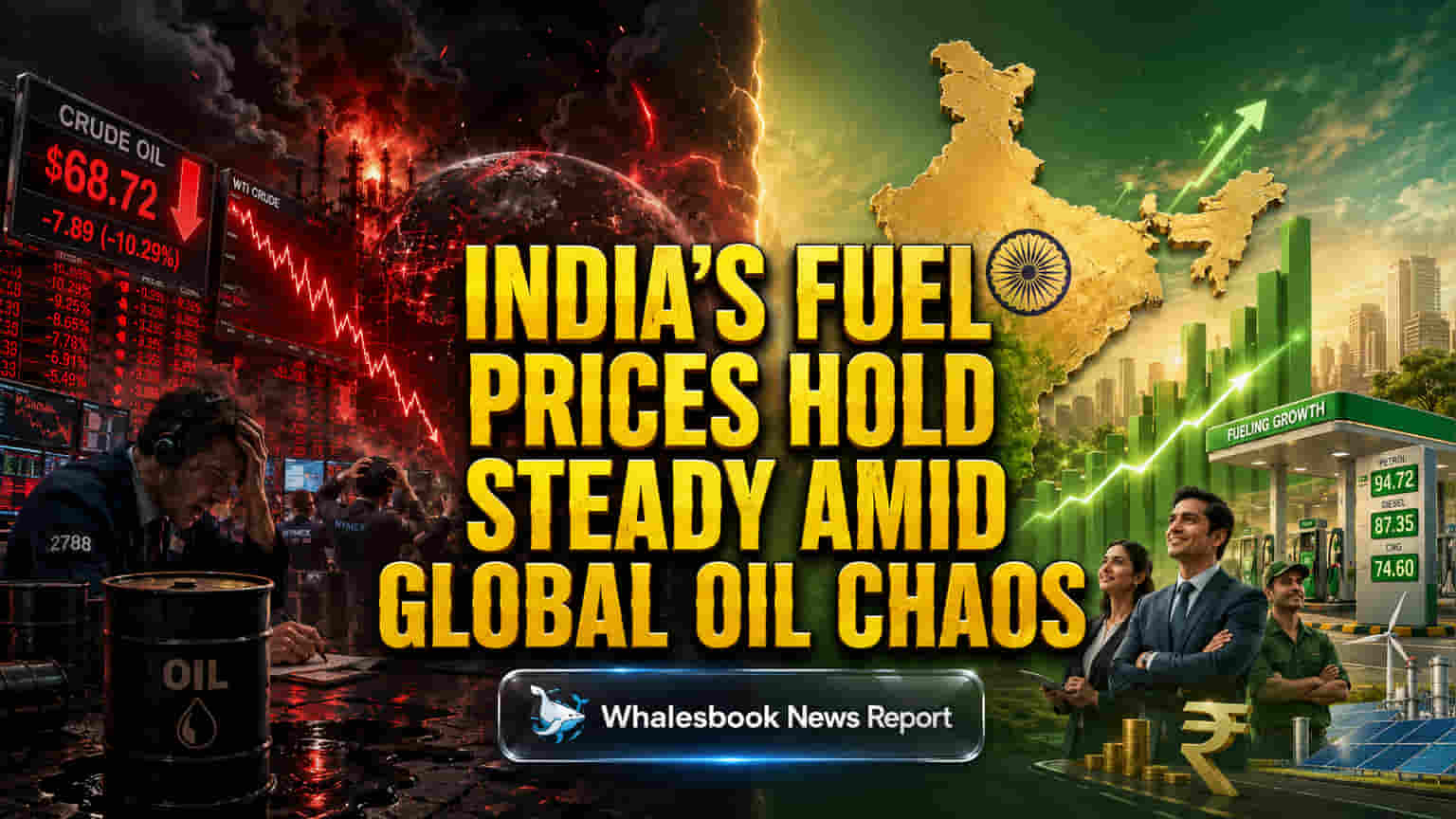


Consumers Shielded, Oil Firms Lose Billions
Global events have shaken energy markets, but India has kept domestic fuel prices stable to protect consumers. This strategy, however, comes at a cost. Absorbing high global prices has created a large financial gap for the country's state oil and gas companies, challenging their long-term health and plans.
The Cost of Stable Fuel Prices
State oil marketing companies are reportedly selling petrol and diesel at a loss of about ₹14 and ₹18 per litre, respectively. This situation has persisted for years due to a freeze on retail price revisions, even as global crude costs have fluctuated. Currently, petrol prices in Delhi remain around ₹94.77 per litre and diesel at about ₹87.67 per litre.
India's Strategy to Keep Prices Low
While over 120 countries have seen fuel price hikes, India has maintained its retail pump prices at pre-crisis levels. Consumers in Delhi pay significantly less for petrol than in countries like Pakistan, Sri Lanka, Nepal, the USA, Italy, Spain, Germany, and France, where prices can be 70% to 300% higher. India managed this through government interventions such as export levies on diesel and Aviation Turbine Fuel (ATF) when crude oil prices surged, and reduced excise duties on petrol.
Financial Health of State Oil Companies
India's refining capacity, set to exceed 300 MMTPA, provides a buffer against price swings. Public sector oil companies like Indian Oil Corporation (IOCL) and Bharat Petroleum Corporation (BPCL) trade at low Price-to-Earnings (P/E) ratios, around 5-6. This suggests investors may be concerned about how under-recoveries affect their profits and future growth. These firms last adjusted retail fuel prices in 2022, indicating a prolonged period of price stabilization. The mandated E20 ethanol blending, starting April 1, 2026, aims to reduce oil import dependence.
Risks of Sustained Losses
When Indian state oil companies absorb these costs, it helps consumers and economic stability but creates a major financial challenge for the companies themselves. These significant losses directly impact profitability and strain balance sheets. This financial pressure could hinder their ability to invest in necessary upgrades, expansion, and the energy transition. Unlike more agile global competitors, these Indian firms operate under public mandate pressures, risking delays in adopting new technologies like advanced biofuels or hydrogen. Building strategic petroleum reserves also adds to capital demands.
Future Outlook for India's Energy Sector
Balancing consumer affordability with the financial health of the oil sector is crucial as India navigates global energy markets. The country's strong GDP growth forecast provides a supportive environment for policy changes. While the increasing share of renewables and ethanol blending targets show commitment to a diverse energy future, the current price stabilization model for consumers depends on finding a viable financial solution for state oil firms. This could involve direct compensation for losses or a gradual adjustment of retail prices to better reflect market realities, ensuring India's energy security backbone can continue to invest and power national growth.