

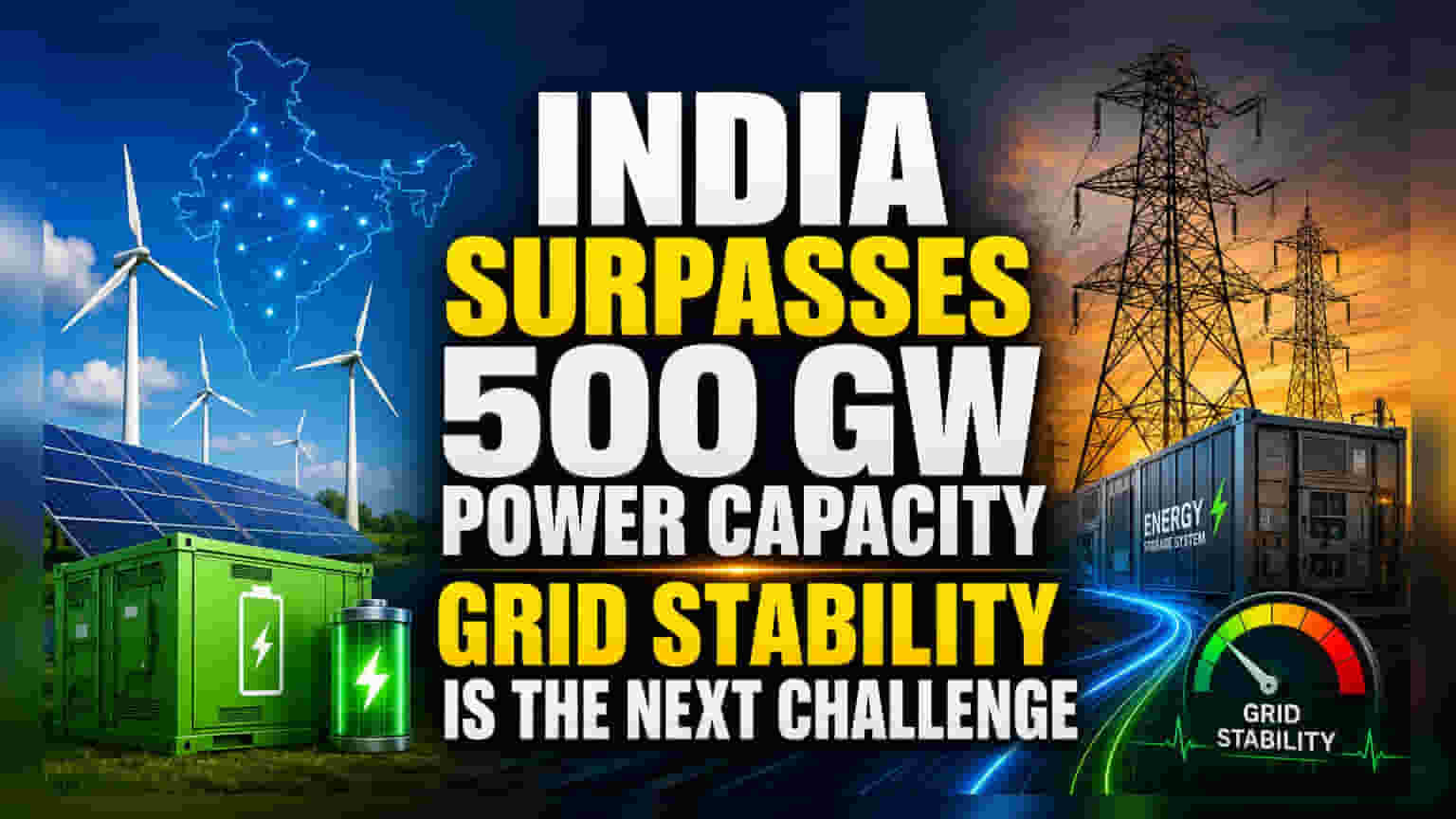
India’s power grid is facing stability challenges as renewable energy capacity crosses 500 GW. With legacy infrastructure struggling to manage variable energy flows, the focus is shifting toward storage solutions like battery systems. Investors may track policy changes impacting transmission companies, renewable energy firms, and power distribution utilities.
What Happened
India has surpassed 500 GW of installed power capacity, with more than half coming from low-carbon sources like wind and solar. However, the Power Ministry’s Consultative Committee recently highlighted that the national grid is struggling to handle this rapid growth. The existing transmission infrastructure, built primarily for traditional thermal power, is finding it difficult to manage the variable and intermittent nature of renewable energy. This has raised concerns about grid stability, particularly in resource-rich states where power curtailment—forcing a reduction in energy supply—has become a risk.
Why It Matters For Investors
The shift toward renewable energy is changing where and how money is being spent in the power sector. The challenge of balancing fluctuating demand from sectors like data centers and semiconductors with an uneven supply of green energy has created a need for grid-forming technology. This shift is likely to benefit companies involved in transmission infrastructure and energy storage solutions. For renewable energy producers, grid stability is crucial because if the grid cannot take the power they generate, their revenue could be impacted by curtailment.
The Shift Toward Storage And Transmission
To address the volatility, policy makers are looking at Battery Energy Storage Systems (BESS) and pumped hydro projects. These technologies help absorb excess energy during the day and release it during peak demand, stabilizing the grid and reducing the need to back down thermal plants. For the business sector, this implies that future capital spending will likely pivot from pure power generation to infrastructure that supports energy delivery. Companies providing grid-forming inverters, STATCOMs (devices used to improve voltage stability), and storage solutions are expected to be in focus as the government pushes for a more resilient grid.
The Cost And Operational Risks
One of the biggest concerns identified is the financial strain on distribution utilities (Discoms). When the grid is stressed, Discoms may be forced to buy expensive power during peak shortages, even if they have excess renewable power available at other times. This mismatch between when power is generated and when it is needed—often called the 'Duck Curve'—creates cost pressure across the value chain. If transmission infrastructure does not keep pace with renewable project commissioning, the risk of project delays and cost overruns increases, affecting the return on investment for large energy developers.
What Investors Should Track
Investors may keep an eye on upcoming government tenders for BESS and transmission projects, which will signal the speed of grid modernization. Policy updates regarding regulatory frameworks for storage services, updated technical standards for grid-forming equipment, and compensation mechanisms for renewable producers facing curtailment will be critical. Additionally, the readiness of state-level transmission networks to handle large-scale renewable integration will be a key factor in the long-term viability of renewable energy projects.