

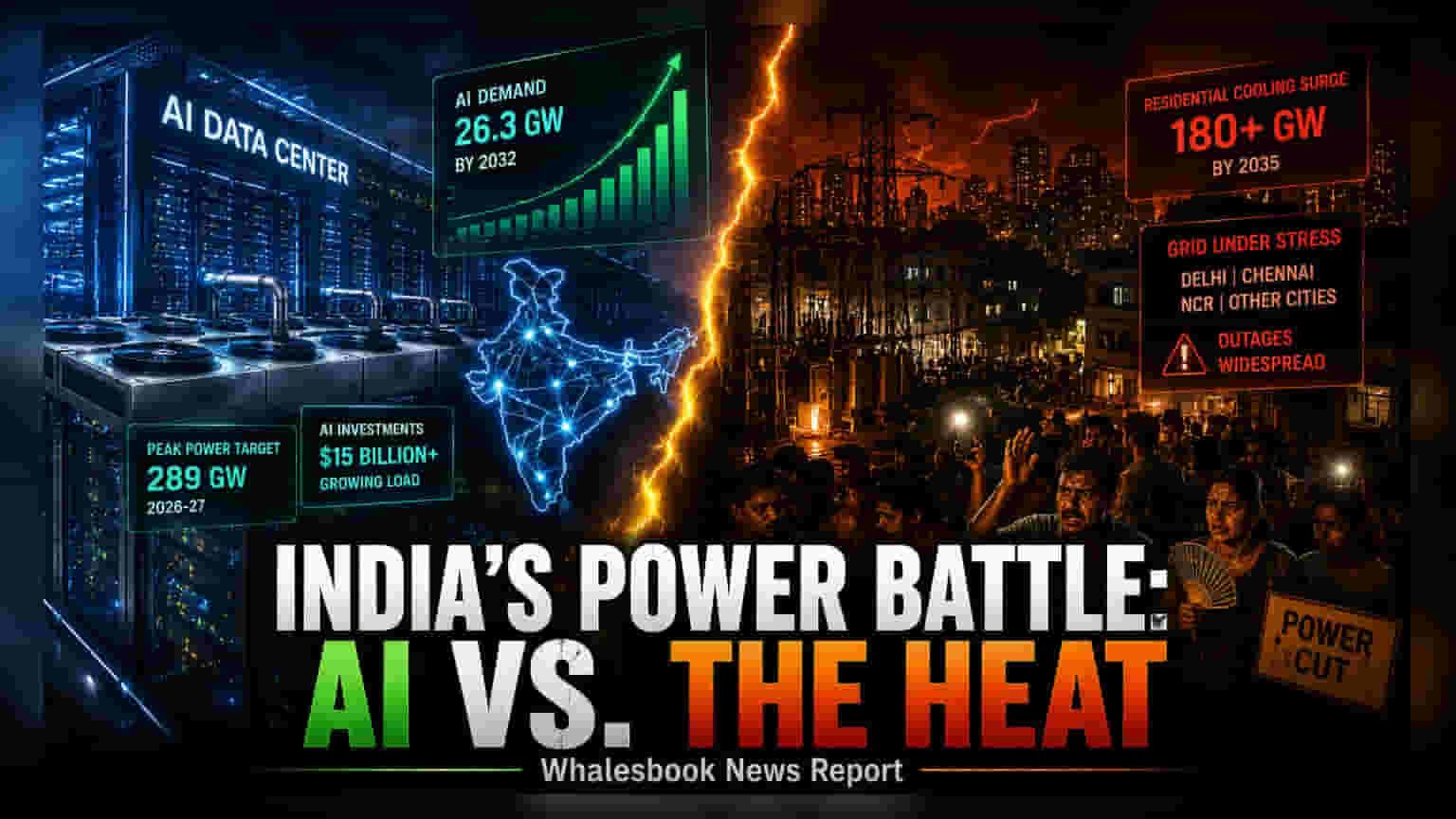
India’s electricity grid is managing a surge in demand as AI data centers and residential air conditioning units compete for power. With AI centers needing 26.3 GW by 2032 and cooling demand projected to add 180 GW by 2035, infrastructure investment is becoming a critical area for the power sector.
India's national power grid is currently navigating a significant stress test, driven by two distinct but compounding energy demands: the rapid expansion of AI-driven data centers and a sharp, weather-dependent rise in residential cooling usage. As the nation targets a peak power demand of 289 GW for the 2026-27 fiscal year, industry data suggests that infrastructure upgrades and storage solutions are becoming essential to manage this load.
The challenge for the grid is a matter of timing. While solar power provides a large portion of energy during the day, production drops after sunset just as residential demand peaks. This creates a supply gap that utilities must fill with other sources. The Ministry of Power projects that AI data centers will require an additional 26.3 GW of load by 2032. Simultaneously, air conditioning demand is expected to climb, contributing over 180 GW of peak demand by 2035. This dual pressure is causing localized outages in major urban centers, including Delhi, Chennai, and parts of the National Capital Region.
Corporate investment is accelerating the AI load. Google, for instance, broke ground on a gigawatt-scale AI data center in Visakhapatnam in April 2026, part of a broader $15 billion investment commitment. While such projects drive economic growth, they require constant, high-intensity electricity, often termed 'firm power.' Data centers need this supply around the clock, which can sometimes put them in direct competition with residential households during peak evening hours when power supply is already stretched.
The broader implications extend beyond just total generation capacity. The primary hurdle for the energy sector is grid stability. High-intensity, non-linear demand from AI servers can interfere with grid frequency and voltage if power usage fluctuates suddenly. Furthermore, data centers are highly water-intensive for cooling purposes, adding environmental complexity to their location in water-stressed urban areas. Infrastructure bottlenecks, particularly in transmission networks, remain a significant challenge as the country moves to integrate these massive loads with legacy distribution systems.
To address these hurdles, the industry is seeing a shift toward innovation in storage and efficiency. New private sector initiatives, such as those by Sthyr Energy in zinc-based battery storage and cooling-hardware providers like KuhlTherm, are working to develop solutions that bridge the gap between supply and demand. Additionally, regulatory frameworks like the recently passed SHANTI Act aim to bolster nuclear energy as a source of reliable, clean power for these emerging industrial requirements.
For investors and market observers, the key monitorables over the coming quarters will be the pace of transmission infrastructure development and the effectiveness of new long-duration energy storage projects. The ability of distribution companies to manage this growing demand without compromising supply reliability for households will likely remain a central theme in India's energy story for years to come.