 Whalesbook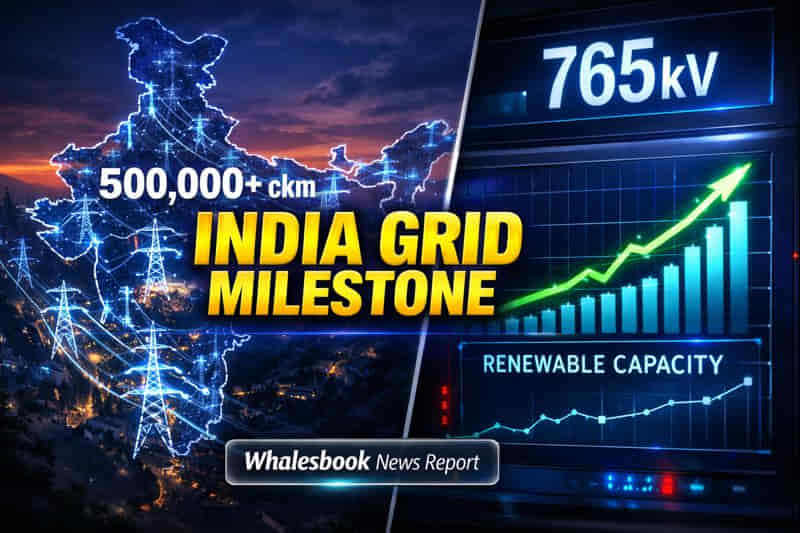
Power Transmission Network Reaches Landmark
India's national power transmission network has achieved a significant milestone, surpassing five lakh circuit kilometres (ckm) of transmission lines capable of carrying high-voltage energy of 220 kilovolts and above. This expansion also includes a transformation capacity of 1,407 gigavolt amperes (GVA). The world's largest synchronous national grid reached this point on January 14, 2026, with the commissioning of a 628-ckm, 765 kV transmission line connecting Bhadla II to the Sikar II substation in Rajasthan. This new infrastructure is specifically designed to facilitate the evacuation of renewable energy from the Rajasthan Renewable Energy Zone.
Enabling Massive Renewable Energy Integration
The commissioning of the Bhadla II to Sikar II line allows for an additional 1,100 MW of power to be evacuated from the solar power complexes in Bhadla, Ramgarh, and Fatehgarh. This development is critical as India pursues its ambitious target of achieving 500 GW of non-fossil fuel-based energy generation capacity by 2030. The enhanced transmission capacity is a cornerstone for integrating the growing volume of solar and wind power into the national grid, supporting the country's climate commitments and energy security.
Sustained Growth and Unified Grid Vision
This milestone represents substantial growth in India's transmission infrastructure. Since April 2014, the country's transmission network has expanded by 71.6 percent, adding 2.09 lakh ckm of transmission lines and boosting transformation capacity by 876 GVA. The inter-regional power transfer capacity now stands at 1,20,340 MW, a key enabler of the 'One Nation – One Grid – One Frequency' vision, ensuring seamless electricity flow across different regions.
Future Expansion and Policy Directives
Further strengthening of the grid is underway, with inter-state transmission projects expected to add approximately 40,000 ckm of lines and 399 GVA of transformation capacity. These efforts are supported by ongoing intra-state projects contributing an additional 27,500 ckm and 134 GVA. Complementing this infrastructure drive, the Ministry of Power has released the draft National Electricity Policy (NEP) 2026, outlining a roadmap for a future-ready, reliable, affordable, and sustainable power sector. This policy aims to transform the sector and increase per capita electricity consumption, aligning with the vision of Viksit Bharat @2047.