 Whalesbook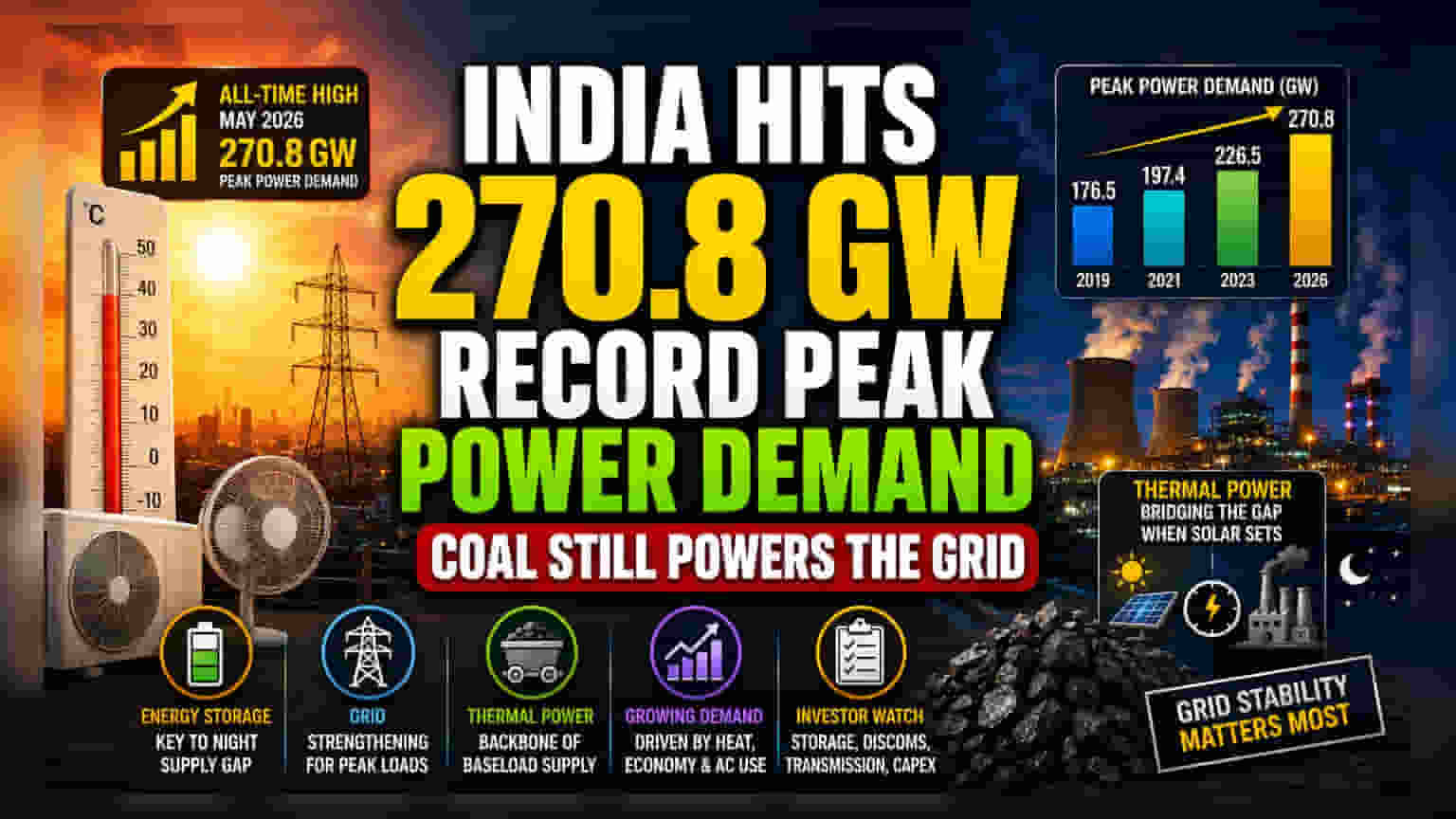


What Happened
India’s electricity grid faced its biggest test in May 2026, with peak power demand hitting an all-time high of 270.8 gigawatts. This record surge was driven by extreme summer temperatures across the country, which pushed the use of cooling appliances like air conditioners and fans to new levels. For context, this is a significant jump from peak demands recorded in previous years, reflecting both economic growth and the impact of severe heatwaves on energy consumption.
The Shift in Energy Demand
While India has made rapid progress in adding renewable energy capacity, the May 2026 record highlighted a specific challenge: timing. Solar power, a major part of India’s green energy mix, produces electricity mainly during daylight hours. However, the peak demand often extends into the evening and night, when solar generation is unavailable.
This gap between peak demand and solar availability has forced the grid to rely heavily on thermal power, primarily coal-based plants, to bridge the supply deficit. Data from recent weeks shows that thermal power plants were essential in maintaining supply stability, as they can be ramped up to provide power when solar output drops. This confirms that coal remains the backbone of India's baseload power supply, at least until large-scale energy storage solutions become more common.
Why This Matters For Investors
The power sector is currently undergoing a structural change. Investors are watching this transition because it impacts how power companies plan their future spending. The need for "dispatchable" power—energy that can be turned on or off when needed—is growing.
Companies that operate thermal power plants are seeing higher utilization levels, which can improve their operational performance. Simultaneously, there is a massive push toward creating energy storage systems, such as battery storage or pumped hydro, to capture excess solar power produced during the day and use it at night. This transition creates a dual opportunity: continued demand for thermal power to ensure grid stability and a growing market for storage and grid-modernization technology.
Risks And Grid Challenges
Managing such high demand is not without risk. The primary concern for the system is grid stress. When demand spikes rapidly, it tests the limits of transmission lines and distribution networks.
Additionally, there is the risk of supply bottlenecks. If thermal power plants cannot source enough coal or if transmission capacity is insufficient to move power from surplus regions to deficit areas, it can lead to supply shortages. The government and grid operators are coordinating closely, but any failure to keep up with this demand growth could lead to regulatory pressure or operational challenges for power producers and distributors.
What Investors Should Track
Investors may keep an eye on a few key factors moving forward. First, the progress of large-scale energy storage projects is crucial; these are the long-term solution to the "non-solar" supply gap. Second, the financial health of state distribution companies (DISCOMs) remains a monitorable, as they are the primary buyers of electricity. Third, updates on transmission infrastructure expansion are important, as a stronger grid is needed to handle rising peak loads. Finally, management commentary from power utility companies regarding their capacity addition plans and their strategy for balancing thermal and renewable assets will provide a clearer picture of long-term growth sustainability.