

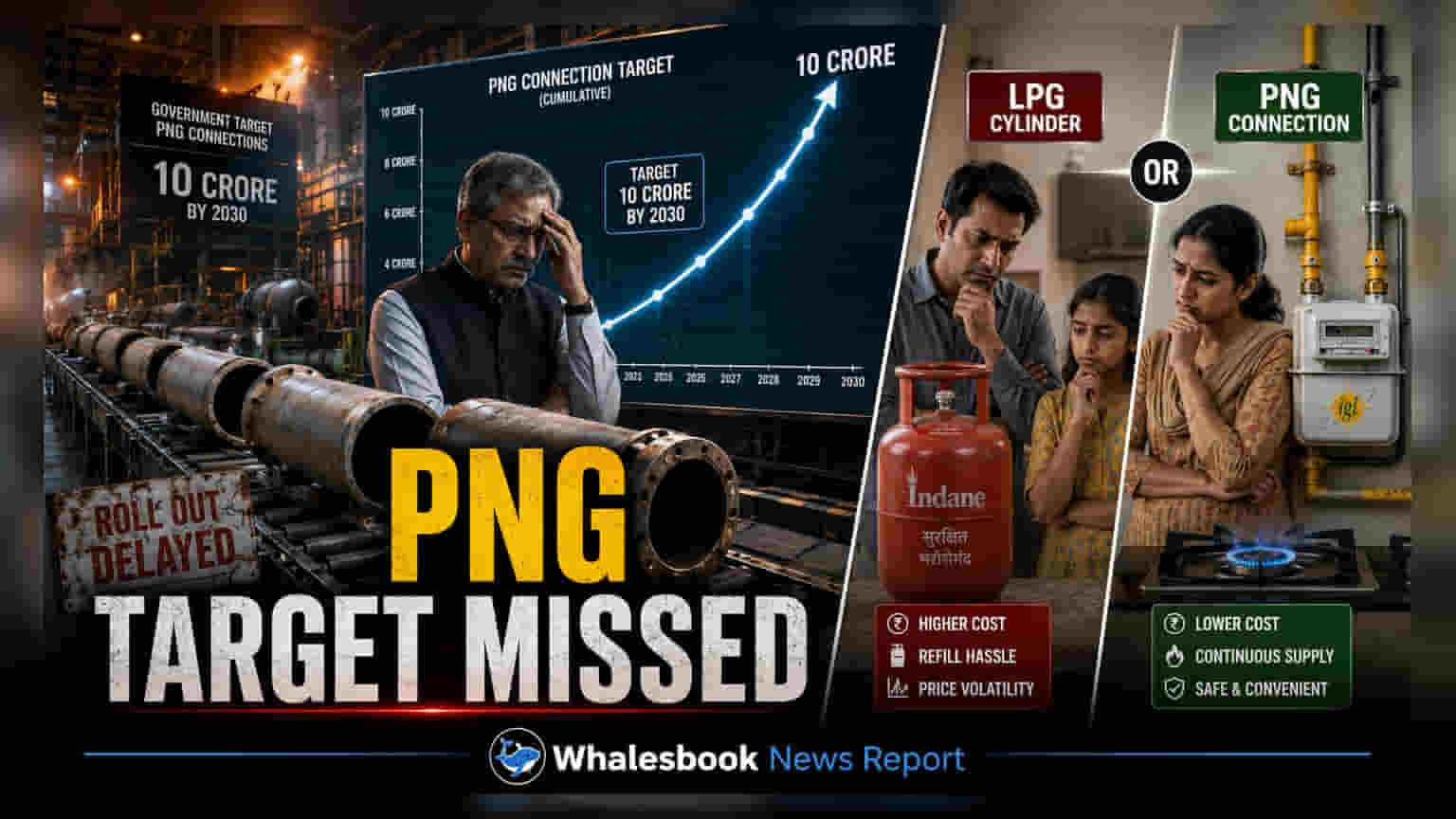
India has reached only 13.4 lakh new piped natural gas (PNG) connections in six months, falling short of the 60 lakh target. High upfront security deposits and consumer preference for LPG continue to slow down the transition to piped gas. Investors may monitor how city gas distribution companies manage infrastructure costs and future adoption rates.
India’s ambitious push to expand piped natural gas (PNG) coverage is moving slower than anticipated. Data indicates that only 13.4 lakh new connections were activated in the last six months, meeting just about 20% of the government's 60 lakh target set in March 2026. While city gas distributors have established a network capable of serving over 1.7 crore households, actual conversion remains a significant challenge.
Several practical hurdles are slowing the transition for households. A primary obstacle is the upfront cost, including a security deposit of ₹6,000, which acts as a deterrent for many families. Furthermore, unlike essential utilities such as electricity or water, switching to piped gas is optional. Many consumers, particularly those in rental properties or those already holding multiple LPG cylinders, prefer the familiarity and flexibility of their current setup. Landlords have also shown limited interest in installing piping infrastructure in their properties.
Operating costs for gas distribution companies add another layer of pressure. These firms face high capital spending to lay pipelines, often compounded by charges imposed by local municipal bodies for digging and infrastructure work. When these costs are high, it becomes difficult for companies to keep connection fees affordable while maintaining healthy profit margins.
There are signs of improvement in the installation pace, which has risen from roughly 3,000 daily connections in late 2025 to over 9,000 per day recently. This progress follows government directives to municipal bodies to reduce infrastructure charges and a push from oil marketing companies to encourage consumers in PNG-ready areas to move away from LPG. A de-duplication exercise is currently identifying households that possess both LPG and PNG connections, which may lead to more targeted efforts to convert users to piped gas.
The government's long-term goal of reaching 12.6 crore connections by 2032 remains significantly ahead of current reach. While the sector has built a foundation of over 1.7 crore connections across 312 geographical areas, the gap between potential and actual use is wide. The key monitorable for investors will be how city gas companies balance the high cost of network expansion with the need to accelerate consumer adoption to meet these long-term targets.