
Government Strategy Pressures Finances
The government's strategy to shield consumers from volatile global LPG prices means sustained financial pressure on these state-run companies, forcing them to manage significant cash flow gaps.
Delayed Payout Means Longer Cash Flow Strain
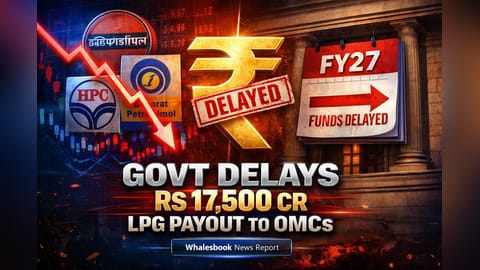
The plan to pay the remaining ₹17,500 crore for LPG losses in seven equal installments until March 2027 signals a prolonged period of financial strain for Indian Oil Marketing Companies (IOCL, BPCL, HPCL). This staggered approach means they must manage ongoing cash flow challenges as reimbursements are delayed. As of April 2026, these companies, with market capitalizations in the hundreds of billions of rupees and P/E ratios between 9x and 12x, saw moderate stock price gains last year, mainly following market and oil price trends. However, these delayed compensation payments create a significant hurdle for managing their working capital.
Rising Global Prices Deepen LPG Sales Losses
This compensation plan addresses surging international LPG prices, with Saudi Contract Prices for LPG rising sharply. Geopolitical factors, including disruptions in the Strait of Hormuz, are impacting supply routes and driving up import costs. This means the companies are losing an estimated ₹380 on each 14.2 kg cylinder sold as of early April 2026. While the government aims to protect Indian consumers from these global price shocks, it requires ongoing financial aid for the oil companies. Past compensation packages have offered temporary relief but have not solved the core problem of domestic prices not keeping pace with global benchmarks.
Pricing Gaps Hamper Oil Firms' Growth Plans
Reliance on government compensation highlights a structural pricing gap that restricts the strategic freedom of IOCL, BPCL, and HPCL. Unlike private energy firms with more flexible pricing or diverse income, these state-run companies are highly exposed to volatile global oil markets and government policy goals. Constantly absorbing losses and facing delayed payouts can hinder essential capital spending on refinery upgrades, network expansion, and cleaner energy tech. Analysts often give these state-owned firms neutral ratings, recognizing their consistent dividend payments but warning about the risks of policy dependence and unpredictable price swings. The current environment means managing significant government-imposed financial burdens overshadows operational efficiency.
Future Depends on Pricing Reforms and Government Support
The future financial well-being of these oil companies depends heavily on government policy for LPG pricing and the government's ability to fund compensation packages. A ₹12,000 crore subsidy for Ujjwala consumers was also approved for FY26, but the larger loss compensation mechanism signals a continuous need for budget funds to maintain energy affordability. Brokerages generally hold a cautious view, expecting any significant rise in company valuations to rely on structural reforms in domestic LPG pricing or a long period of stable, low international energy prices, neither of which seems likely soon. The current payout plan indicates these energy giants will continue to manage tight working capital.