 Whalesbook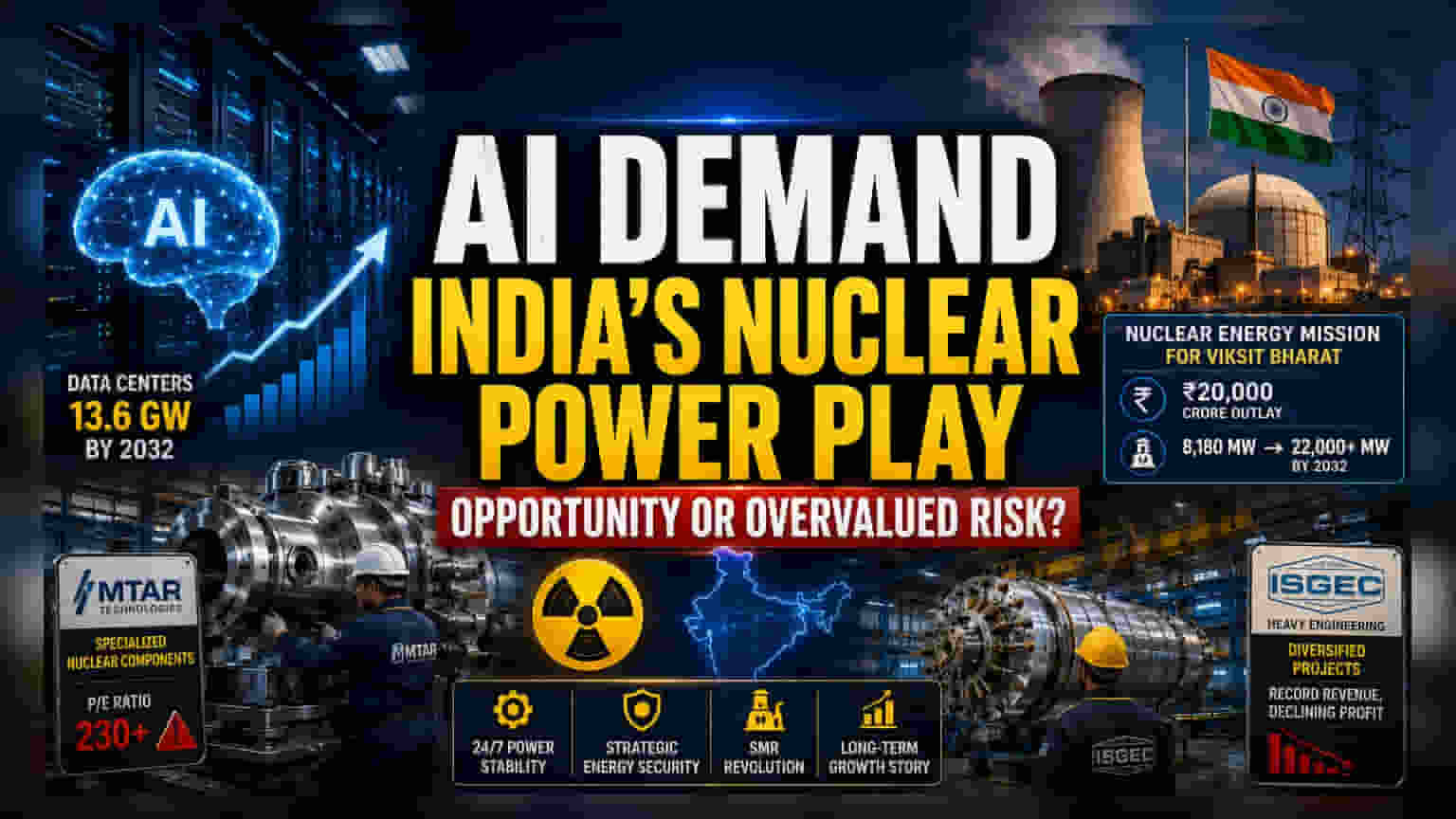


The Power Gap Driving the Nuclear Pivot
Artificial intelligence has introduced an unavoidable structural challenge to India’s energy infrastructure. Unlike the intermittency that solar and wind farms offer, AI data centers operate as constant, high-density loads that necessitate 24/7 power stability. As grid demand projections outpace current capacity—with data center requirements expected to reach 13.6 GW by 2032—the limitations of renewable energy in the absence of massive storage have made nuclear power the primary strategic hedge. The government’s Nuclear Energy Mission for Viksit Bharat, backed by a ₹20,000 crore outlay, aims to scale capacity from approximately 8,180 MW to over 22,000 MW by 2032, leveraging Small Modular Reactors to bypass the long-gestation periods of traditional plant construction.
The Engineering Supply Chain Constraints
Building a fleet of indigenous reactors requires more than policy; it demands specialized metal fabrication and safety-critical components that only a few entities can manufacture. MTAR Technologies has carved out a distinct competitive advantage through its entrenched relationships in civil nuclear, space, and defense sectors. The manufacturing of complex components like fuel machines and grid plates involves rigorous certification barriers, effectively creating a high-entry moat for the company. Conversely, ISGEC Heavy Engineering offers a broader diversified approach, participating in power plant turnkey projects and machinery fabrication. While MTAR benefits from specialized high-margin segments, ISGEC’s reliance on large-scale infrastructure projects exposes it to different cyclical pressures within the heavy engineering sector.
The Forensic Valuation Check
Investors should note the divergence between industry excitement and financial reality. MTAR Technologies currently trades at a price-to-earnings (P/E) ratio exceeding 230, a valuation multiple that prices in aggressive, flawless execution over the next several years. This extreme premium highlights a significant risk: any delay in the government’s reactor deployment timeline could trigger a sharp derating of the stock. Meanwhile, ISGEC Heavy Engineering faces a different set of challenges. Despite achieving record revenue in recent quarters, the firm reported a decline in consolidated net profit, illustrating a disconnect between top-line expansion and bottom-line stability. Margin pressure, driven by operational costs in its construction-heavy business, serves as a cautionary tale for those betting on rapid, easy profits in the energy sector.
Structural Risks and Regulatory Hurdles
Beyond the valuation of specific equities, the broader sector faces inherent hurdles. Private sector participation remains dependent on evolving regulatory frameworks, including potential modifications to the Atomic Energy Act and the Civil Liability for Nuclear Damage Act. Furthermore, the operational history of these reactors is nascent, and the execution risk for Small Modular Reactors at scale is historically high. Investors must balance the compelling long-term demand for AI-driven energy with the reality that infrastructure-heavy companies often struggle with extended working capital cycles and regulatory project delays, which can stifle free cash flow for extended periods.