

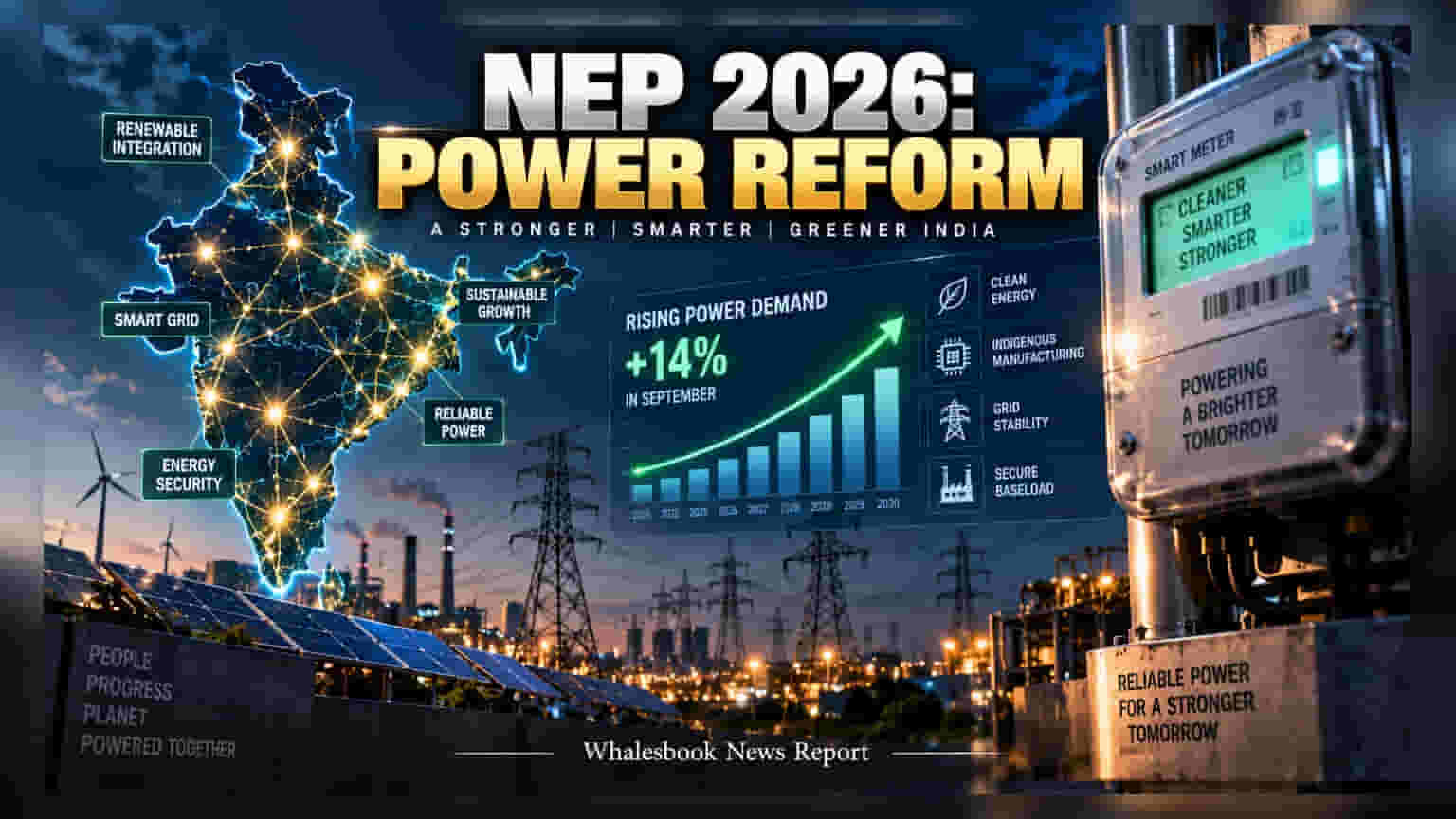
The Ministry of Power has submitted the draft National Electricity Policy 2026 to the Union Cabinet, marking the first major update since 2005. The policy aims to improve grid stability, support renewable energy integration, and boost local manufacturing of smart meter components. This shift balances the growing demand for green energy with the continued reliance on coal, signaling a modernized approach to power infrastructure.
The Ministry of Power has submitted the draft National Electricity Policy 2026 to the Union Cabinet for inter-ministerial review. This move is significant as it marks the first comprehensive policy overhaul since 2005, reflecting the drastic changes in India’s energy sector over the last two decades. While the earlier policy focused primarily on basic electricity access, the 2026 update addresses the complexities of a modern, high-capacity grid.
Investors may note that the proposed policy reflects a move toward grid stability and realism. Power officials have indicated a target of 60 percent utilization for grid capacity, acknowledging that constant peak-level performance is difficult to maintain with the high share of renewable energy. For companies involved in transmission and distribution, such as Power Grid Corporation of India, this shift toward stability and sophisticated grid management could lead to sustained capital spending requirements. The policy is designed to align with the broader national vision for 2047, emphasizing infrastructure that can handle fluctuating power flows from wind and solar sources.
A key area of interest is the focus on indigenous manufacturing, particularly for smart meters. The Ministry is actively incentivizing local developers to design and produce chips for smart meters, aiming to reduce dependence on imported components. This is a potential positive for domestic manufacturers like Genus Power Infrastructures and HPL Electric & Power, as it aligns with government efforts to build a localized supply chain for digital infrastructure.
Despite the push for renewables, the policy maintains a pragmatic approach toward coal-based power. With electricity demand climbing by 14 percent in September, coal remains a critical fuel source. The government’s effort to ensure fuel security is evident in the stabilization of logistics, with over 440 rail rakes being deployed daily to keep power plants supplied. Large power producers like NTPC and coal suppliers like Coal India are likely to remain central to the country's energy strategy in the near term as they bridge the gap during the energy transition.
The final shape of the policy, once approved and notified, will determine the pace of investment for utilities and equipment manufacturers. Investors may track the implementation timelines, specific subsidy or incentive structures for local manufacturing, and any regulatory changes affecting power distribution companies. The balance between aggressive renewable adoption and the need for reliable baseload power through coal will remain a defining trend for the sector's financial health in the coming years.