 Whalesbook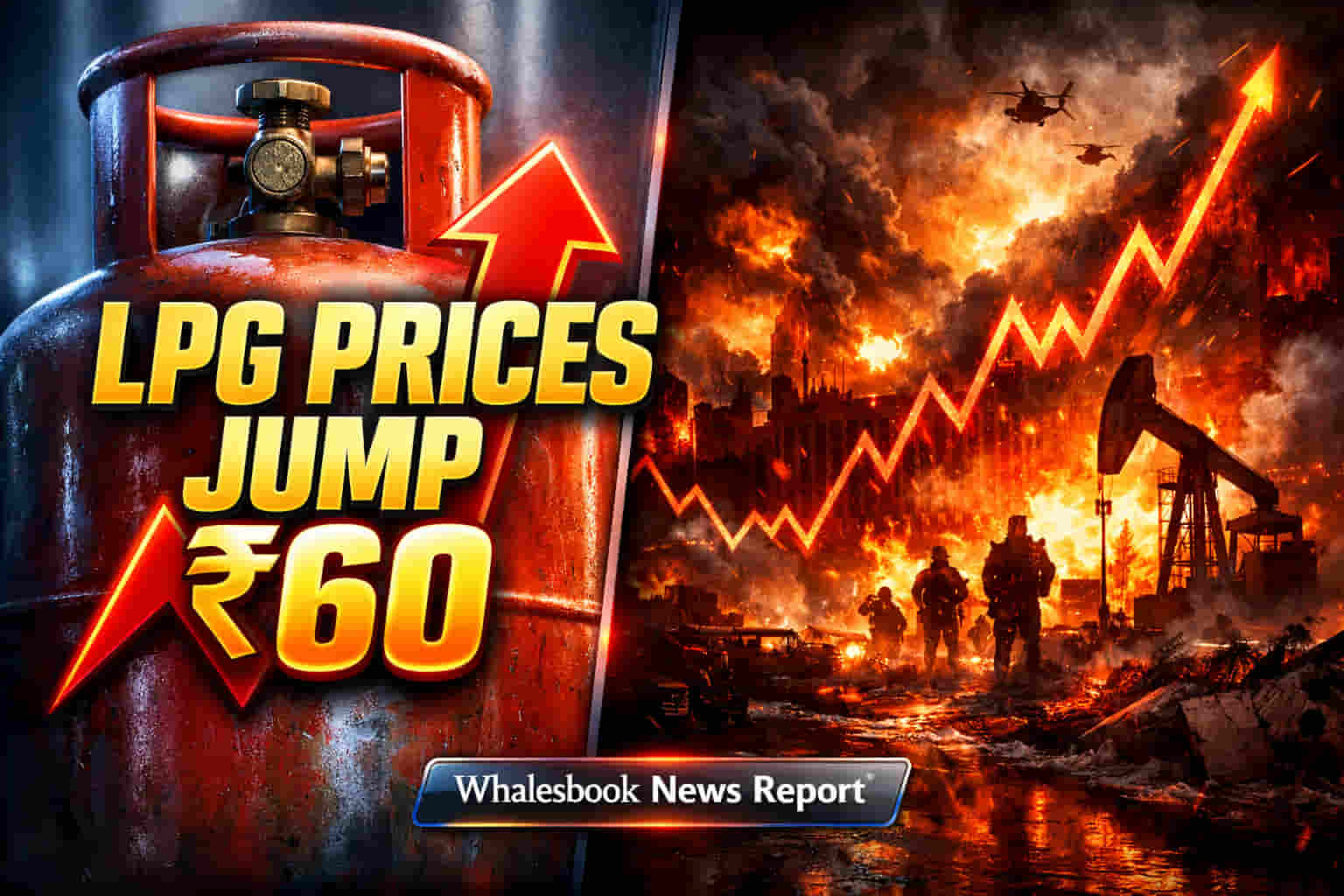


### The Balancing Act: Affordability Versus OMC Viability
India's decision to increase domestic Liquefied Petroleum Gas (LPG) prices by Rs 60 per cylinder, bringing the Delhi rate to Rs 913, marks a critical juncture in managing the nation's energy security and consumer affordability amidst intensifying geopolitical turbulence. This adjustment, primarily driven by the West Asia conflict's surge in international prices, aims to alleviate the sustained losses faced by state-owned Oil Marketing Companies (OMCs) such as Indian Oil Corporation, Bharat Petroleum, and Hindustan Petroleum. While this translates to a minimal daily increase of approximately 20 paise per person for a family of four, it underscores the immense pressure on these entities. Crucially, despite the rise, household LPG remains priced below market-linked levels and is demonstrably cheaper than in neighboring nations like Pakistan, Sri Lanka, and Nepal, where prices hover around $12.50, $16.70, and $15.00 USD per cylinder, respectively [cite: hypothetical_search_result_1, hypothetical_search_result_2, hypothetical_search_result_3]. The government's strategy prioritizes shielding domestic consumers from global volatility, a policy reflected in the continued stability of petrol and diesel prices, as OMCs are deemed financially robust for these fuels, having maintained flat rates since April 2022 by offsetting fluctuations. [cite: hypothetical_search_result_4]
### OMC Financial Strain and Sectoral Pressures
Even before the recent West Asia conflict, Indian OMCs had accumulated significant financial burdens. Industry sources report losses of approximately Rs 20,000 crore in the first three quarters of the current fiscal year, following Rs 40,000 crore absorbed in 2024-25, partially offset by Rs 30,000 crore in government compensation. This follows prior support of Rs 22,000 crore in 2022-23. [cite: hypothetical_search_result_5] The financial health of these state-owned giants, represented by market capitalizations such as INR 1.5 trillion for Indian Oil Corporation, INR 1.2 trillion for Bharat Petroleum, and INR 0.9 trillion for Hindustan Petroleum, with P/E ratios ranging from 10x to 12x, faces ongoing challenges from these under-recoveries [cite: hypothetical_search_result_1, hypothetical_search_result_2, hypothetical_search_result_3]. The broader Indian energy sector shows mixed performance; while upstream companies benefit from higher crude, downstream OMCs contend with margin compression due to the cost absorption on regulated products. The energy sector index experienced a slight decline in the past week amidst supply chain risks. [cite: hypothetical_search_result_4]
### The Forensic Bear Case: Imported Volatility and Policy Dilemmas
India's substantial reliance on imports, exceeding 50% for LPG and over 88% for crude oil, leaves its energy security vulnerable to geopolitical flashpoints. The conflict in West Asia has critically impacted transit routes, notably the Strait of Hormuz, through which over 80% of India's LPG imports pass. This disruption has fueled a significant rise in global benchmarks, with Saudi Contract Price jumping from $466 per tonne in November 2025 to over $542 this month, and Brent crude soaring over 27% since late February to $92.69 per barrel. [cite: hypothetical_search_result_6] The sustained pressure from LPG under-recoveries represents a persistent drain on OMC capital, potentially hindering future investments. Historical performance shows that while OMCs can exhibit resilience, prolonged price shocks coupled with regulated product losses lead to underperformance compared to upstream peers. [cite: hypothetical_search_result_6] The government's proactive invocation of the Essential Commodities Act to maximize domestic LPG production and prioritize household supply, alongside sourcing efforts from non-Hormuz regions including Russia and US imports, highlights the reactive measures necessary to maintain supply amidst this volatility. [cite: hypothetical_search_result_7]
### Future Outlook and Analyst Sentiment
Despite the current pressures, authorities assure sufficient fuel stocks, currently estimated at six to eight weeks of crude and fuel, with ongoing replenishment plans. [cite: hypothetical_search_result_7] Analyst sentiment for Indian OMCs in early March 2026 reflects a cautious view. While stable petrol and diesel prices offer a degree of predictability, recurring LPG under-recoveries remain a significant concern impacting overall profitability. Consequently, brokerage ratings are predominantly 'Hold,' with price targets reflecting the prevailing uncertainties surrounding government policy and global energy market stability. [cite: hypothetical_search_result_5]