

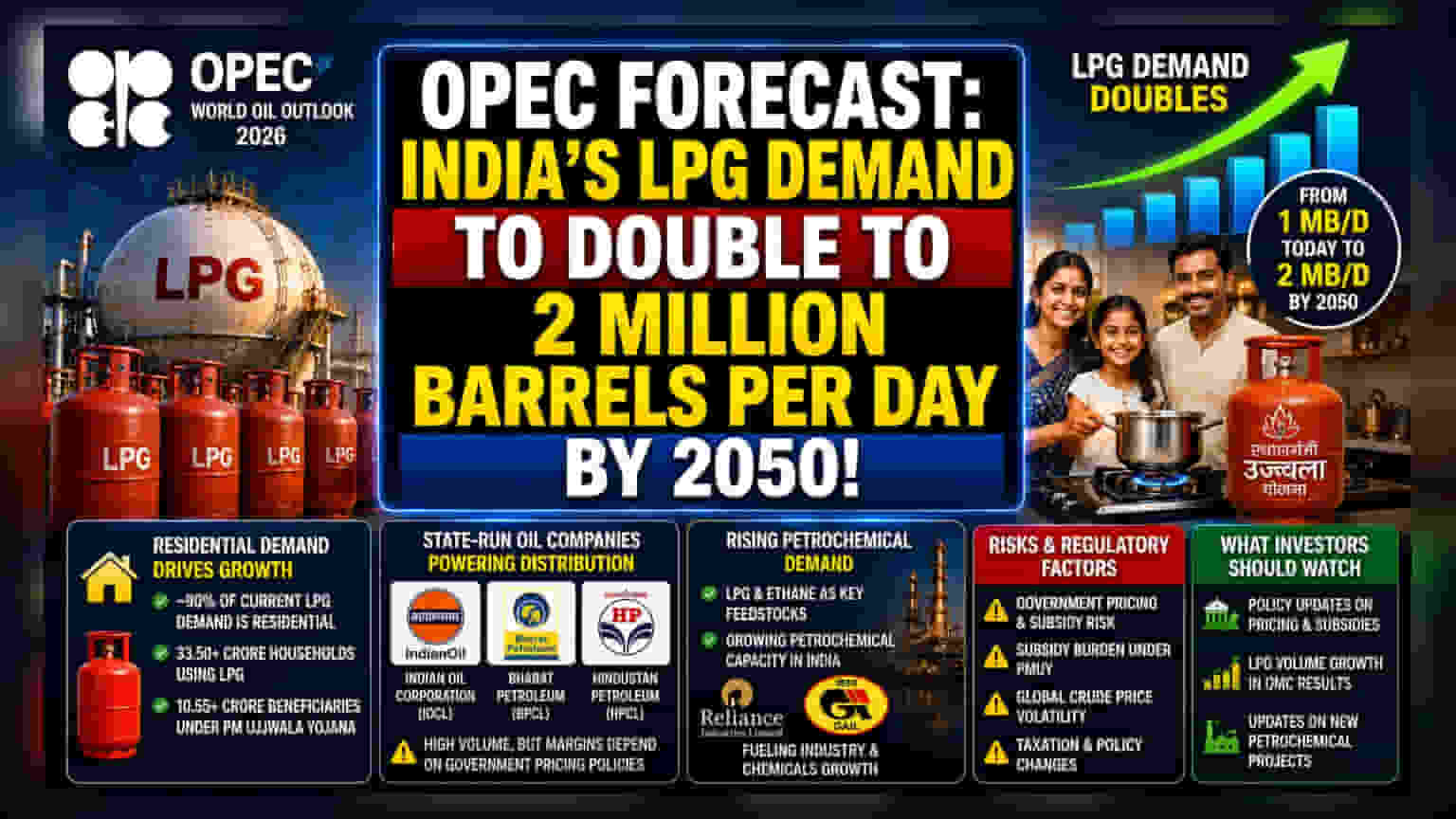
OPEC’s World Oil Outlook 2026 projects India’s LPG demand to double to 2 million barrels per day by 2050. Driven by household cooking and the petrochemical industry, this long-term growth supports volume potential for state-run oil marketing companies and private sector players. However, investor returns will continue to depend on global energy prices and government subsidy policies.
What Happened
The Organization of the Petroleum Exporting Countries (OPEC) released its World Oil Outlook 2026, forecasting a significant rise in India’s liquefied petroleum gas (LPG) consumption. The report predicts that India’s demand for LPG will climb to 2 million barrels per day by 2050, effectively doubling from current levels. This projection highlights India's position as a major engine for global energy demand growth over the next two decades.
Why Investors Are Watching The Energy Mix
The OPEC report points to two main drivers for this growth. First, the residential sector is responsible for nearly 90% of current LPG demand, supported by the massive expansion of gas connections. With over 33.50 crore households now using LPG, and over 10.55 crore beneficiaries under the Pradhan Mantri Ujjwala Yojana (PMUY) scheme, the distribution network is widespread. Second, the rising petrochemical industry is increasing the consumption of LPG and ethane. For long-term investors, this suggests a steady growth in the volume of energy products sold within the domestic market.
Impact On State-Run Oil Companies
The primary entities that manage LPG distribution in India are state-run oil marketing companies (OMCs), including Indian Oil Corporation (IOCL), Bharat Petroleum Corporation (BPCL), and Hindustan Petroleum Corporation (HPCL). These companies operate the vast supply chains required to reach millions of households. While higher consumption volumes can lead to more revenue, the financial performance of these companies is often tied to government pricing policies. If the government keeps selling prices low during times of high global crude costs, the profit margins of these state-run players can come under pressure.
The Petrochemical Connection
Beyond cooking gas, the report highlights the growing role of LPG as a feedstock for the petrochemicals sector. Large integrated players like Reliance Industries and GAIL are actively expanding their petrochemical capacities. As India moves toward more industrial manufacturing, the demand for chemicals derived from LPG is expected to rise. This shift allows companies with diversified business models to potentially capture value from both fuel distribution and industrial chemical production.
Risks And Regulatory Factors
While the demand outlook appears steady, investors should note the inherent risks in this sector. The biggest factor is regulatory risk. LPG prices are sensitive to government intervention, especially for subsidized connections under schemes like PMUY. Changes in subsidy structures, taxation, or government control over retail pricing can immediately impact the earnings of oil marketing companies. Additionally, these companies are exposed to the volatility of global crude oil prices, which directly affects the cost of importing fuel.
What To Watch Next
Investors tracking this space should watch for government policy updates regarding fuel pricing and subsidy outlays, which are often detailed in budget announcements or ministry circulars. Monitoring the volume growth reported by OMCs in their quarterly results will provide a clearer picture of whether demand is matching long-term projections. Additionally, updates on new petrochemical projects by major industry players will indicate how effectively companies are capitalising on the shift toward industrial gas usage.