 Whalesbook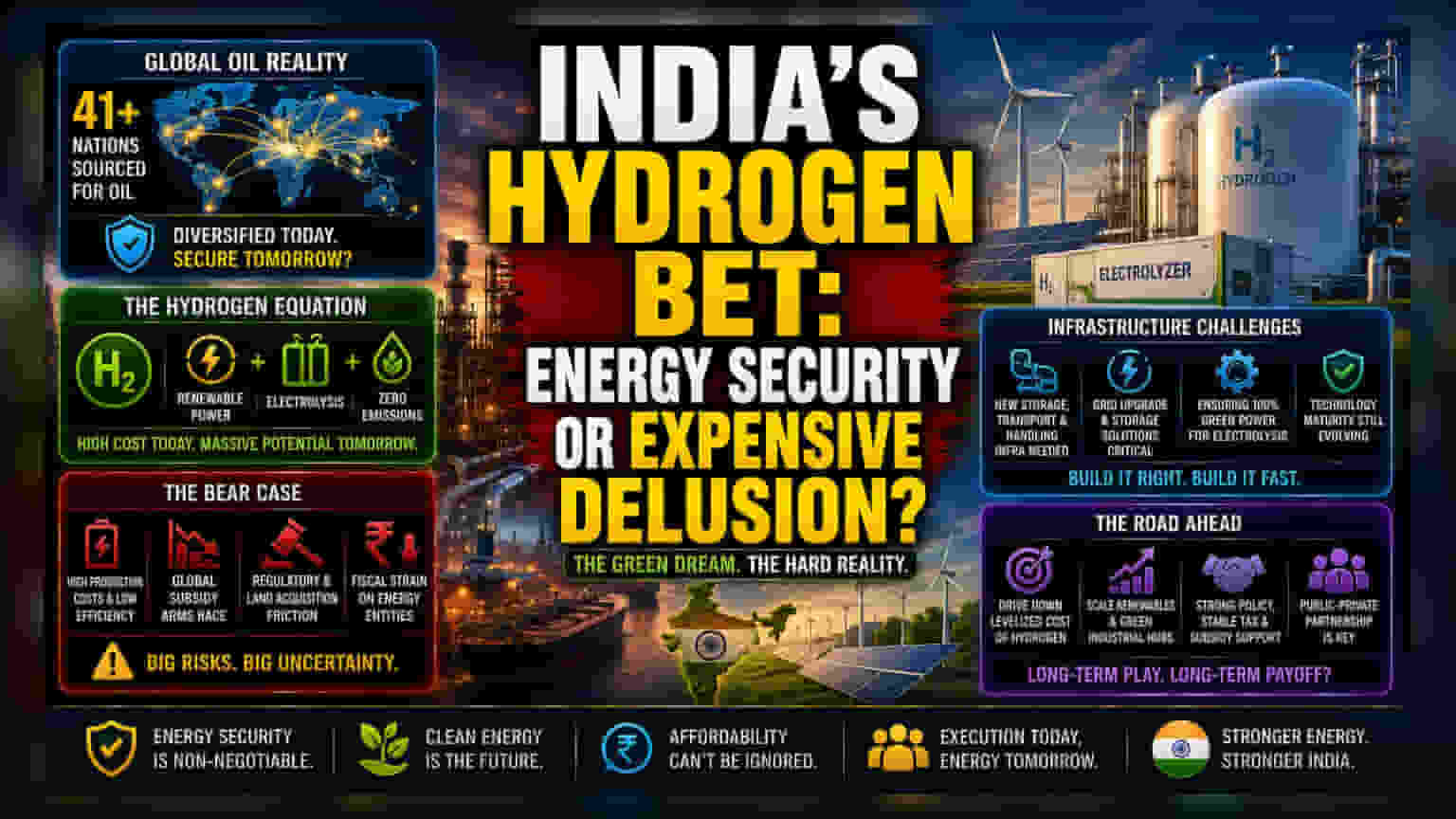


The Economic Calculus of Decarbonization
The ambition to transition toward green hydrogen as a foundational energy source hinges on India’s ability to leverage its massive industrial scale to drive down unit costs. While current energy policy emphasizes successful navigation of geopolitical volatility—such as securing stable supplies from 41 diverse nations to offset risks in the Strait of Hormuz—the pivot to hydrogen introduces an entirely different set of economic variables. The primary challenge remains the cost of green electrolysis, which currently lags behind fossil fuel alternatives. For the government’s vision to manifest, domestic producers must achieve drastic reductions in the Levelized Cost of Hydrogen (LCOH), a feat that requires both massive capital expenditure and a rapid expansion of renewable energy capacity to power the electrolysis process.
Infrastructure and Grid Integration Challenges
Transitioning from traditional crude imports to a hydrogen-based energy mix is not merely a political or diplomatic endeavor but a technical one. Unlike existing liquid fuel infrastructure, hydrogen requires specialized transport, storage, and handling facilities that are currently in their infancy. Analysts note that while India’s diplomatic agility has provided a short-term buffer against global crude price spikes, the long-term energy security argument rests on building a robust, resilient renewable grid. Integrating high-load electrolyzers into a grid that still relies heavily on coal requires significant investment in smart-grid technologies and energy storage solutions to ensure that the hydrogen produced is truly 'green' rather than carbon-intensive.
The Forensic Bear Case
The narrative of energy autonomy faces significant structural headwinds that investors and policymakers must acknowledge. Skeptics point to the 'hydrogen paradox,' where the energy required to produce, compress, and transport hydrogen often exceeds the net energy gained, leading to low overall efficiency. Furthermore, global competition is fierce; with aggressive subsidies being deployed in the European Union and the United States under the Inflation Reduction Act, Indian firms may struggle to maintain cost-competitiveness without similar, sustained fiscal support. Past policy attempts to force-transition energy markets have frequently encountered 'implementation friction,' where regulatory uncertainty regarding land acquisition and utility connection delays hampered large-scale projects. If these execution risks are not mitigated, the move toward a hydrogen economy may lead to fiscal strain on state-owned energy entities rather than the promised consumer price relief.
Future Outlook and Sectoral Consensus
Brokerage sentiment remains cautiously optimistic regarding the long-term roadmap, though institutional focus is currently directed toward mid-term earnings stability for major oil and gas players. While political leadership maintains that energy pricing is decoupled from electoral cycles, market participants are keeping a close watch on state-level tax structures and subsidy regimes, which remain the largest variables affecting retail fuel margins. For now, the transition to green hydrogen is viewed as a high-potential but high-duration project that will necessitate years of steady technological advancement and capital deployment before it impacts the average consumer's energy bill.