 Whalesbook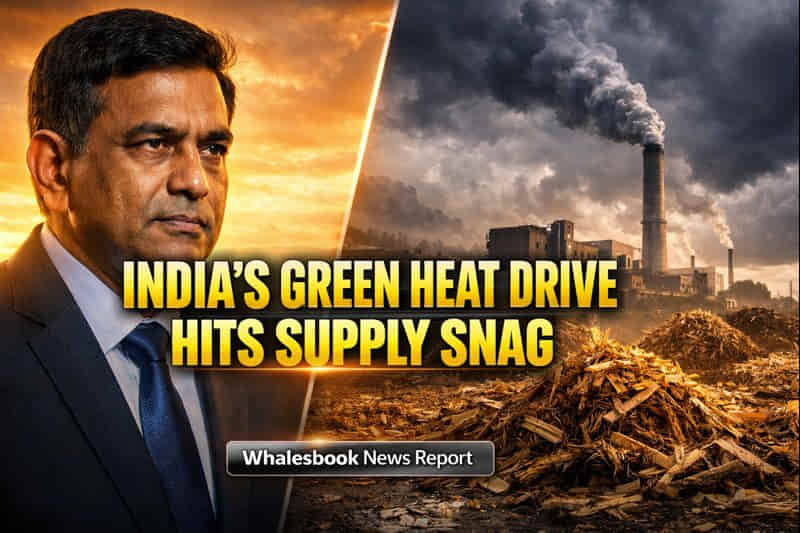
India is strategically advancing bioenergy as a key solution for decarbonizing industrial heat, a segment notoriously difficult to abate, particularly for its Micro, Small, and Medium Enterprises (MSMEs). However, policymakers and industry experts voiced concerns at a recent conference, emphasizing that the true success of this green initiative hinges less on technological prowess and more critically on establishing robust and reliable raw material supply chains.
Green Heat Ambitions for MSMEs
Bioenergy currently contributes approximately 12 gigawatts (GW) to India's renewable energy capacity, a figure smaller than solar and wind power. Yet, its impact is significant due to its wide geographic distribution and diverse feedstock options, including agricultural residue, municipal solid waste (MSW), and animal waste. This decentralized nature makes bioenergy particularly suited for providing industrial heat and steam. These are essential energy inputs for MSME-heavy sectors such as textiles, food processing, foundries, chemicals, and pharmaceuticals. These enterprises account for nearly a third of India's manufacturing output but often remain dependent on fossil fuels like coal, furnace oil, and petcoke, thereby locking in emissions and exposing them to volatile global fuel prices.
The Raw Material Roadblock
MNRE Secretary Santosh Sarangi identified raw material availability as the "weakest link" in the bioenergy value chain. Indian biomass supply chains are characterized by fragmentation, seasonality, and poor integration, casting doubt on the prospects for year-round fuel provision. "Biomass as a raw material is not yet backed by a fully established supply chain. Until that matures, availability across the year will remain a question mark," Sarangi stated, highlighting the urgent need for institutional mechanisms to efficiently aggregate and transport feedstock.
Government Initiatives and Co-Benefits
To tackle these challenges, the government is exploring policy instruments. These include biomass development obligations, digital biomass aggregation platforms, standardized green steam supply contracts, and enhanced coordination with farmer producer organizations. Programs like the National Bioenergy Programme, SATAT, and GOBARdhan aim to convert surplus crop residue and waste into a reliable industrial fuel source. This dual approach not only addresses energy needs but also creates vital rural income streams and promotes waste management. Policymakers view bioenergy as a "systems solution," offering multifaceted benefits from emissions reduction and energy security to improved rural livelihoods.
Technology and Future Outlook
While supply chains present the primary hurdle, technology gaps also persist. Secretary Sarangi pointed to the need for intensified research and development in multi-fuel boiler technologies capable of operating efficiently across varying biomass types and scales, especially for MSMEs. India is actively seeking international collaboration, notably with Germany, to adapt proven boiler designs for domestic conditions. MNRE scientists are poised to scale up research specifically tailored for small and medium industries. Ultimately, India's ability to secure, standardize, and scale biomass feedstocks will be crucial in determining bioenergy's role in the nation's clean energy transition.