 Whalesbook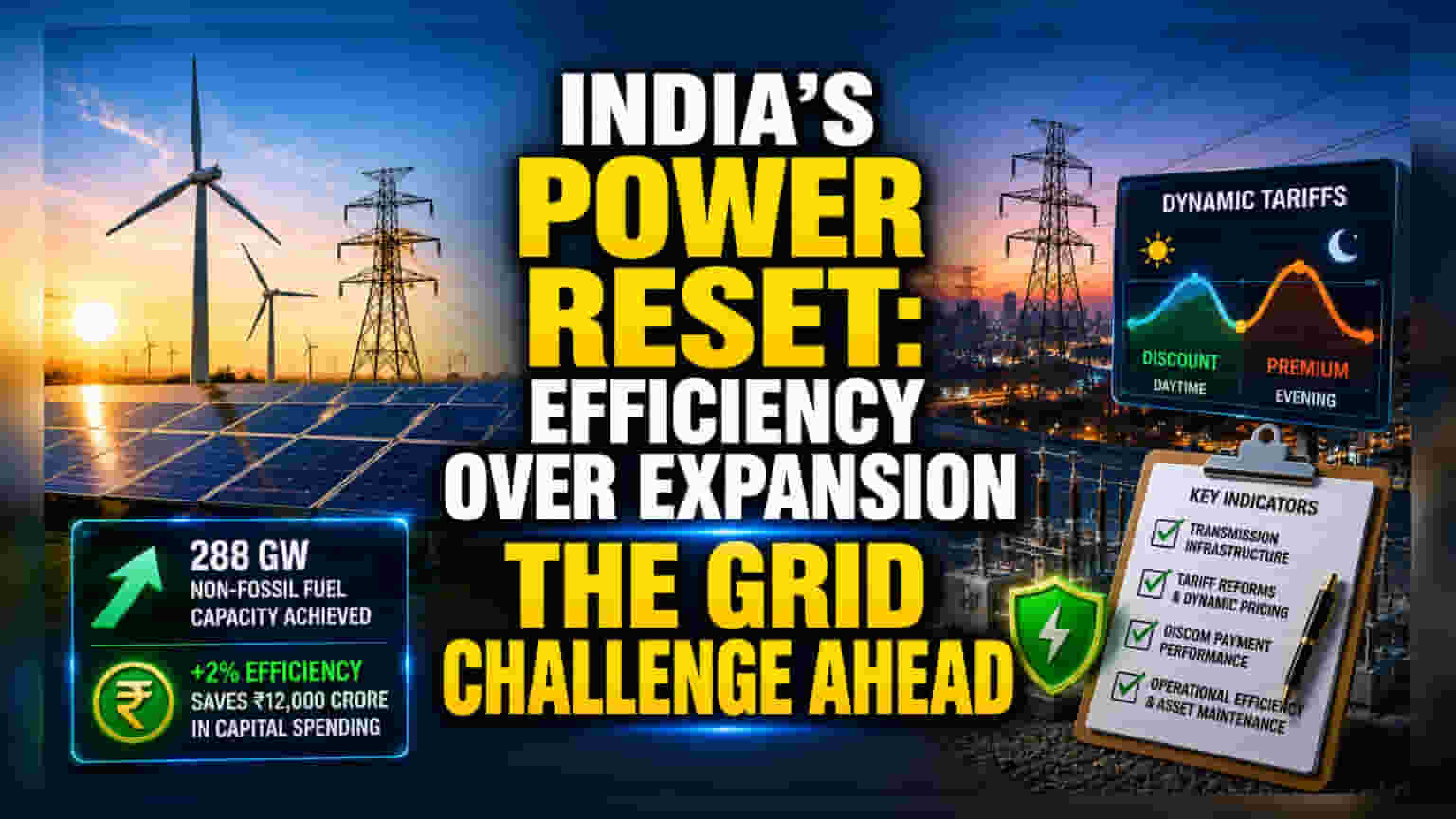


What Happened
At a recent industry conference held by the Confederation of Indian Industry (CII), leaders highlighted a critical structural challenge in India's energy sector. While the nation has achieved a significant milestone of 288 GW in non-fossil fuel power capacity, the focus is shifting from simple capacity addition to grid modernization. Experts argued that the current infrastructure is struggling to keep pace with the speed of new renewable energy installations. A key observation from the discussion was that enhancing the output efficiency of existing solar plants by just 2% could potentially save the industry ₹12,000 crore in capital spending on new projects.
The Shift Toward Operational Efficiency
For investors, this shift in focus is significant. Traditionally, the power sector has been measured by the amount of capacity added. However, the industry is now signaling that adding capacity without corresponding grid and transmission upgrades leads to inefficiencies. When power cannot be transmitted because the grid is congested, it leads to power curtailment—a situation where generated electricity goes to waste. Companies that focus on maximizing the output and efficiency of existing assets, rather than just chasing new project wins, may be better positioned to manage costs and maintain profit margins in an increasingly competitive environment.
Potential Impact of Dynamic Tariffs
Industry leaders have proposed the introduction of dynamic tariffs to improve grid utilization. This model suggests a structure where electricity prices vary based on demand—offering discounts during peak solar generation hours (daytime) and applying a premium during peak evening demand. While this could help balance the grid, it also introduces a new variable for power producers and consumers. If implemented, such a pricing model could change the revenue dynamics for renewable energy companies. Investors should monitor how policy changes in this area might affect the long-term pricing power and revenue stability of power generation firms.
The Grid Infrastructure Challenge
The core issue remains the physical infrastructure required to transport electricity from generation sites to demand centers. The renewable energy sector in India frequently faces challenges related to transmission bottlenecks. If the transmission lines are not ready when a new solar or wind farm is commissioned, the company faces an execution risk where they have an asset that cannot sell its full output. Furthermore, the financial health of state-owned distribution companies, or Discoms, remains a critical monitorable. Historically, payment delays from Discoms have affected the cash flow and working capital of power producers. Any improvement in grid infrastructure must also be supported by the financial viability of these distributors to ensure that power producers are paid on time.
What Investors Should Track
Investors looking at the power sector may want to monitor several key indicators. First, watch for progress in transmission infrastructure projects, as these are the backbone of electricity delivery. Second, keep an eye on government policy regarding tariff reforms and dynamic pricing, as these could shift revenue models for major energy players. Third, track the payment performance of Discoms, as this directly impacts the cash flow health of renewable energy companies. Finally, observe whether companies are prioritizing operational efficiency and asset maintenance, as these factors will become increasingly important as the sector matures and competition intensifies.