 Whalesbook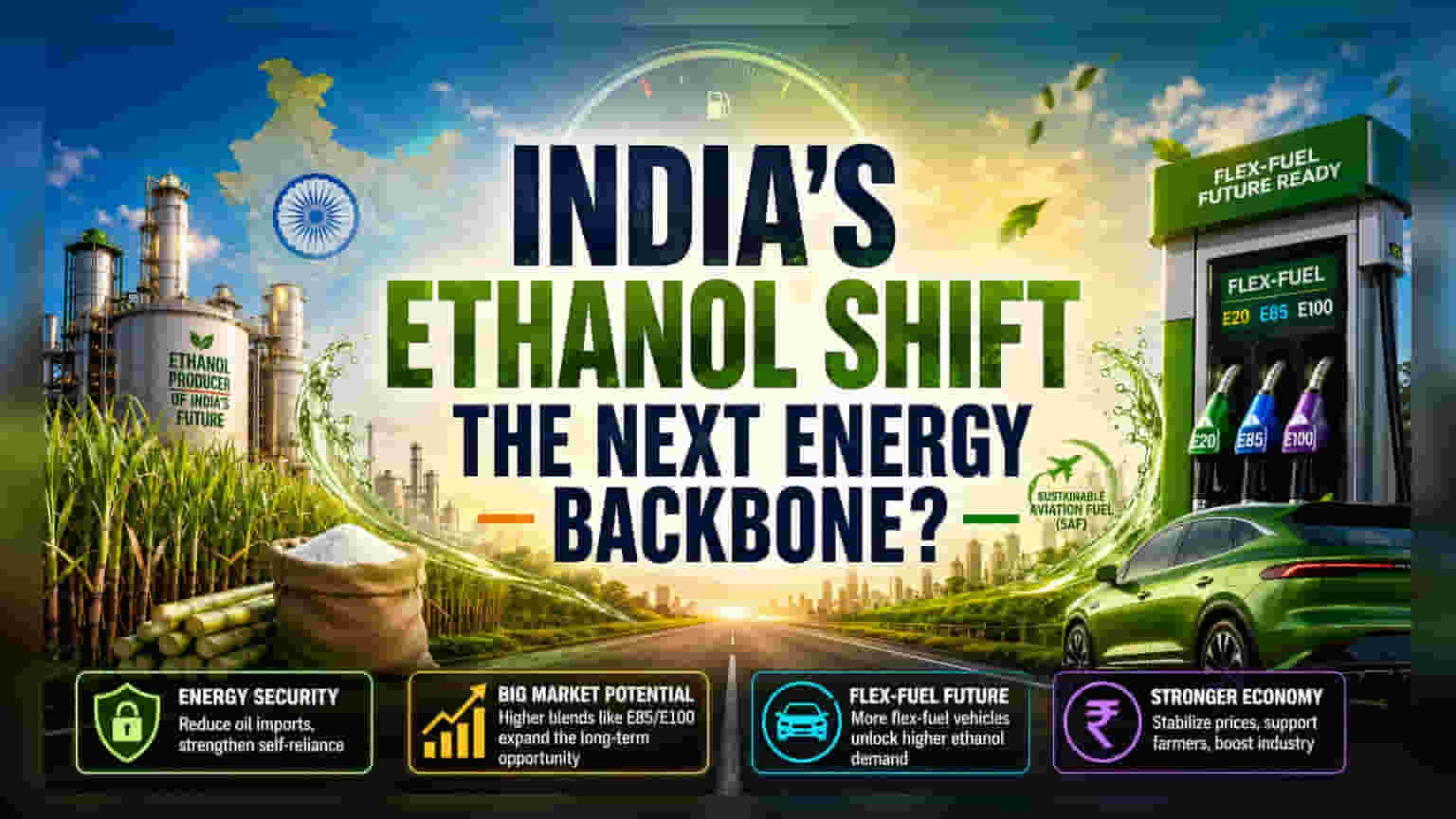


A new report suggests India's ethanol program could evolve into a core transport energy backbone, moving beyond simple 20% blending. This shift aims to buffer the country against global oil price volatility by adopting higher fuel blends like E85 and E100 alongside flex-fuel vehicles. While this signals a long-term growth opportunity for the sugar and bio-fuel sector, investors should remain cautious about regulatory hurdles, raw material supply, and the infrastructure readiness required for such a transition.
What Happened
A recent report has proposed a significant shift in India’s ethanol program, suggesting it should evolve from a standard blending requirement into a strategic transport energy backbone. Currently, India’s Ethanol Blended Petrol (EBP) program focuses on achieving a 20% ethanol blend (E20) across the country. The report argues that to enhance energy security, India should transition toward a system that can use higher ethanol blends, such as E85 or E100, and employ flexible usage strategies based on global crude oil prices.
Why This Matters For Investors
The move from a fixed-blending mandate to a flexible energy backbone represents a potential structural change for the sugar and distillery sectors. For years, sugar companies have benefited from the government's push for ethanol, as it provides a stable revenue stream that helps reduce dependency on the cyclical sugar commodity market. If India moves toward higher-grade ethanol (like E85), it could imply a significant increase in the long-term total addressable market for ethanol producers. This expansion is essential for companies looking to de-risk their business models from the volatility of global sugar prices.
The Move Toward Higher Blends
The report highlights the need for a shift toward flex-fuel vehicles—cars that can run on any combination of petrol and ethanol. This is a critical link in the value chain. Without a significant population of flex-fuel vehicles, demand for higher ethanol blends cannot materialize. Furthermore, the proposal suggests using ethanol as a price stabilizer. When oil prices spike, the system could ramp up ethanol usage to reduce the national import bill. Conversely, if oil prices are low, ethanol could be diverted to other profitable industrial uses like Sustainable Aviation Fuel (SAF). This creates a more dynamic revenue environment for producers, provided they can pivot production efficiently.
Real-World Risks And Challenges
While the prospect of a larger ethanol economy is positive for the sector, investors must account for several verified constraints that have historically impacted these companies. The primary risk is the reliance on first-generation, food-linked feedstock. India’s ethanol production is largely dependent on sugarcane and, to some extent, grain. Because of this, the government has, at times, restricted the diversion of sugar to ethanol to ensure domestic sugar availability and control inflation. This regulatory intervention creates a 'policy risk' where business growth can be capped by the government’s need to balance food security with energy security.
Additionally, there is the issue of pricing. Ethanol prices are currently guided by government-linked frameworks. Investors should watch whether future pricing models become more market-aligned or remain controlled, as this directly affects the profit margins of distillery operators. Finally, the infrastructure challenge is significant; distributing higher blends requires specialized storage and logistics that are currently designed primarily for E20 or lower.
What Investors Should Monitor
Moving forward, the success of this strategic shift will depend on several monitorables beyond company-level performance. First, track government policy updates regarding the commercial rollout of flex-fuel vehicles and any incentives provided to manufacturers. Second, observe the development of 'second-generation' (2G) ethanol technology, which uses agricultural waste rather than food crops, as this could alleviate the pressure of raw material shortages. Third, look for any changes in the pricing formulas for ethanol, as these dictate the operating margins for sugar companies. Finally, monitor the progress of infrastructure spending in the oil marketing sector, as dedicated storage and distribution lines for higher ethanol blends are essential for this plan to move from a proposal to reality.