 Whalesbook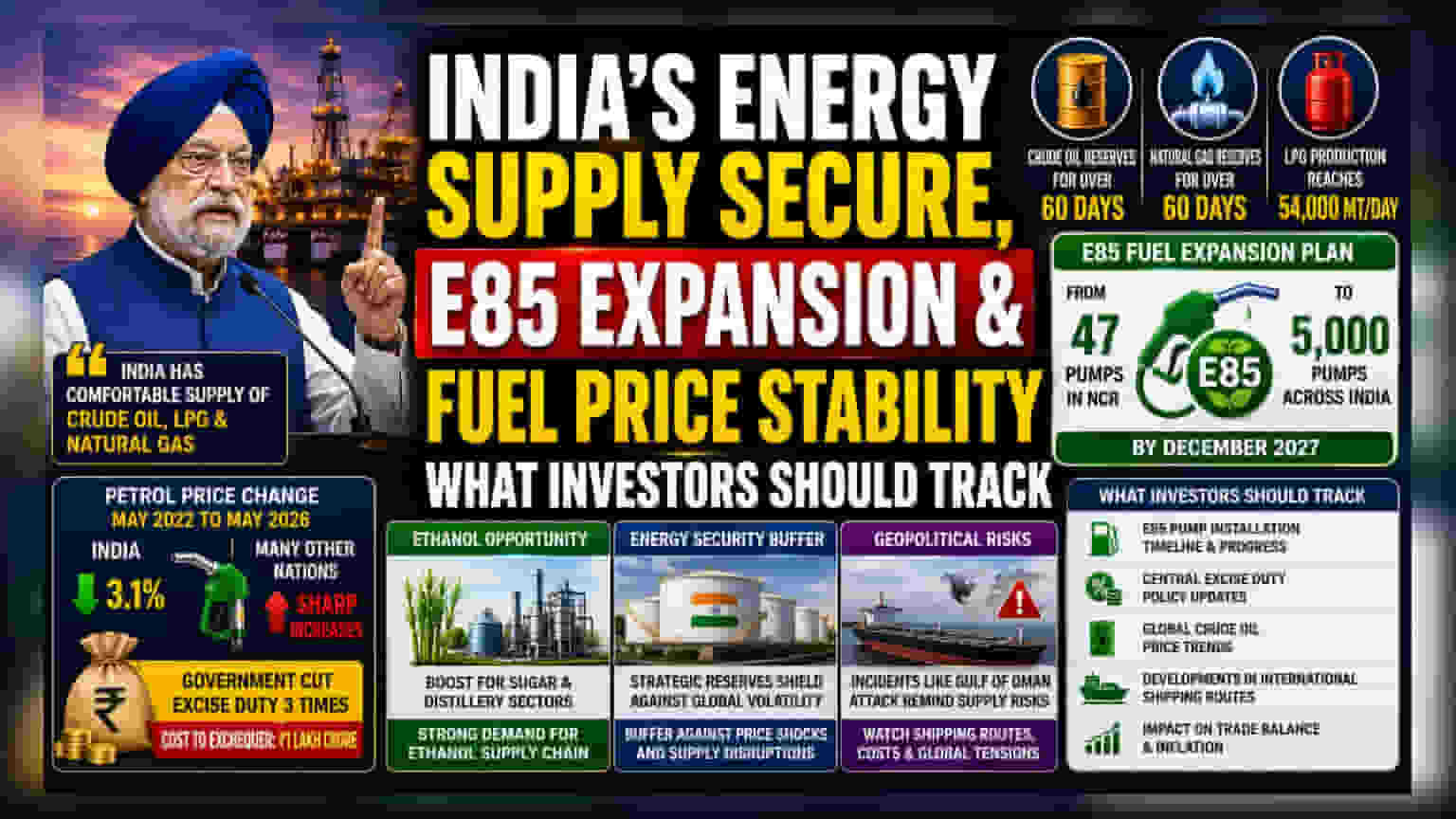


Union Minister Hardeep Singh Puri recently confirmed that India’s energy supplies remain stable, with ample crude oil and gas reserves. He also outlined plans to scale up ethanol-blended petrol (E85) pumps significantly by 2027. For investors, this highlights the government's focus on managing fuel price inflation and pushing alternative energy, which has direct implications for state-run oil marketing companies and the broader fuel supply chain.
What Happened
Union Minister Hardeep Singh Puri stated that India maintains a comfortable supply of essential energy sources, including crude oil, LPG, and natural gas. During a recent update, the Minister noted that the country holds crude oil and natural gas reserves sufficient for over 60 days of demand. He highlighted that domestic LPG production has increased significantly, reaching 54,000 metric tonnes per day, which has helped reduce import dependency. Additionally, the government has ambitious plans to expand E85 fuel—petrol with 85% ethanol blending—from 47 pumps in the National Capital Region to 5,000 pumps across the country by December 2027.
The Impact on State-Run Oil Retailers
The Minister noted that petrol prices in India fell by 3.1% between May 2022 and May 2026, while many other nations saw sharp increases. This stability was largely attributed to the government’s decision to cut central excise duties three times, a move that cost the national budget Rs 1 lakh crore. For investors tracking state-run oil marketing companies, this is a key data point. When the government uses excise duty cuts to keep retail fuel prices stable, it is often a balancing act between consumer inflation and the profitability of these retailers. Investors in this sector often watch government intervention closely, as policies that control retail pricing can create pressure on the profit margins of these companies, even if demand remains strong.
The Ethanol Opportunity
The push for E85 fuel marks a significant shift in India’s energy strategy. Moving toward higher ethanol blending is not just about environmental goals; it is a structural change that impacts the supply chain. This creates a predictable market for companies in the sugar and distillery sectors, which supply the ethanol. As the number of E85 pumps scales toward the target of 5,000 by 2027, companies providing the necessary technology and those involved in the distillery space may see increased demand. Investors often track these expansion timelines to gauge the potential for long-term growth in the biofuels sector.
Energy Reserves and Geopolitical Risks
The Minister also highlighted that India's strategic reserves of crude oil and natural gas act as a buffer against global volatility. This is particularly relevant given recent geopolitical tensions, such as the incident involving the killing of Indian seafarers in the Gulf of Oman. While energy supplies remain secure, such incidents serve as a reminder of the risks associated with global supply chains. Investors monitoring the energy sector typically keep an eye on how these geopolitical factors might influence shipping costs, insurance premiums, and the overall stability of crude imports for India.
What Investors Should Track
Moving forward, there are several factors for investors to monitor. First, the timeline for the installation of E85 pumps is a critical metric for gauging the speed of the transition toward ethanol blending. Second, updates on central excise duty policies will continue to influence the financial performance of oil marketing companies. Finally, global crude oil price trends and any new developments in international shipping routes will remain important, as they directly affect the cost of imports and, consequently, the trade balance and inflation figures that the market frequently reacts to.