 Whalesbook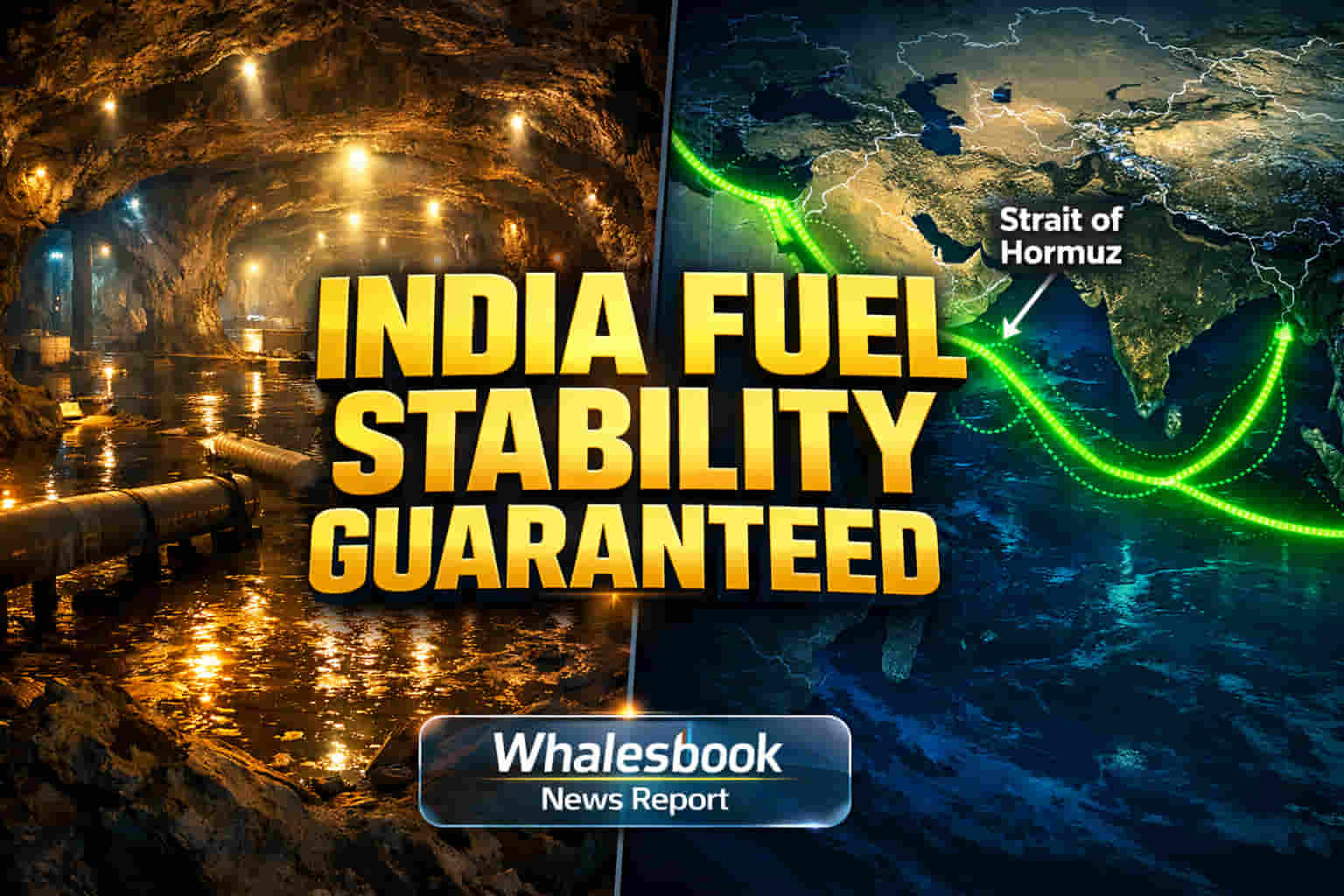


THE SEAMLESS LINK
India possesses over 250 million barrels in strategic energy reserves, sufficient for seven to eight weeks of coverage. This is bolstered by a diversified sourcing network spanning 40 countries, reducing reliance on chokepoints like the Strait of Hormuz. Domestic refining capacity exceeds national demand. However, public sector oil companies have absorbed significant losses, totaling approximately Rs 64,500 crore for petrol, diesel, and LPG, to maintain retail price stability over four years. This multi-pronged approach prioritizes affordability, availability, and sustainability, yet exposes state-owned enterprises to financial strain.
The Evolving Energy Defense Strategy
India's energy security framework has undergone a significant evolution, moving beyond mere stockpile numbers to encompass a sophisticated, multi-layered strategy. The nation's buffer of over 250 million barrels, equivalent to approximately 4,000 crore liters, offers robust coverage for seven to eight weeks across the supply chain, countering claims of critically low reserves. This physical buffer is augmented by a strategically diversified sourcing network that now includes 40 countries, a marked increase from 27 a decade ago. This diversification is critical, as only about 40% of India's crude imports traverse the Strait of Hormuz, with the bulk arriving via alternative routes from regions like Russia, West Africa, the Americas, and Central Asia. This shift allows for managed sourcing adjustments during potential chokepoint disruptions, rather than immediate supply emergencies. Furthermore, domestic refining capacity has expanded to 258 million metric tonne per annum (mmtpa), comfortably surpassing national consumption demand, creating a crucial domestic asset that has even enabled Indian refiners to bridge fuel gaps in Europe following sanctions on Russian crude.
Geopolitical Navigation and Financial Strain
Russia remains India's primary crude oil supplier as of February 2026, a relationship maintained despite geopolitical pressures and adherence to G7 price cap rules. A recent US Treasury waiver further simplifies these import channels, acknowledging India's role in stabilizing global markets. Domestically, the 20% ethanol blending program displaces approximately 44 million barrels of crude oil annually, contributing to energy independence. Retail fuel prices have seen remarkable stability, remaining unchanged for four consecutive years in Delhi, a stark contrast to the significant price hikes seen in Pakistan and Germany over the same period. This price stability, however, comes at a substantial cost to public sector oil companies (PSUs). Indian Oil Corporation, Hindustan Petroleum, and Bharat Petroleum have absorbed losses estimated at Rs 24,500 crore for petrol and diesel, and approximately Rs 40,000 crore for LPG, totaling over Rs 64,500 crore, to maintain consumer affordability. This strategy, guided by affordability, availability, and sustainability, highlights a complex balancing act between national energy security and the financial health of state-owned enterprises.
The Analytical Deep Dive: Global Context and Competitive Positioning
India's energy security posture is increasingly defined by its diversification efforts, a trend mirrored by other major Asian importers. While China holds vast strategic petroleum reserves, potentially covering up to six months of supply, and Japan maintains approximately 254 days of coverage, India's 7-8 weeks of reserves are comparatively lean. This thinner buffer exposes India to greater vulnerability during prolonged global supply shocks, particularly if geopolitical tensions escalate in the Middle East. Although India has expanded its sourcing from 27 to 40 countries, its import dependence remains high, with over 85% of its crude oil needs met through imports. The increasing reliance on Middle Eastern supplies, which now account for 55% of India's imports, heightens exposure to critical chokepoints like the Strait of Hormuz. Analysts note that while Indian OMCs have shown resilience, factors like rupee depreciation can exacerbate import costs, impacting margins. Upstream companies, like ONGC, may benefit from higher crude prices, but marketing companies such as IOCL, HPCL, and BPCL face margin compression if retail prices cannot keep pace.
⚠️ THE FORENSIC BEAR CASE
The considerable financial burden borne by India's public sector oil companies (PSUs) represents a significant structural weakness. The reported losses of Rs 64,500 crore incurred to subsidize fuel prices over four years are unsustainable in the long term. While India has diversified its import sources, its reserve levels of 7-8 weeks fall short compared to major economies like China (six months) and Japan (eight months), leaving it more exposed to prolonged supply disruptions. The nation's heavy reliance on oil imports (over 85%) and the transit of a significant portion of its crude through the Strait of Hormuz remain inherent vulnerabilities, despite efforts to mitigate these risks. The increasing dependence on Russian oil, while offering price advantages, introduces its own set of geopolitical complexities and potential compliance challenges. Furthermore, the weakening Indian Rupee directly increases the cost of imported crude, adding pressure on both consumer prices and PSU profitability. The robust export capacity of India's refining sector, while a strength, also means that a strategic redirection of these products for domestic use during an emergency would require careful coordination and could impact foreign exchange earnings.
The Future Outlook
India's strategy to ensure energy security is multifaceted, combining strategic reserves, aggressive diversification of sourcing, domestic capacity enhancement, and active management of retail prices. The nation is actively expanding its refining capacity and has plans for new strategic reserve facilities to bolster long-term security. The continued growth of ethanol blending and the increasing share of EVs in the transportation sector signal a move towards cleaner energy alternatives, though fossil fuels will remain dominant in the medium term. The financial sustainability of PSUs absorbing significant price stabilization losses remains a key challenge, potentially necessitating future policy adjustments or tariff revisions. Analyst sentiment indicates that while the diversification strategy offers resilience, the country must continuously adapt to geopolitical shifts and manage its import dependencies to maintain energy independence.