 Whalesbook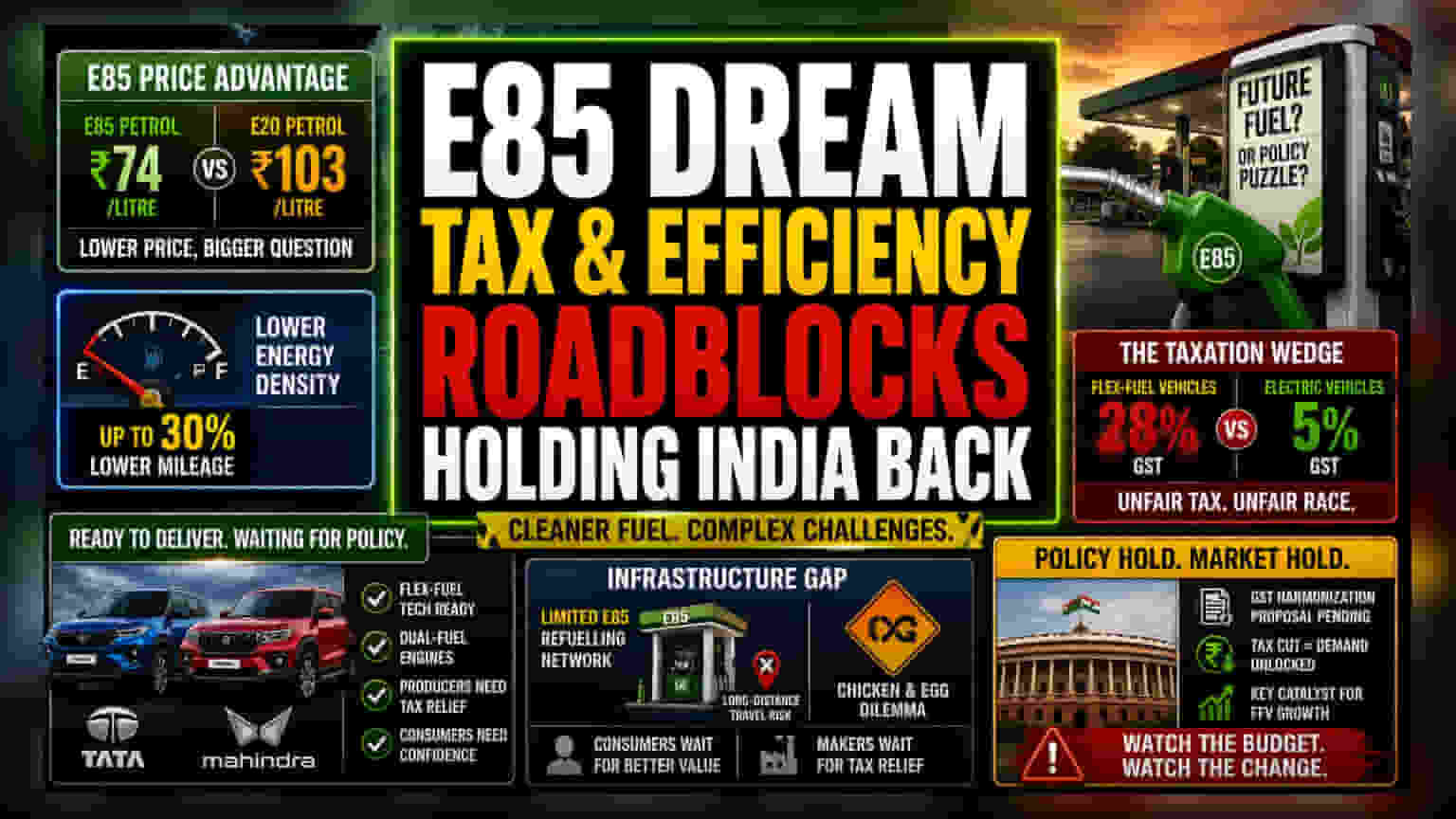


The Efficiency Gap and Economic Realities
The strategic pivot toward E85 petrol, priced at a notable discount to current E20 alternatives, is designed to reduce the nation's reliance on foreign oil. However, the energy density of ethanol remains the primary technical hurdle. Because ethanol contains less energy per unit of volume than gasoline, the shift to E85 necessitates a proportional decline in fuel efficiency, often reaching an estimated 30% reduction in vehicle range. Consumers are currently calculating whether the lower pump price sufficiently offsets the frequency of refuelling, creating a skeptical retail environment that prevents rapid demand scaling.
The Taxation Wedge
Beyond fuel economy, the financial viability of flex-fuel vehicles (FFVs) remains stifled by an uneven tax environment. While the government pushes for energy diversification, domestic automakers are caught between the mandate for dual-fuel hardware—which requires specialized fuel lines and corrosion-resistant sensors—and a restrictive tax structure. Current regulations levy a 28% Goods and Services Tax on FFVs, placing them at a distinct disadvantage compared to the 5% tax applied to battery-electric vehicles. This fiscal disparity persists despite vocal lobbying from the Petroleum Ministry, which has long argued for parity to stimulate production volumes.
The Structural Weakness in Adoption
Market penetration is further constrained by the lack of an expansive, dedicated refuelling infrastructure. Unlike the established gasoline network, E85 distribution remains concentrated, limiting the utility of FFVs for long-distance travel. Manufacturers, including companies like Tata Motors and Mahindra & Mahindra, have demonstrated the technical capability to produce compatible engines, yet they are hesitant to commit significant capital expenditure to mass production without clear guarantees of state-sponsored tax relief. The current situation resembles a chicken-and-egg dilemma: consumers wait for cheaper, more efficient vehicles, while producers wait for government tax subsidies to make those vehicles price-competitive with traditional internal combustion models.
Future Outlook and Policy Trajectory
With proposals to harmonize GST rates currently sitting before the finance ministry, the sector is in a state of regulatory suspension. Should the government move to lower the tax floor for FFVs, it would likely signal a shift toward genuine commercial viability. However, until the energy-density issue is mitigated through improved engine mapping or further retail price subsidization, the E85 initiative remains a top-down policy ambition rather than a consumer-driven market movement. Investors should monitor upcoming budget sessions for evidence of tax restructuring, as this remains the singular catalyst for unlocking the FFV domestic market.